
Key Highlights of winning science fair projects high school
- Find 15 science project ideas that have won awards. They are great for high school students and help in any science fair.
- See what materials you need and why each science project can impress the judges at your next high school science fair.
- Get easy tips on how to do your experimental design and how to show your science competition projects well.
- Know the most common mistakes. Avoid them to give yourself a better chance to win.
- Look at high school science project topics from biology, chemistry, physics, and engineering for your next fair.
- Learn what helps a high school science project stand out among others.
Introduction
Are you a high school student looking to come up with a science fair project that will stand out? Picking science fair project ideas can seem hard at first, but this is how you start to make something special. This guide will help you find fun and cool fair project ideas that can grab the attention of the judges. There are simple things you can do and also some that take more work. You are sure to get new ideas that will help you do well at your next science fair.
Many students at a private high school in Canada actively participate in science fairs to build strong academic and research skills.
15 Winning Science Fair Projects High School Students Can Impress Judges With
Choosing the right science project is crucial for a successful science fair experience. The best projects often tackle real-world issues while showcasing creativity and a solid understanding of the scientific method. It’s essential to select a topic that interests you and allows for innovative experimentation beyond simple demonstrations.
Below is a list of project ideas spanning biology, chemistry, physics, and engineering. These engaging topics are designed to captivate high school students and provide opportunities for in-depth investigation. With the right project, you can stand out and impress judges at your next science fair. Let’s explore some exciting options!
1. Testing the Effect of Different Water Purification Methods
This project examines how effective different water purification methods are by comparing filtration, boiling, and chemical treatments to see which cleans water best. Clean water is a global concern, making this a relevant science fair experiment. Start by collecting a water source, such as pond water, and have containers ready. Use coffee filters or sand for filtration, a pot for boiling, and pH test strips to check water quality.
Why this can win: It demonstrates fair testing, critical thinking, and problem-solving skills.
- Materials: Water source, containers, coffee filters, sand, boiling pot, pH test strips.
- Judging Advantage: Tackles an important issue with measurable results.
2. Investigating Soil Moisture’s Impact on Plant Growth
Are you interested in how much water a plant needs to grow? This science project explores how different soil moisture levels affect plant growth. Set up several identical plants in separate pots, each receiving a different amount of water. Use a measuring tool to track the water given. Record plant height and leaf count over a few weeks to observe changes.
Why this can help you win: This classic science fair project stands out with strong experimental design and clear data collection. You can boost your project by testing different soil or plant types. The results are easy to present and impress judges.
Concepts like plant growth and ecosystems are commonly covered in science grade 10, making these projects easier to understand and execute.
3. Exploring the Aerodynamics of Paper Airplanes
This project uses paper airplanes to explore how things fly. Build and test different paper planes to see how wing shape, size, or folding affects flight. It’s a fun science experiment that shows physics in action and is perfect for a science fair.
To start, all you need is paper, a ruler, tape, and a stopwatch. Make several airplane designs and compare how far or how long each can fly.
Why it can win: Simple yet deep, this project helps you understand flight.
- Materials: Paper, ruler, tape, stopwatch.
- Judging Advantage: Shows knowledge of physics like lift, drag, and thrust.
4. Analyzing How Sleep Affects Academic Performance
- Ever wondered if an extra hour of sleep boosts your test scores? This project explores the link between sleep duration and academic performance, a relatable topic for many students.
- Gather volunteers to track their sleep using phones or smartwatches, and take daily, short, consistent tests to measure academic performance. Keep other daily routines the same to ensure fair results.
- Why can this idea win? Real-life, relatable topics catch judges’ attention. By studying how sleep affects the brain and stress, you can clearly show the impact of sleep on learning. Projects like this stand out for their usefulness and clarity.Presenting your findings clearly is key, and an English tutor in Mississauga can help improve your report writing and presentation skills.
5. Building a Model Wind Turbine to Generate Electricity
This engineering project lets you explore renewable energy by building a model wind turbine that produces measurable electricity. Start by designing the blades and frame, then add a small DC motor or generator to convert wind into electrical energy. Test your turbine outside in the wind or with a fan.
Why it can win: This project combines engineering with current environmental issues.
- Materials: PVC pipes or wooden sticks for blades, a small DC motor, magnets, copper wire, and a multimeter to check voltage.
- Judging Advantage: Experiment with different blade shapes and sizes to optimize results, showing problem-solving skills judges value.
This is an excellent hands-on project for high school students!
Projects involving energy and structures build on concepts taught in physics grade 11 and beyond.
6. Designing Your Own Hydroponic System
Try out the future of growing food with your own hydroponic system. In this science project, you don’t need soil, plants grow in water with nutrients. Build a simple setup using used bottles and twine, and compare plant growth in water versus regular soil.
- Gather materials like soda bottles, string, and nutrient-rich water.
- Assemble your system and monitor plant growth, yield, and health.
- Record observations throughout the experiment.
Why can this science project win? Judges like solutions to big issues such as food shortages and sustainable farming. Building a hydroponic system demonstrates practical science and stands out as an innovative project.
7. Studying the Effects of Exercise on Heart Rate
This project examines how different types of exercise affect heart rate immediately. Measure your heart rate before, during, and after activities like running, jumping jacks, or cycling to observe how your body responds to physical activity. All you need is a stopwatch and a way to track your pulse; a heart rate monitor or pulse oximeter can improve accuracy. This classic science fair project can be done at home or school and is easily enhanced for high school students. Present clear graphs and detailed analysis to demonstrate your understanding of human physiology and the science behind exercise, impressing judges effectively.
8. Evaluating How Temperature Influences Battery Performance
Have you ever noticed your phone’s battery drains faster in cold weather? This project investigates how temperature affects battery performance and lifespan. Gather several battery types, a thermometer, and a multimeter. Expose each battery to different temperatures and record their voltage output. Analyze how temperature impacts their chemical properties and efficiency.
Present your findings in a table to highlight the results. Judges appreciate the technical depth and scientific methodology of this project, making it a strong contender. It demonstrates understanding of electrochemistry and systematic experimentation. Clear data presentation, like the table below, will help impress judges with your findings.
| Battery Type | Temperature (°C) | Voltage Output (V) |
|---|---|---|
| Alkaline AA | -10 | 1.2 |
| Alkaline AA | 20 | 1.5 |
| Lithium AA | -10 | 1.5 |
| Lithium AA | 20 | 1.6 |
9. Testing the Strength of Different Types of Paper
How strong is a piece of paper? In this science project, you’ll test and compare the strength of different types of paper, such as printer, construction, and tissue paper. Gather your samples, a ruler, and some weights (or a force gauge). Clamp the paper and add weight until it tears, recording the force needed for each type. Analyze your results and consider why some papers are stronger than others. This hands-on physics experiment is simple yet effective, making it perfect for high school students. Judges appreciate clear methods, thoughtful analysis, and explanations—qualities that make this project stand out at science fairs.
10. Creating a Solar Oven for Sustainable Cooking
- You can use the sun to make a solar oven of your own. With this project, you’ll learn about renewable energy and eco-friendly cooking. A solar oven uses shiny materials to gather sunlight and turn it into heat.
- To make your solar oven, you need a cardboard box, aluminum foil, black construction paper, and a clear plastic sheet. After building it, test how well it works by cooking simple foods like marshmallows or heating water.
- Why can it win? This experiment is fun to watch and shows how science can solve real-life problems. Track the oven’s temperature for extra data.
11. Examining the Impact of Light Pollution on Nocturnal Insects
This science project explores how artificial night light affects nocturnal insects’ behavior and diversity. It examines how city lights impact the number and types of insects active at night, addressing real-world environmental concerns.
For testing, set up light traps in areas with varying light levels, some in dark rural locations and others in brightly lit cities. Collect insects from each site, record their types, and count how many are found.
Why it can win: Judges appreciate projects about environmental stewardship. By comparing insects from city and country, you provide clear evidence of how light pollution disrupts wildlife, making this a compelling science fair entry.
12. Comparing Water Quality from Various Sources
Is bottled water really better than tap water? Discover the answer by comparing water quality from multiple sources, tap, bottled, stream, and well water. Use water test strips or pH test strips to check for pH, chlorine, and other key indicators. Record your results for each type of water and then analyze your data to determine which is purest.
Why can this project win? It demonstrates a clear scientific process, uses real tools, and collects solid data.
- Materials: Water from different sources, water test strips, pH test strips, containers.
- Judging Advantage: Combines chemistry and environmental science, with clear charts to impress judges.
13. Using Mindfulness Techniques to Reduce Smartphone Addiction
Today, many people worry about how much time they spend on their smartphones. This science fair project explores whether mindfulness techniques, like meditation or breathing exercises can help reduce smartphone use. It’s a great topic for high school students since many teens deal with this issue.
In this project, participants try mindfulness techniques for a set period. You track their smartphone usage before and after to see if it changes. Careful experimental design is important for accurate results.
Why this can win: Projects about mental health stand out. Showing mindfulness can reduce phone addiction makes your project meaningful and relevant.
14. Investigating How Color Affects Mood and Emotion
- Does the color in a room affect how you feel? This project explores the link between colors, moods, and emotions using psychology.
- You can show participants images or items in specific colors, then have them answer a survey about their feelings. Tracking heart rate can also reveal if color impacts the body as well as the mind.
- Why can this win? It combines art and science, making your work visually appealing and engaging. With a strong question and clear steps, you can spot patterns between colors and emotions. Judges will love the fresh perspective on how people experience the world.
15. Building a Model Suspension Bridge for Engineering Principles
- This engineering project lets you build a model suspension bridge using popsicle sticks, string, and glue. Start by researching real suspension bridges to learn basic engineering principles, then draw your design and build your bridge. Test how much weight it can hold to understand tension and compression.
- Why it can win: Judges love hands-on projects that show problem-solving and critical thinking. By experimenting with materials and design, you demonstrate real engineering skills. Document your process—from planning to testing—to highlight your approach. Changing your bridge’s look or materials for strength can impress judges and make your project stand out.
What Makes Winning Science Fair Projects High School Stand Out
A winning science project goes beyond being visually appealing; it demonstrates critical thinking and a solid grasp of the scientific method. Judges look for high school science fair projects that begin with a compelling question and are backed by a well-structured experiment. The process of inquiry how you formulate, test, and discover is crucial. Exceptional experiments are innovative, detailed, and comprehensible. To capture attention, choose a topic that genuinely interests you, as this will enhance your effort and performance. Your presentation at the science fair also plays a vital role in making a lasting impression on the judges.
What Judges Look for in Winning Projects
Judges use clear science fair judging criteria for every project. They want to see you’ve done real experiments and scientific work, showing you can think like a scientist. Critical thinking is key judges look at how you chose your question, set up your experiment, analyzed your data, and understood your variables. Good conclusions and a neat lab report help your project stand out.
Here’s what judges look at:
- Originality and Creativity: New questions or unique ways to solve problems.
- Thoroughness: Well-designed experiments with controlled variables and enough data.
- Understanding: Demonstrate strong grasp of scientific concepts.
- Clarity: Clearly explain your project and findings.
Common Mistakes That Reduce Your Chances
Even a great science fair idea can fall short if you make common mistakes. For high school students, avoiding these errors can improve your chances of winning. One key mistake is not having a clear hypothesis or research question, which can make your project lose focus. Another major issue is not collecting enough data—judges want to see that you repeated your experiment for reliable results. A messy presentation, whether on your board or in your explanation, also hurts your score.
Here are a few mistakes to stay away from:
- Procrastination
- Ignoring the Scientific Method
- No Data Analysis
- Plagiarism
Practical Tips to Turn Your Project Into a Winner
To turn a good science project into a winning one, focus on the details and think ahead. High schoolers should aim to exceed basic requirements and find ways to make their projects unique. Winning science fair experiments are not just about achieving results; they also involve learning throughout the process. Choose ideas that excite you, as passion will help you persevere through challenges. Once you have your concept, concentrate on a solid experimental design and execute each step diligently. Use these tips to enhance your project and present your findings with confidence and expertise.
How to Present Your Project Like a Pro
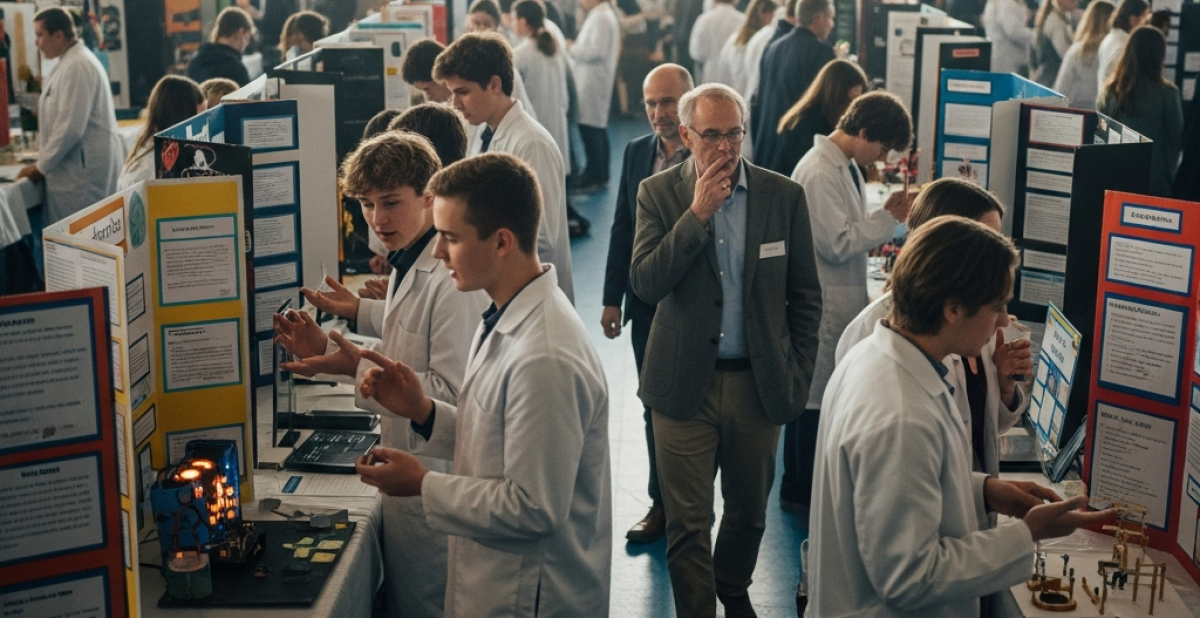
Your science fair presentation is your chance to impress judges and make your project memorable. Beyond having a great project, you need a strong, organized display board with clear headings that guide viewers from your main question to your final answer. Practice speaking confidently and with enthusiasm, so you don’t have to read from your board or notes. Be prepared to answer questions about every aspect of your project to show your expertise.
Here are some simple tips for your science fair or high school science presentation:
- Create a Clear Visual Hierarchy: Use big words for titles, subtitles, and bullet points so people can read your board fast.
- Practice Your Elevator Pitch: Write a quick, interesting summary you can talk about in just 30 to 60 seconds.
- Know Your Data: Be ready to talk about your graphs and what they show about your project results.
Strong presentation and research skills are also developed through a university preparation program.
Simple Ways to Improve Your Experiment Results
The quality of your experiment results is very important for science fair judging. To improve your results, make sure your data is accurate and consistent across all trials. Repeat your experiment several times to detect errors or unusual results, and only change one variable at a time so you can tell what affects the outcome. At USCA Academy, students are encouraged to follow these best practices to ensure their projects stand out.
Here are a few ways to improve your results in the science fair:
- Increase Your Sample Size: Run more tests or use more samples to make your findings stronger.
- Calibrate Your Tools: Make sure your measurement tools are accurate for every trial.
- Keep a Detailed Log: Record all steps, mistakes, and unexpected results.
Clear, reliable work impresses judges, and at USCA Academy, these methods are emphasized to help students achieve success.
Conclusion
To sum up, doing a science fair project can be fun and a great experience. The 15 winning science fair projects high school, we talked about here are good for people who want to learn. They also give you the chance to stand out to judges with new ideas and good research. If you pick one of these science fair projects that you like and that shows how people use science in real life, you will set yourself up for a win. The things that help these fair projects do well are new ideas, a clear way of sharing what you did, and strong experiments. Take on the challenge, think about your choices, and ask for help if you need it. If you want more help or have questions, get in touch with us!
Many private schools in Mississauga encourage participation in science fairs to build confidence and innovation skills.
Frequently Asked Questions
1. What are some examples of winning science fair projects for high school?
Many award-winning science projects for high school look at real-life problems. For example, you can build a small wind turbine, try out ways to clean water, or see how sleep can change your academic performance. These fair project ideas show the use of critical thinking and a strong understanding of science. They make for great science fair project examples.
2. How do high school science fair winning projects differ from regular science projects?
Winning projects at a high school science fair do more than just show how something works. They start with a special question and use a good experimental design. Students control the variables and study their data in detail. Judges want to see students who really understand what they worked on. They also need to explain what they found in a clear way.
3. Are there easy science fair project ideas for high schoolers that have a good chance of winning?
Yes, there are a lot of easy science fair projects for high schoolers that can be winners. You can try science fair projects like looking at how different paper airplanes fly. You can also test to see which kind of paper is stronger. These kinds of fair projects are simple to set up. They become really good science experiments when you do good data analysis and show your results in a strong way. This is what makes these science fair projects stand out.