
Key Highlights of summer school edmonton
- Summer school in Edmonton offers high school students a chance for credit recovery or to get ahead in their studies.
- Explore diverse summer school options, including in-person, online, public, and private programs like those at USCA Academy.
- Courses are available through providers like Metro Continuing Education, covering core subjects and unique electives.
- Summer classes in Edmonton are condensed, requiring a significant time commitment to complete a semester’s work in about a month.
- Registration has specific deadlines, and costs can vary, so planning ahead is crucial for a successful experience.
Introduction
Welcome to your complete guide to summer school in Edmonton for 2026. No matter if you are a parent or a student, the journey through summer school can be hard to figure out. This guide is here to make things simple. You will find all the key summer school information that you will need. We talk about the benefits of summer school and also explain summer school registration. Our goal is to help you feel clear about your options and sure about your choices for this summer. This way, you can make the best call for your school path.
Programs like summer school programs in Mississauga also help students continue building communication and conflict resolution skills outside the regular academic year.
Summer School Edmonton in 2026: What’s New?
Summer school keeps changing, and 2026 brings new things, too. When you start your search, you will see more chances for flexible learning. There are strong online class options, so you can study from wherever you are.
Now, the programs have new subjects like digital health and artificial intelligence. This matches what people need in today’s world. Keep watching for the latest course lists as summer school registration in Edmonton gets started. Let’s go over what summer school is, and who these classes can help.
What Is Summer School and How It Works in Edmonton
Summer school lets high school students in Edmonton take fast-paced courses during July, covering a full semester’s material in just a few weeks. Programs like Metro Continuing Education offer many classes that help you earn credits toward your Alberta high school diploma. You can use summer school to retake a class, complete required courses, or explore something new.
Classes are intense, with daily lessons, homework, and tests either online or in person. It’s like working a full-time job for about a month. The big advantage is that you can quickly earn credits and sometimes get ahead for the next school year.
Who Should Consider Summer School in 2026
Are you wondering if summer school is right for you or your child? Summer school benefits high school students who want to upgrade marks, catch up, get ahead, or explore interests. You’ll need to stay focused since classes move quickly, so make sure it fits your goals. Here’s how summer school can help:
- Upgrade Marks: Improve grades for post-secondary options.
- Catch Up: Pass a class or stay on track to graduate.
- Get Ahead: Complete courses early for a lighter schedule next year.
- Explore Interests: Try career exploration activities with a flexible schedule.
Popular courses fill quickly register soon!
Why Students Choose Summer School in Edmonton
Every year, thousands of summer school students in Edmonton make this choice for many good reasons. One of the biggest benefits of summer school is that it gives you more freedom with your time. You can use summer school to free up space in your main schedule. This is great if you want to work part-time, get work experience, or try harder classes.
You might need to boost a grade. Maybe you want to earn credits early, or you just want to try something new. The summer school setting can be very good for learning. Now, let’s look at two top reasons people join. These are credit recovery and getting a head start.
Credit Recovery vs Grade Improvement
Two main reasons students attend summer school are credit recovery and grade improvement. While they might seem similar, they are different. Credit recovery is for students who did not pass a required course and need to earn credits to graduate. Grade improvement is for those who passed a course but want a higher grade, often for university applications.
Here’s a simple breakdown:
- Credit Recovery: You did not pass a course, and you need the credit.
- Grade Improvement: You passed but want your grade to be higher.
- Both: These help you keep up with your goals for high school.
- Goal: Earn the credits you need or raise your grades.
Summer school gives you another chance to get on track.
Fast-Track Learning for University Preparation
- Summer school in Edmonton isn’t just for catching up, it’s a smart way to get ahead and prepare for university.
- By fast-tracking courses like math or science, students can strengthen their foundation, impress competitive programs like the University of Alberta, and even explore new subjects such as quantum physics.
- Focused summer classes help students prepare effectively for diploma exams, often leading to better results and a smoother transition to post-secondary education.
Types of Summer School Options in Edmonton
When searching for summer school options in Edmonton, you’ll find a variety of choices, from traditional public school programs to more flexible private school options. Each program caters to different learning styles, ensuring there’s something for everyone. The emergence of online summer school in Canada has further simplified the process, allowing students to earn credits from home. As you prepare for summer school registration, it’s essential to understand the distinctions between public and private programs, as well as the differences between online and in-person classes. Additionally, consider how summer school differs from summer camp experiences.
Public vs Private School Programs
Choosing between public and private summer school programs in Edmonton depends on your needs and budget. Public programs, run by local school boards, are usually low-cost or free for residents and follow the standard provincial curriculum. They tend to have larger class sizes and set schedules. Private programs, like those at USCA Academy, charge tuition but offer smaller classes, more personalized attention, and greater flexibility. They may also provide specialized or advanced courses not found in public programs. Consider your learning goals and preferred environment before deciding.
Here is a quick comparison:
| Feature | Public School Programs | Private School Programs |
|---|---|---|
| Cost | Often free or low-cost for residents | Tuition fees apply |
| Class Size | Generally larger | Typically smaller |
| Flexibility | Standardized schedule and curriculum | More flexibility, customized support |
| Offerings | Core curriculum and some electives | May offer specialized or advanced courses |
Online vs In-Person Classes
Another big choice is whether you want to learn online or in a classroom. The best option depends on your learning style, schedule, and ability to stay focused. Online classes offer flexibility you can study from home or anywhere with internet. In-person classes have more structure, with set schedules and face-to-face interaction. Online learning now often includes live sessions and daily check-ins to keep students engaged.
Consider these things when deciding:
- Flexibility: Study at home or while traveling with online learning.
- Structure: In-person classes have a set routine.
- Interaction: Online uses computers; in-person is face-to-face.
- Discipline: Online requires self-motivation.
Gather information to find what fits you best.
Summer School vs Summer Camps
It’s easy to confuse summer school with summer camps, but they serve different purposes. Summer school is focused on academics and helps students earn high school credits through structured classes and homework. Summer camps, on the other hand, are designed for fun or learning new skills, such as sports or arts, and do not offer academic credit. Some camps may include activities like summer research experiences, but they are not credit-based. Both options take place in summer, but their outcomes and goals differ.
Below are the main ways they differ:
- Purpose: Academic credit vs. fun or skill-building.
- Outcome: Credits and grades vs. memories and friends.
- Structure: Daily classes and homework for summer school.
Courses You Can Take During Summer School
There are many courses to pick from in summer school, and some may surprise you. You can work on hard core subjects or try out things you don’t usually have time for during the year. The choices go from key science courses, a fun English course, or even Physical Education. This means there are many chances to get high school credits.
Picking a summer school course should match your goals at high school. You might need to catch up in a class, move ahead, or make your school year easier later. There are many options to pick from. You will find that both main classes and electives are there in summer school.
Core High School Subjects (Math, Science, English)
Core subjects are popular choices in summer school because they’re required for the Alberta high school diploma and most post-secondary programs. Taking a core class in the summer lets you focus on one tough subject without distractions. This is a great chance to catch up or get ahead, whether it’s math, science, English, or social studies. You can use summer school to master a difficult course or complete a needed credit.
Common core courses offered:
- English Language Arts (10-1, 20-1, 30-1, etc.)
- Math (10C, 20-1, 30-1, etc.)
- Social Studies (10-1, 20-1, 30-1, etc.)
- Science courses like Biology, Chemistry, and Physics (20, 30)Even in online summer school in Canada, students can practice communication and conflict resolution through virtual group activities.
Electives and Skill-Based Courses
Summer school isn’t just for main classes, you can explore new interests and develop valuable skills through electives. These courses let you earn credits in ways that aren’t typical.
- Physical Education: Stay active and earn credits.
- Introductory Courses: Try basics of psychology or forensics.
- Advanced Subjects: Explore something unique like quantum physics.
- Work Experience: Earn credits while gaining real-world skills.
These options help you build critical thinking, provide a break from regular schoolwork, and make your summer both useful and enjoyable. You might even discover a new passion or career idea by trying something different during summer school.
Eligibility Requirements and Registration Process
Ready to sign up? The summer school registration is easy, but you need to pay close attention to deadlines and details. Most schools use an online system, like a Google Form, to get applications from high school students.
It is good to start the process early, since many courses fill up fast. Make sure you know who can join and what steps to follow, so the sign-up goes smoothly for all summer school students. Now let’s look at who can join summer school and what you have to do to get enrolled.
Who Can Apply (Local & International Students)
Summer school in Edmonton welcomes both local and international students. Typically, high school students in Grade 9 to Grade 12 can apply, and some programs accept adults over 20 who wish to upgrade or finish their diploma. International students benefit by learning about the Canadian education system; schools like USCA Academy support them well. Students must ensure they have the proper documents or visa to study in Canada. Eligibility usually includes:
- Current high school students living in Alberta.
- Adult learners (20 years or older) wanting to upgrade.
- International students, who must check specific rules and visa requirements.
Always review program-specific age and residency rules.
Step-by-Step Registration Process
The summer school registration process usually begins in the spring before the summer session. Each school, like Metro Continuing Education, may differ slightly, but the general steps are quite similar.
First, review the available courses and check for prerequisites. Once you’ve selected your summer school class, complete the online registration form, which is often found on the school’s website. Be sure to have your personal information, school background, and Alberta Student Number (ASN) ready.
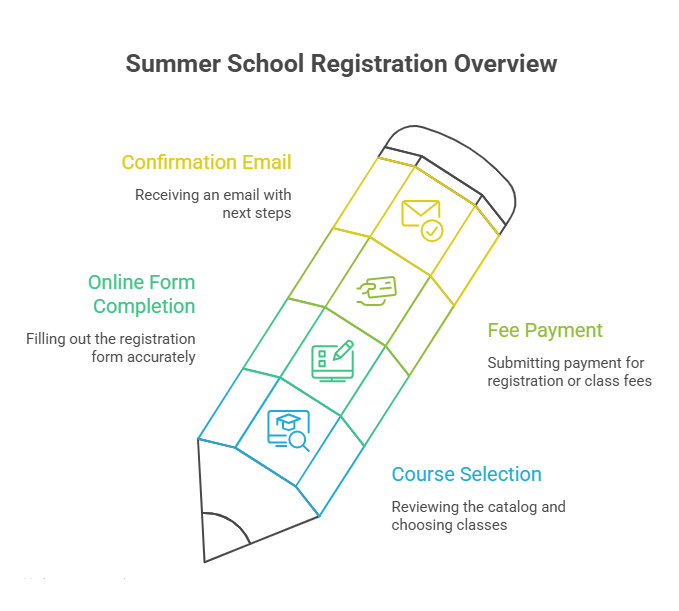
Here’s a common registration list for summer school:
- Choose Your Courses: Review the catalog and select your classes.
- Complete the Online Form: Fill out the registration form accurately.
- Pay the Fees: Submit payment for registration or class fees.
- Receive Confirmation: Watch for a confirmation email with next steps.
Registering early increases your chances of getting your preferred classes at Metro Continuing Education and helps you avoid last-minute stress.
Fees, Schedule & Important Deadlines (2026)
Planning for summer school is not just about picking a course. You need to know about summer school fees, when classes take place, and the deadlines. The costs can change a lot from one program to the next. There can be more costs for things like materials or exam fees, so make sure to add those when you plan your budget.
Most summer school classes finish in a short time. The course will usually run during the month of July and be fairly fast. If you miss a registration deadline, you might lose your place. Here, we will talk about the usual costs and schedules you can see in 2026, including any additional costs.
Typical Costs Across Edmonton Programs
Summer school fees in Edmonton vary by provider and residency status. Public school programs, like Metro Continuing Education, are often free for resident students, though a small registration or materials fee may apply. Private schools and elite programs such as USCA Academy charge tuition, reflecting smaller class sizes and specialized instruction. International students generally pay higher fees. Be aware of potential extra costs for textbooks, online access, or diploma exam fees. Below is a general cost overview:
| Program Type | Estimated Cost Range (for one course) | Notes |
|---|---|---|
| Public School (Resident) | $0 – $200 | May include registration or material fees. |
| Private School (Domestic) | $500 – $1500+ | Fees vary widely by institution. |
| International Student | $1200 – $2500+ | Higher tuition is standard for non-residents. |
Always confirm current fees with your provider.
Summer Timelines and Course Duration
Summer school in Edmonton is intense and moves quickly, with most classes lasting about four weeks in July. You’ll complete a full course in a short time, which means a significant daily commitment. Expect to spend 6-8 hours each day on classes and homework. Deadlines are strict, with assignments usually due every day to keep you on track.
Key things to know about the schedule:
- Course Length: About 4 weeks in July.
- Daily Commitment: 6-8 hours each day for class and homework.
- Class Structure: Daily classes, and you usually have to be there.
- Deadlines: There are daily deadlines for these assignments.
Treat summer school like a full-time job in July. With good planning, you can succeed.
How to Choose the Right Summer School Program
Choosing the right summer school program is a significant decision that depends on your goals. First, determine your reason for attending: do you want to improve a grade, advance academically, or explore new subjects?
Consider your learning preferences. Some students thrive in structured in-person classes, while others prefer the flexibility of online courses. It’s essential for students and parents to thoroughly evaluate each program to understand what it offers.
Examine factors like cost, location, schedule, and available classes. Decide if you want career exploration opportunities or a strong foundation in core subjects. Private schools may offer personalized support, while public programs can help you earn credits. Taking your time in choosing will enhance your summer school experience.
Understanding why choose summer school in Ontario shows how these programs support both academic and personal growth
Tips to Succeed in Edmonton Summer School
Success in summer school requires focus and effective habits. Here are some tips to help you succeed:
- Stay Organized: Create a daily plan that includes time for classes, homework, and breaks to manage your workload effectively.
- Seek Help: Communicate with your teacher regularly and don’t hesitate to ask questions in class or after to clarify doubts.
- Engage in Programs: Participate in summer programs to enhance your English skills and adapt to local teaching styles.
- Treat it Like a Job: Approach summer school as a full-time commitment for the month to maximize your chances of success.
Conclusion
Choosing summer school in Edmonton can give you many ways to grow in your studies and in life. You can catch up on credits or work on your skills. These programs are made to fit different learning needs. You can study online or go to classes in person. It is important to pick what works best for you.
Make sure you understand who can join, how to sign up, and when the deadlines are. This will help the process go well. Take action if you want to do well in your summer school classes. Work with the lessons and ask for help if you need it. If you have questions or need more help, reach out to us for support.
Frequently Asked Questions
1. Are online summer school options available in Edmonton?
Yes, there are many online summer school options out there. Metro Continuing Education and a few private schools offer a lot of courses for you to pick from. You can do some work at your own speed, but there will also be live classes you need to join. Online summer school in Canada is now a top and flexible way for students around the province to learn.
2. Can international students enroll in Edmonton’s summer school programs?
Yes, there are many summer school programs in Edmonton where international students can join. Private schools like USCA Academy often be open to help them get started at a summer school. If you are thinking about joining a summer school program, it is good to look into visa rules and ask the school if you can join before you apply.
3. Is summer school easier or harder than regular school?
Summer school is not always harder or easier, but it does move much faster. The material in a credit course is the same as one you’d get in the regular school year. The only difference is that it is fit into about four weeks. Because things go quickly, this can be tough for some summer school students. They need to have very good time management and stay focused.