
Key Highlights of social skills activities for preschoolers
- Social skills are very important for young children in early childhood. They help with both emotional skills and social growth.
- Fun activities, like games where kids take turns and group art projects, teach sharing and teamwork in an easy way.
- When young children learn the names of feelings, they can better handle their own and understand those of others.
- These activities help kids get better at talking with others, working together, and making positive relationships.
- Adding social learning to daily routines helps give steady practice and makes it feel natural.
- Simple games can boost a child’s confidence and emotional skills in a big way.
Introduction
Helping your preschooler deal with big feelings and make friends can seem tough. But it may not have to be hard. What if it is as easy as playing a game? Building strong social skills is one of the first steps on the path to emotional development and emotional learning. These basic skills let kids know their feelings, talk to others, and build friendships. With simple, fun activities, you can help your child get the tools they need to do well in and out of class.
Building strong social skills early is just as important as academic learning, which is why structured programs like an elementary school curriculum play a key role in a child’s overall development.
Social Skills Activities for Preschoolers (Easy Guide for Parents & Teachers)
Helping young children build social skills is essential for their future. These skills focus on connecting with others, managing feelings, and expressing needs. Parents and teachers can utilize engaging activities that make learning fun, whether at home or in the classroom. Simple group activities can foster sharing and kindness, turning emotional learning into playtime. Let’s explore enjoyable activities that ensure preschoolers develop social skills in a joyful and positive environment.
Many families also explore structured environments such as a private school in Mississauga where social-emotional learning is part of everyday classroom experiences.
Why Social Skills Matter in Early Childhood?
Social skills activities are simple games and exercises that help preschoolers learn how to share, take turns, listen, and work together. These activities give kids a safe, fun way to practice being with others and build a base for positive relationships.
By joining in these activities, children start to understand their feelings and notice how others feel. This helps them express themselves, solve problems, and be kind important steps for making friends and working well with others.
15 Social Skills Activities for Preschoolers
Are you ready for some fun? The right social skills games for kids can turn learning into playtime. These SEL activities are simple, fun, and help kids learn, so they are great for both parents and teachers. Some games teach sharing, and others work on communication skills for preschoolers. There is something for every child.
These fun activities let kids practice social skills in a safe space. It does not matter if you want activities to help with sharing in preschool or want to teach cooperation. The ideas below will help your child build their social skills, while having a good time. Let’s look at some great choices.
1. Turn-Taking Games (Like “Pass the Ball”)
Turn-taking games are a great way to help kids learn patience and how to work together. The idea is easy. Each child gets to take a turn. They have to wait for others before they can go again. This helps them learn to respect rules. It also shows them that everyone should get a chance to join in.
A simple game like “Pass the Ball” works well. Ask the children to sit in a circle. They take turns passing a ball around. When the ball gets to a child, they can share something, like what their favorite color or animal is. This is a good way to build listening and communication skills.
Other good turn-taking games are:
- Simple board games with dice.
- Building a tower. Each child gets to put on one block at a time.
- Playing with one toy, and passing it to the next person when they are done. These board games and activities help kids practice cooperative play and be patient. They also have fun at the same time.
2. Role-Playing Scenarios for Everyday Situations
Pretend play is a good way to help kids learn social skills. When children act out different scenarios, they get to practice what to do in real life. Pretend play is a powerful tool because it helps them understand how another person might feel. They learn to step into someone else’s shoes.
Try setting up simple scenes your preschooler might see every day. These can be things like going to the grocery store, visiting the doctor’s office, or playing at the playground. Guide your child while they act out things like asking for help, sharing a toy, or using words like “please” and “thank you.”
Here are a few different scenarios you can try:
- Asking to join a game: One child pretends to play alone, and the other can say, “Can I play too?”
- Sharing a toy: Two children can pretend to share a favorite toy and take turns.
- Apologizing: Practice by saying, “I’m sorry” after bumping into someone by mistake.
Let them switch roles, so they can see the situation from all sides. This is a great way to help them build social skills with pretend play.
3. Group Art Projects That Encourage Teamwork
Group art projects are fun and help kids learn how to work with others. When children make things together, they use their own materials and talk about ideas. They also learn to give and take. The most important thing is working as a team, not winning alone.
A big mural is a good group activity for preschool kids. Tape a large sheet of paper on the wall or floor. Give them stuff like crayons, markers, and construction paper. Every child can help add to this huge piece of art.
Some ideas for making art together are:
- Group Collage: Kids get magazines, scissors, and glue to make a collage. Pick a theme, like “Our Favorite Foods.”
- Building a Sculpture: Use boxes and tubes that can be recycled to build one big sculpture as a team.
- Painting Together: Let everyone use paint to add their designs to one large canvas. With these projects, kids learn how good it is to reach a common goal together.
4. Emotion Recognition Games
Understanding emotions is a big part of social growth. Emotion recognition games help young kids learn to spot different emotions in themselves and in other people. These activities often use pictures or other visuals. This makes big feelings easier for kids to understand.
One common activity is the feelings chart. The chart shows faces with different facial expressions like happy, sad, angry, or surprised. You can use it every day. Ask your child to show which face matches how they feel and talk about what made them feel that way.
Here are some other emotional development activities for kids:
- Emotion Charades: Act out an emotion without words. Let your child guess what the feeling is.
- Feeling Faces: Stand in front of a mirror and make facial expressions together.
- Story Time: Talk together about how people in a book feel.
These games help kids get to know different emotions. They are a good way to make emotional development fun and easy for preschoolers.
5. Sharing and Cooperation Games
Sharing can be hard for many preschoolers. But playing games can help them learn it. These activities for preschool focus on what is good about working together. They do not make a child give up a toy.
One strategy that works is to set up games that need everyone to join in and do something as a group. For example, you can give the children a box of blocks. Ask them to use all the blocks to build one big thing. This makes the children share the blocks and play as a team. They all try to reach the same goal.
Here are some other fun things to do that help with sharing and working together:
- Puzzles: All the kids work on a big puzzle on the floor. Each one finds and fits in a piece.
- Cooking Together: Try making something simple like a fruit salad. Every child puts in one of the things they have.
- Parachute Games: These games are loved by kids. The group has to hold, lift, and lower the parachute together.
The activities above help children with teamwork, conflict resolution, and sharing.
6. Follow the Leader
“Follow the Leader” is more than just a fun game that kids play. It is one of the best social skills games for kids. This game can help children learn many important things. When you play this game, the children have to use active listening and follow what someone else does. It is a good way to build social skills.
To play, first pick one child to be the leader. The leader will walk around and do different actions. The other children must pay close attention. They have to look at the leader, use eye contact, and copy exactly what the leader does with their body and face.
This game helps kids work on:
- Attention and Observation: Kids must really look and understand what the leader does, so they can do the same.
- Self-Regulation: They have to hold back and wait for their turn, instead of just doing what they want.
- Social Awareness: This teaches children to notice what others are doing and go along with the group. You could make the game even better by having the leader show their own emotions as they move. This way, everyone can learn to spot different feelings in other people.
7. Compliment Circle
A Compliment Circle is a simple and strong activity that helps kids build positive relationships and feel good about themselves. It teaches children to share kind words, so everyone can feel supported and cared for. This is a great thing to add to your daily circle time.
Ask the children to sit together in a circle. Then, go around the circle and each child gives a compliment to the person next to them. They can say things like, “I like your shirt,” or “You are a good friend.”
This activity helps build:
- Positive Communication: Kids learn how to say kind things to others.
- Social Awareness: Children start to notice good things about their friends.
- Relationship Skills: It builds a feeling of togetherness and teaches kindness. You can use a feelings chart to ask how it feels to give or get a compliment.
8. Storytelling in Turns
Group storytelling is a great way to help kids improve their communication skills and be more creative. In this activity, children sit together and build a story. They go around the circle, and each one adds just one sentence. Everyone needs to be ready to listen and to think of new ideas.
To start, have all the kids sit in a circle for story time. One person begins by saying a sentence like, “Once upon a time, there was a friendly dragon.” The next child then adds another sentence. This keeps going until you have a full story. It is a fun way to try out new ideas and enjoy a bit of dramatic play.
This activity helps with:
- Active Listening: Children have to listen to what was just said so they can add something that fits next.
- Turn-Taking: Each child learns to wait for their turn to speak.
- Creativity and Collaboration: Kids learn how to work with others and build a story together.
This is a simple and effective way to boost early learning. You can do it anywhere and anytime.
9. Puzzle Time Together
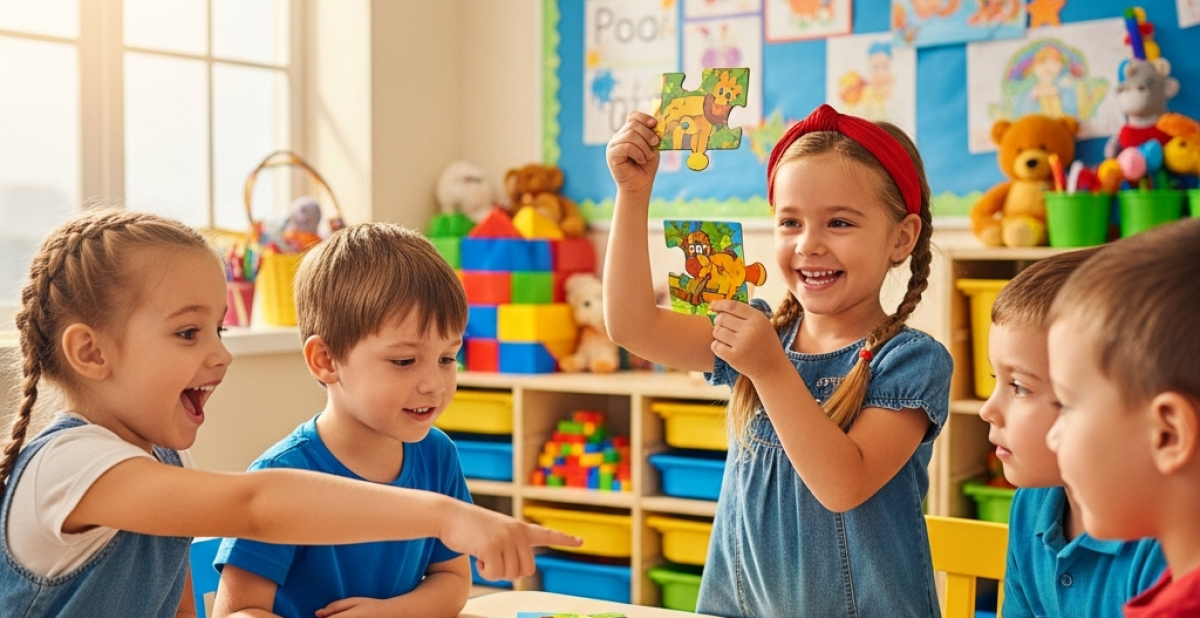
Working on a puzzle together is a calm and focused group activity. It helps children learn important social skills. Unlike board games, puzzles use cooperative play and not competition. Everyone works toward the same goal, which is good for teamwork.
Pick a large floor puzzle with a picture that the kids like. Spread the pieces out on the floor and let them look for matches together. This works well in small group settings.
Puzzle time helps with:
- Teamwork: Kids get to talk and work together to finish the puzzle.
- Problem-Solving: It helps them use critical thinking as they decide where each piece fits.
- Patience: Puzzles can take time, so they learn to be patient and keep trying.
It is a peaceful and positive way to grow your child’s cooperation and social skills.
10. Clean-Up Game
Turning clean-up time into a game is a smart and easy way to teach kids about working together and being responsible. When you do this, the task does not feel like work but becomes a fun part of your daily activities. Anyone can fit this step into their day.
Play a clean-up song that is fun and ask the kids to put away all their toys before the song stops. This makes cleaning up feel exciting and helps kids come together to finish it fast. It also makes the space feel safe and gives everyone a chance to help out.
The clean-up game helps with:
- Cooperation: Kids see that when they help each other, things get done faster.
- Responsibility: Kids learn to care for the space they use together.
- Emotional Regulation: It can turn a tough moment into a happy one by making the task feel good.
This daily activity gives a real sense of teamwork. It also helps kids feel good when they see what they can do together.
11. How Would You Feel?” Game
The “How Would You Feel?” game helps preschoolers talk about their own emotions through stories. In this game, kids hear different things that could happen. They say how they would feel in each case. This helps them understand what others may feel, too. Kids use the game to build good social skills and to get better at saying what is on their minds. It also helps them share feelings with others and talk about their own emotions in an easy way.
12. Greeting Practice Game
Practicing greetings is a simple part of building good communication skills. Saying “hello” and “goodbye” helps a lot in your everyday social interactions. This game makes a simple habit become a fun part of your daily routines.
Ask the children to greet each other in different ways. They can wave, give a high-five, or say “hello” and look at their friend. You can also help them ask questions like, “How are you today?”
This activity will help with:
- Verbal Communication: The kids get to use common, easy words that people say every day.
- Social Awareness: They learn why it is important to notice other people.
- Confidence: The more they practice, the easier it will be to greet people outside of games.
It is a great way to start and end the day.
13. Build Together (Blocks Game)
Building together with blocks is a classic way to do cooperative play. It is a good activity for teaching kids how to share, work in a group, and talk things out. The goal is for children to join to make one building or tower. To do this, they need to talk to each other and use their blocks together.
Give the group a box of blocks and set a simple task. You can say, “Let’s build the tallest tower we can!” This gives them a common goal and helps them act like a team. This is not like playing a card game where someone wins or loses. In this game, everyone wins when they work together and reach their goal.
This game builds:
- Cooperation: Kids learn how to share and add to what the others do.
- Communication: They talk to each other about how to build.
- Critical Thinking: They team up to solve problems, like how to keep the tower from falling.
You can also play this game with other things. Try using construction paper or empty boxes instead of blocks.
14. Freeze Dance
Freeze Dance is one of the most fun games you can use to teach emotional regulation and self-control. The game rules are easy. When the music is on, you dance. When it stops, you freeze right away. Kids have to listen well and also keep their bodies still.
To play, put on some happy music and let the kids move around and dance. When you turn off the music all of a sudden, they have to stand still right away. This game of go and stop helps them with impulse control.
Freeze Dance is good for:
- Emotional Control: The game teaches them to handle how excited they get and to stop when you tell them.
- Active Listening: Kids need to listen hard to the music.
- Body Awareness: The game lets them get better at moving and stopping their bodies.
If you want to calm things down, you can ask the kids to take deep breaths while they are frozen.
15. Buddy Walk
The Buddy Walk is an easy way to help kids build positive relationships and work well with others. In this activity, two kids hold hands or link arms and walk together. They have to move at the same time and help each other, so they learn how to be a team.
Put the kids in pairs. Tell them to walk from one side of the room to the other. They will see right away that they need to talk and plan their steps, or they might fall or lose track of each other. When they do this, they start to get good at relationship skills.
A Buddy Walk encourages:
- Cooperation: The kids have to work together if they want to move at the same speed.
- Communication: They will often talk to each other to make their steps match.
- Physical Awareness: It helps them understand their own space and body when moving. This is a simple activity for helping social interactions and emotional learning in a way that gets kids moving.
Core Social Skills Preschoolers Need to Learn
Are you ready for some fun? Social skills activities provide numerous benefits for preschoolers, making learning enjoyable. Here are some key advantages:
- Enhanced Communication: These activities help children develop vital communication skills, allowing them to express themselves effectively.
- Promotes Sharing and Cooperation: Engaging in games teaches preschoolers the importance of sharing and working together with peers.
- Safe Practice Environment: Kids can practice social skills in a secure space, building confidence while having fun.
These exciting activities ensure that every child can improve their social skills while enjoying their time with friends. Let’s explore some great choices!
Benefits of Social Skills Activities in Preschool
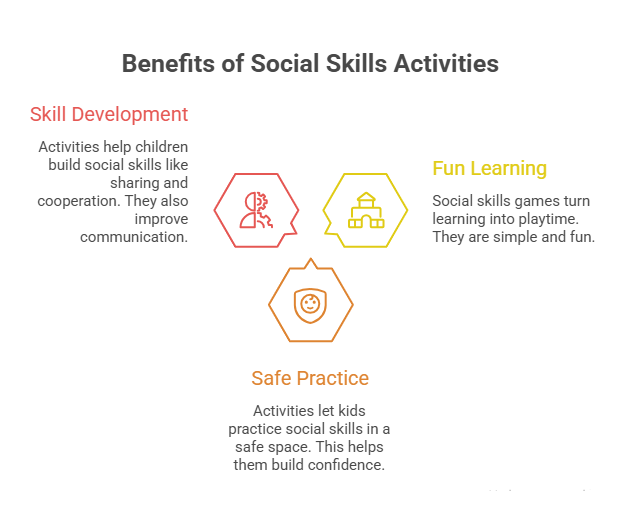
Are you ready for some fun? The right social skills games for kids can turn learning into playtime. These SEL activities are simple, fun, and help kids learn, so they are great for both parents and teachers. Some games teach sharing, and others work on communication skills for preschoolers. There is something for every child.
These fun activities let kids practice social skills in a safe space. It does not matter if you want activities to help with sharing in preschool or want to teach cooperation. The ideas below will help your child build their social skills, while having a good time. Let’s look at some great choices.
How to Use Social Skills Activities at Home and School
The key to building strong social skills is to practice daily. Incorporate social skills activities into routines at home and school, allowing kids to enhance their abilities in a natural setting. These activities don’t require extensive time; they can seamlessly blend with everyday tasks.
By making emotional learning a regular part of life, you help children apply relationship skills throughout their day. Opportunities to demonstrate kindness, collaboration, and empathy arise during playtime, meals, and bedtime. The following tips will provide practical ways to integrate these lessons into daily life, fostering better social interactions for preschoolers.
Real-Life Examples from USCA Academy
At top private schools, fostering early childhood social skills is seen as fundamental to long-term academic success. Many of the best international schools integrate preschool social emotional learning activities directly into their curriculum. For instance, USCA Academy provides a supportive learning environment where these skills are nurtured through daily practice in group activities.
Teachers use evidence-based strategies to encourage collaboration and empathy. By creating a classroom culture that values kindness and teamwork, they help students build a strong social and emotional foundation that supports future success in programs like the Ontario Secondary School Diploma (OSSD)
Here are some examples of how these activities are applied in a classroom setting:
| Activity | Social Skill Focus | Classroom Example |
|---|---|---|
| Morning Meeting | Communication & Belonging | Each child greets the class and shares one thing about their morning. |
| Collaborative Building | Teamwork & Sharing | Students work in small groups to build a city with blocks, sharing materials and ideas. |
| Story Time Discussion | Empathy & Perspective-Taking | After reading a story, students discuss how the characters felt and why. |
Common Mistakes Parents Should Avoid
When teaching social skills, avoid these common mistakes:
- Solving Problems for Your Child: Resist the urge to fix every issue. Encourage your child to resolve conflicts independently by asking, “What could you do differently next time?” This fosters resilience and learning.
- Dismissing Emotions: Avoid telling your child not to feel a certain way. Instead, acknowledge their feelings by saying, “I can see you’re upset.” This validates their emotions and encourages open communication.
- Forcing Eye Contact: Don’t pressure your child into making eye contact if they’re uncomfortable. Provide low-pressure opportunities to practice social skills at their own pace.
Conclusion
To sum up, helping young kids grow their social skills is very important. It helps them with how they act and talk to people as they get older. When kids do these fun activities, they learn skills like sharing, working as a team, and caring about how others feel. These activities also make learning more fun for them.
You can add games like “Pass the Ball” or “Compliment Circle” into your child’s day. Both parents and teachers can do this to help kids feel good about speaking up and working with others. The best way to help is to use these games every day and make them part of your daily routines. Parents planning long-term education pathways often explore options to study in Canada, where early social development is strongly integrated into school systems.
If you want more help or need ideas that fit your child, reach out to us. Let’s start building your child’s social skills today!
Frequently Asked Questions
1. How often should I do social skills activities with my preschooler?
Being consistent matters more than how much time you spend. Try to make emotional learning a part of your daily routines. Even a few minutes each day can help, especially during the preschool years. Doing short but focused activities at an early age can make a big difference and help build these skills.
2. Can these activities help shy children build confidence?
Yes, these activities give a safe place for shy kids to try talking with others. The games are easy and do not have a lot of pressure. When kids do well in them, they feel more sure of themselves. This also helps kids get better at controlling their feelings and teaches them how to have positive relationships. The kids learn new relationship skills in healthy ways.
3. What is the best age to start social skills activities?
It’s never too early to start. You can help emotional development in young children from an early age. There are simple things you can do that help emotional learning. This will give young children a start as they grow and begin to think about new things. Emotional learning helps kids with critical thinking as they get older.