
Key Highlights of conflict resolution activities for kids
- Explore 15 fun conflict resolution activities for kids designed to build essential life skills.
- Learn how role-playing and games can teach children valuable conflict resolution skills.
- Discover why developing social skills and emotional intelligence early on is so important.
- Find tips for parents and teachers to guide children through disagreements effectively.
- Understand how these activities improve communication skills and help kids manage their emotions.
- These exercises help foster positive relationships both in the classroom and at home.
Introduction
Disagreements are a normal part of life. Kids often meet them as they start to mix with others. Teaching children how to handle these moments in a good way through conflict resolution activities for kids is a crucial skill. Growing strong conflict resolution skills early helps kids with their emotional development. It also lets them build positive relationships with friends.
When we give kids the right ways to deal with conflict, they get the know-how to turn fights into ways to learn and grow. This makes every problem just another step in learning more about each other and about life. Many of these ideas are rooted in play-based learning activities for kids, which help children naturally develop social and emotional skills.
15 Fun & Effective Conflict Resolution Activities for Kids (2026)
Are you looking for engaging conflict resolution activities for kids? Games and hands-on tasks effectively teach young children how to navigate disagreements. By turning learning into play, children can grasp concepts like empathy and compromise, making these lessons easier to understand.
Role-playing different conflict scenarios and teamwork challenges offer safe spaces for kids to practice their conflict resolution skills. These activities not only help children see various perspectives but also encourage them to express their feelings and collaboratively solve problems. Here are some fun activities you can implement at home or in a classroom setting.
1. Role-Playing Scenarios for Practicing Conflict Resolution
Role play is an effective way to teach kids about conflict resolution, allowing them to understand different perspectives. Create simple, real-life scenarios that children might encounter, and let them act out the problems. After each role play, discuss what happened and talk about various ways to solve the conflict. This approach helps children, especially preschoolers, learn how to handle similar situations in the future. Encourage them to share how they felt in each role and how they might respond differently next time.
Here are some examples of conflict scenarios:
- Two friends both want to play with the same toy.
- One child accidentally knocks over another child’s building blocks.
- A group of kids can’t agree on what game to play during recess.
- Someone says something that hurts another person’s feelings.
2. The “I Feel” Statement Game
The “I Feel” statement game helps kids express their feelings positively and is one of the best conflict resolution techniques. By making communication clear and avoiding blame, kids learn to talk about emotions without causing trouble. To play, each child says a sentence beginning with “I feel…”, based on real or imagined scenarios. For example, “I feel sad when I’m left out of a game.” This activity improves emotional regulation and communication skills.
Here’s how to use these statements:
- “I feel [emotion]…”
- “…when [situation].”
- “I would like [solution].”
This simple game encourages healthy emotional expression and builds conflict resolution skills.
3. Feelings Bingo for Emotional Awareness
Feelings Bingo is a playful twist on the classic game that boosts emotional intelligence. Kids use Bingo cards with emotion words or pictures like “happy,” “angry,” “surprised,” or “confused.” Instead of numbers, situations are described—such as, “Mark the square that shows how you might feel if you won a prize.” Kids identify and mark the emotion that fits.
Why is this activity helpful?
- It helps children recognize and name a variety of emotions, which is essential for emotional learning.
- It connects real-life situations to feelings, helping kids understand their own and others’ emotions, key for conflict resolution.
4. The Balloon Game for Teamwork
The Balloon Game is a fun way to teach conflict resolution to elementary students. Each child writes down a problem they’ve seen, like “not sharing” or “name-calling,” on a piece of paper, puts it inside a balloon, and blows it up. Sitting in a circle, kids pass the balloons around while music plays. When the music stops, the child holding a balloon pops it, reads the conflict, and the group discusses possible solutions together.
This conflict resolution activity works because:
- It shows kids that conflicts happen to everyone, so they don’t feel alone.
- It encourages teamwork in solving problems together.
These steps make learning conflict resolution enjoyable and effective.
5. Compromise Challenge
Learning to meet in the middle is an important part of conflict resolution. The Compromise Challenge helps children practice this skill in a fun way. Pair children up and present them with a pretend problem where they want different things—for example, one wants to play with blocks, the other wants to draw. Set a timer and ask them to find a solution that makes both happy. They might take turns or combine ideas.
This challenge teaches children:
- The importance of listening to the other person’s wants and needs.
- How to find common ground and make a plan.
- That compromise can help both sides win.
6. Listening Circle to Build Communication Skills
A Listening Circle is a simple and effective way to teach kids active listening, which is important for good communication. Start by having children sit in a circle and give them a talking stick or another special object. Only the child holding the object can speak, while others listen quietly without interrupting. The speaker can share a thought, feeling, or talk about a disagreement. This activity helps kids learn to respect others’ words and wait their turn to speak.
The Listening Circle gives these benefits:
- It creates a safe space where every child feels heard and valued.
- It helps children listen better and understand different perspectives during a conflict.
7. Emotion Charades
Emotion Charades is a lively, fun game that helps kids build emotional intelligence and development. To play, write different emotions like “happy,” “sad,” “frustrated,” or “disappointed” on small papers and put them in a hat. Each child picks a paper and acts out the emotion without words, while others guess which emotion it is. After each round, have a brief discussion about times someone felt that way.
Why Emotion Charades is a great activity:
- It helps kids notice non-verbal hints and body language, building emotional intelligence.
- It encourages empathy and improves conflict resolution by understanding shared emotions.
8. Conflict Resolution Pictionary
You can turn a classic drawing game into a learning tool with Conflict Resolution Pictionary. Create cards with different conflict scenarios, such as “two friends arguing over a game” or “someone cutting in line.” Split the kids into two teams. One player picks a card and draws the conflict on a whiteboard or paper, while their team tries to guess what conflict is depicted. Once the team guesses correctly, they discuss possible solutions.
This game helps because:
- It combines creativity and problem-solving, making conflict resolution engaging and memorable.
- It encourages kids to find effective solutions and support positive choices, building social skills.
9. Collaborative Tower Building Activity
The Collaborative Tower Building Activity is a great conflict resolution exercise for kids. Put children into small groups and give them blocks, paper cups, or marshmallows with toothpicks. Their goal is to build the tallest tower, but every group member must agree before adding a piece. If someone disagrees, they pause and use conflict resolution strategies—talking things out until consensus is reached.
This activity helps kids:
- Learn the value of working together for the same goal.
- Find out how to hear and talk about different ideas in small groups.
- See that resolving conflicts respectfully helps everyone succeed.
10. Peace Table Discussions
A Peace Table is a special spot for kids to resolve conflicts quietly and respectfully. Place it in a classroom or at home, and set it up with useful items like a talking stick, “I feel” cards, or a timer. When two children have a disagreement, they sit at the Peace Table and take turns sharing their perspectives without interruption. After both share, they discuss solutions together. This activity empowers kids to handle their problems calmly and thoughtfully.
The Peace Table is good for:
- Teaching kids a step-by-step way to solve conflicts on their own and in a calm way.
- Helping children with emotional learning and to understand how others feel, so they grow to be more compassionate individuals.
11. Problem-Solving Worksheets (Printable)
Printable conflict resolution worksheets help kids navigate the problem-solving process in a structured way. These worksheets outline common conflicts and guide children to identify the problem, express their feelings, brainstorm possible solutions, and select the best option. The format encourages kids to organize their thoughts and consider outcomes before acting. This simple activity can be used at home and supports discussions about other strategies. Here’s an example worksheet layout:
| Step | Question to Consider |
|---|---|
| 1. The Problem | What happened? What is the conflict about? |
| 2. My Feelings | How does this situation make me feel? Why? |
| 3. Brainstorm Solutions | What are three things I could do to solve this? |
| 4. Choose the Best Solution | Which solution is fair for everyone? What will happen if I choose it? |
12. Team Puzzle Challenge
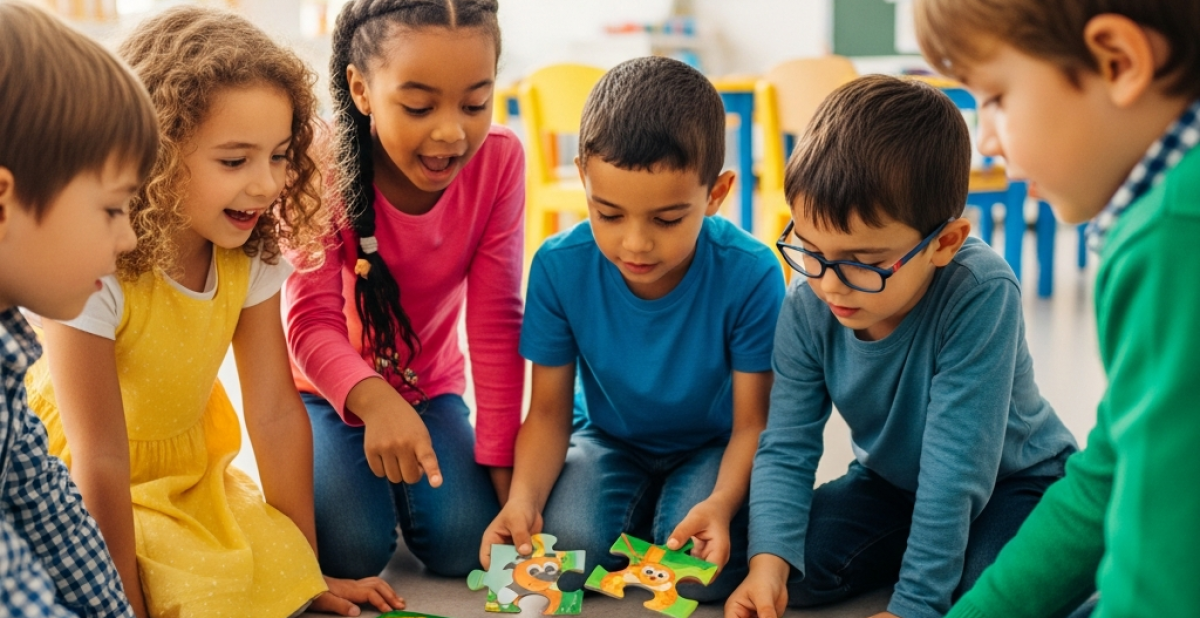
The Team Puzzle Challenge is a fun, hands-on game that builds teamwork and communication skills. Divide kids into small groups and give each group a jigsaw puzzle. Secretly mix up a few pieces so each group has pieces that belong to another group’s puzzle.
Kids will quickly realize they need to talk, negotiate, and swap pieces with other groups to complete their puzzles. This encourages important conflict resolution strategies as they work together.
This challenge helps with:
- Emotional development, as kids learn to manage frustration and cooperate.
- Teaching negotiation and cooperation skills in an enjoyable way.
13. Storytelling with Conflict Resolution Themes
Storytelling helps kids learn conflict resolution skills in a fun way. Choose books or make up stories showing people working through conflicts. Pause while reading to ask questions like, “How do you think that character feels?” or “What could they do instead?” This encourages kids to see problems from different perspectives and consider various solutions. Invite children to create their own stories about resolving conflicts, either by writing or acting them out.
Storytelling is a good learning opportunity because:
- It helps kids try out conflict scenarios and solutions in a safe place that is not real.
- It builds caring feelings and social skills by making kids think about what the characters feel and why they act.
These activities help children develop conflict resolution skills.
14. Kindness Chain Reaction
The Kindness Chain Reaction is a simple, enjoyable activity focused on building positive relationships and preventing conflicts. Give each child a colored paper strip; when they observe a kind act, they write it on their strip. Each strip gets added to a growing paper chain, which can be displayed in the classroom or at home for everyone to see. This visual reminder shows how small acts of kindness add up, encouraging kids to choose cooperation over conflict.
This activity is strong because:
- It helps and rewards good actions, creating a kinder, friendlier environment.
- It grows emotional intelligence, teaching kids how kindness builds strong relationships.
15. Group Mediation Role-Play
Group Mediation Role-Play helps kids learn to be neutral when others have a problem, showing an effective way for groups to manage conflict. Start with a pretend conflict, choosing two kids to play those not getting along, and a third as the mediator. The mediator’s role isn’t to fix the issue, but to help both sides talk, ask questions, and encourage understanding and teamwork to find solutions.
This role-play is good because:
- It teaches kids leadership and problem-solving skills.
- It helps kids learn empathy by seeing both sides.
- It shows conflict resolution strategies like mediation simply.
These activities build valuable social skills.
Understanding Conflict Resolution Activities for Kids
Conflict resolution activities for kids are not just fun games. They help teach young children important life skills. By doing these activities, kids learn in a safe place how to handle problems with others. Instead of adults just saying “be nice,” these games show children real steps to take and ways to solve problems when they argue.
Knowing the reason behind conflict resolution activities helps parents and teachers use them the right way. Teaching kids about essential conflict resolution means helping them listen to others, share what they feel, and find answers that are good for everyone. The next sections will talk about what this means for children and why these skills make a big difference.
What Does Conflict Resolution Mean for Children?
For children, conflict resolution means learning to handle disagreements respectfully and peacefully. It’s not about winning but finding solutions where everyone feels heard. Kids often face conflicts when sharing toys, choosing games, or dealing with hurt feelings. Early on, they can learn helpful strategies like taking turns, expressing emotions with words, listening, and apologizing.
Practicing these skills helps children manage anger and solve problems without fighting or yelling. Over time, they understand that disagreements are normal and can be handled positively. These experiences help kids build strong social skills and feel confident about working with others as they grow.
Why Are Conflict Resolution Skills Important in Early Childhood?
Building conflict resolution skills in early childhood is crucial for a child’s growth and emotional development. When kids learn to handle disagreements, they also learn to manage their feelings and understand others, which boosts their emotional intelligence and social skills.
These abilities help children make friends, work well in groups, and create a positive atmosphere at school and home. Teaching conflict resolution early prevents small issues from becoming bigger problems, allowing kids to enjoy learning together. In diverse environments like USCA Academy, these skills prepare students to connect with people from all backgrounds.
Understanding the importance of early childhood education helps parents see why these social skills should be taught early.
Real-Life Examples & Guidance for Parents and Teachers
Trying out conflict resolution strategies in real life is where kids really start to learn. They need to see how these skills work at school and at home. When they watch others use these tools, it helps them understand better and reminds them to use the skills on their own.
If you are a parent or a teacher, your help is important through all of this. You need to show how to handle problems in a healthy way. Give support when kids are having a hard time solving things on their own. The tips below can help you lead kids well and show you how conflict resolution can work outside the classroom.
How Kids Use Conflict Resolution Skills at School and Home
When kids learn conflict resolution skills, positive changes appear in how they handle conflicts. At school, a student might use an “I feel” statement instead of getting upset. At home, siblings might talk about who will pick the TV show instead of fighting. These skills help kids solve problems and understand others better. For example:
- At School: Two students both want to be first in line, so they agree to take turns each day.
- At Home: If a child breaks a sibling’s toy by accident, they say sorry and offer to help fix it.
- On the Playground: If kids cannot agree on game rules, they vote on a fair way to play.
Using conflict resolution skills daily strengthens friendships and family bonds.
Tips for Guiding Children During Conflicts
As an adult, act as a coach rather than a referee when kids face conflict. Instead of fixing the problem right away, guide the children so they can find their own solution. This builds their confidence in handling issues independently. Start by helping them calm down, as managing emotions is key; people solve problems better when they’re not upset. Encourage deep breaths, then let them use communication skills to share feelings and listen to each other.
Here are some tips to help:
- Stay Neutral: Listen to both sides and show understanding.
- Encourage “I Feel” Statements: Promote expressing feelings without blaming.
- Brainstorm Solutions Together: Guide them to find fair solutions.
Conclusion
To sum it up, it is important to teach kids good conflict resolution skills. These skills help children with both their feelings and the way they act around others. The conflict resolution activities for kids shared in this blog are fun and effective, helping them learn essential conflict resolution techniques. When they use these activities, they learn how to talk about their feelings and how to share information with others in a good way. They also practice working together. The main goal is to give your child the tools they need with conflict resolution so they do well both at home and in school. If you want to know more or need help, you can reach out anytime!
Programs like summer school programs in Mississauga also help students continue building communication and conflict resolution skills outside the regular academic year
Frequently Asked Questions
1. What are the best conflict resolution activities for different age groups of kids?
For preschool kids, start with easy activities. You can try role-playing and using “I Feel” statements. This helps them talk about how they feel.
Elementary students enjoy conflict resolution games where they can work together. Try games like Team Puzzle Challenge and Feelings Bingo. These let them solve problems as a group.
For older kids and teens, you can use activities that make them think more. Try group mediation role-play. This helps them learn new ways to talk and solve conflicts. Use these conflict resolution tips to help everyone learn how to get along better.
2. Can conflict resolution activities help build social emotional skills in children?
Yes, that’s right. Conflict resolution activities for kids help them build important social and emotional skills. These activities teach kids about empathy, how to handle their feelings, how to talk things out, and ways to solve problems. When children practice these conflict resolution strategies, they build stronger emotional intelligence. This gives them tools to have better social interactions and helps with their emotional development and emotional regulation.
3. Are there simple conflict resolution activities I can try at home with kids?
Yes, there are many conflict resolution activities that are good for home. You can use a “Peace Table” when there is a disagreement. Playing Emotion Charades together is another fun idea. Or, you can use conflict resolution worksheets for kids to help them talk about small problems. These activities help kids learn and practice skills at home where they feel safe and comfortable.