

Key Highlights of online summer school canada
- Online summer school in Canada offers a flexible way to earn high school credits.
- This form of online learning lets you study from anywhere with internet access.
- You can take high school courses to catch up, get ahead, or upgrade marks.
- The compressed summer session means you can complete a course in just a few weeks.
- Credits earned are typically recognized by high schools and universities across Canada.
- It’s a great option for students needing flexibility during their summer vacation.
Introduction
Welcome to the world of online summer school in Canada. This guide will help parents and students see how a summer school program can fit into your summer. If you want to earn extra credits, get a better grade, or make your school year easier, online summer school is a good choice. It gives you the flexibility you need.
We will look at what online summer school is, how it works, and how it can help you reach your goals. You can do all this without giving up your summer fun.
Online summer school ontario offers flexible learning options.
Online Summer School Canada: What Parents and Students Need to Know
For parents and students, online summer school in Canada offers a flexible digital classroom where high school courses can be taken during the summer. This program allows learners to study from home, a cottage, or while traveling, supporting an academic path that fits their lives. It’s ideal for those needing to catch up on credits, get ahead, or explore new subjects. To enroll, students must be in high school and meet any course prerequisites.
What It Is + Who It’s For
Online summer school in Canada lets students complete approved courses online during the summer break, without needing to attend a physical classroom. Lessons, assignments, and teacher support are provided through a secure website, making it a flexible option for busy schedules.
These programs are ideal for high school students who want to retake or get ahead in classes, as well as adult learners and international students aiming for an Ontario Secondary School Diploma (OSSD). A wide selection of courses is available, from core subjects like English, Math, and Science to electives such as Business, Technology, Arts, and various languages.
Quick Guide: Duration, Flexibility, Eligibility, and Credits
Understanding online summer school in Canada helps you plan ahead. Courses are condensed, usually held over 4–5 weeks in July and August, but offer flexible, self-paced learning so you can start anytime and study anywhere. Most programs welcome high school students, adult learners, homeschoolers, and international students, just be sure to check prerequisites for your chosen course. Credits earned are fully recognized toward your high school diploma (such as the OSSD in Ontario), making online summer school a convenient option to catch up, get ahead, or explore new subjects.
Here’s a quick summary:
| Feature | Details |
|---|---|
| Duration | Condensed 4-5 weeks (July-August) |
| Flexibility | Self-paced, asynchronous learning study anytime, anywhere |
| Eligibility | Open to high school students, adult learners, international students |
| Credits | Earn official high school credits for graduation (e.g., OSSD) |
How Online Summer School Works in Canada
In Canada, online summer school is straightforward and flexible. When you enroll in a virtual school, you gain access to an online learning platform with all necessary materials. Here’s how it works:
- Asynchronous Learning: You can study at your own pace without needing to attend live classes at specific times.
- 24/7 Access: Complete assignments whenever it suits you, whether it’s morning, day, or night.
- Support Available: Certified teachers are on hand to assist you via email or phone, ensuring you have the help you need.
This format makes online summer school an excellent choice for students in Canada.
Benefits of Online Summer School in Canada
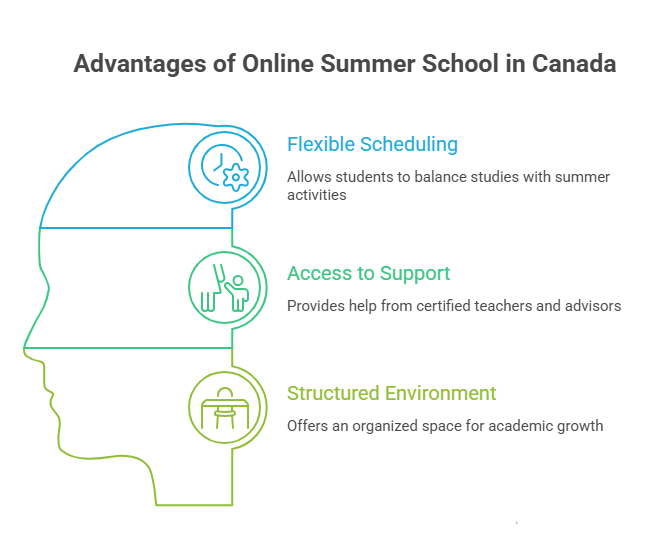
One significant benefit of online summer school in Canada is its flexibility, allowing students to balance studies with summer activities. Here are some key advantages:
- Flexible Scheduling: Learn at your own pace and choose when and where to study, accommodating family trips or jobs.
- Access to Support: Students receive help from certified teachers, tutors, and advisors, ensuring they are not alone in their learning.
- Structured Environment: Online summer school provides a supportive and organized space for students to catch up, get ahead, and prepare for the next school year.
Online vs In-Person Summer School: What’s Different?
When you look at summer school in Canada, you will see a big change between online summer school and the usual in-person option. In-person summer school means you have to be in a classroom at set times every day. This can cause timetable conflicts if you have a job, a family trip, or any other plans.
Online summer school gives you more freedom. You can study at your own pace. You can pick when and where to learn. This way, you won’t have to follow a set class time. This is good for the summer months. It lets you manage your own day. You can work through your lessons when it works for you. This helps you get ready for the next school year without having to travel to school. It also helps reduce stress.
Who Should Choose Online Summer School?
Online summer school is ideal for various learners, particularly those needing to make up credits to stay on track for graduation. It’s also beneficial for students wishing to advance or improve grades through an extra class, allowing for more flexibility in the regular school year. Adult learners aiming for a high school diploma can take advantage of its flexibility. Many programs allow enrollment in two courses simultaneously, but strong time management skills are essential.
Ideal Student Scenarios, Academic Boost, Credit Recovery, and More
Online summer school in Canada offers flexible options for many types of students. Whether you need a second chance or want to get ahead, online courses help you meet your academic goals. Here are common scenarios where online summer school is a good fit:
- Credit Recovery: Retake a failed class to stay on track for graduation.
- Academic Boost: Complete a course early, reducing your Grade 12 workload.
- Exploring Interests: Take unique courses, like business or technology, not available at your main school.
- Improving a Mark: Upgrade your grade in a course to strengthen your college or university application.
How Parents Can Help Students Succeed Online
Parents play a key role in helping kids succeed in online learning. In virtual school, students need self-discipline, and your support at home matters. Set up a dedicated workspace away from distractions, and help your child create a weekly schedule for classes, homework, and study time to prevent procrastination.
Here are some ways parents can help:
- Help make a routine each day or week for schoolwork.
- Check how they are doing many times and ask if they want any help.
- Tell them to ask their online teachers when they have questions.
- Be happy with them for every small win. This keeps them wanting to do better.
How Credits Work in Ontario Online Summer School
In Ontario, the online summer school credit system mirrors the rules of all high schools in the province. Upon completing a course at an approved online summer school, you earn OSSD credits, equivalent to those from public or Catholic high schools. The Ontario Ministry of Education ensures these online schools comply with provincial regulations. After passing your course, the online school sends your final mark to your main high school, which adds it to your transcript for college and university considerations.
Ontario High School Credit System and Graduation Pathways
The Ontario Secondary School Diploma (OSSD) requires students to complete 30 credits, 18 compulsory and 12 optional. Online summer school credits count towards the OSSD, allowing students to meet graduation requirements more flexibly. Here’s how credits work in online summer school:
- Credits earned online through accredited summer schools count toward the 30 needed for the OSSD, including compulsory courses like Grade 11 English.
- Online summer school helps students catch up on missed credits, finish courses early, or get ahead by earning extra credits.
- This flexibility ensures students stay on track for graduation and can complete their OSSD on time.
Ministry-Recognized Courses and University Admissions
Yes, summer school credits from online courses are accepted by Canadian universities if they are from a Ministry-recognized school in Ontario. Be sure the school has a BSID number and follows the Ontario curriculum. Here’s what you need to know:
- Credits and final grades from Ministry-inspected online summer schools count the same as those from day school.
- Universities consider all your grades, including summer courses, especially for prerequisite subjects needed for specific programs.
- You can use summer to complete key courses (e.g., Grade 12 Physics or Calculus) online, which can strengthen your university application.
How to Choose the Right Online Summer School in Canada
To choose the best online summer school in Canada, consider the following:
- Accreditation: Ensure the school is accredited and approved to grant credits in your province, such as by the Ministry of Education in Ontario.
- Course Offerings: Check if the school provides the specific subjects you need for your studies.
- Flexibility: Look for programs that offer self-paced, asynchronous models to allow you to work on your schedule.
- Support Services: Evaluate the availability of certified teachers and guidance counselors to assist you.
Schools like USCA Academy offer robust programs with good support for students.
Common Mistakes to Avoid with Online Summer School
One common mistake students make with online summer school in Ontario is underestimating the workload. Courses are condensed into a few weeks, leading to a fast-paced environment. Poor time management can easily result in falling behind, as “self-paced” does not mean there are no deadlines.
Additionally, many students procrastinate and miss registration deadlines. Popular classes fill up quickly, and some schools impose strict cutoffs, meaning latecomers lose their chance. Lastly, it’s crucial to verify that you meet the necessary prerequisites; lacking them can delay your enrollment in classes. Avoiding these pitfalls will help ensure a smoother summer school experience.
Time Management Challenges and Solutions
The freedom of self-paced online summer school in Canada is helpful, but it can make time management harder. Without a teacher’s schedule, it’s easy to put things off, especially in the summer. To succeed, you need to plan ahead and set a routine.
Here are some ways to help you keep track of your time:
- Use a Calendar: Pick certain hours each day to study and mark them on your calendar.
- Break It Down: Split big projects into small, manageable steps.
- Set Personal Deadlines: Make smaller deadlines before the final one.
- Minimize Distractions: Turn off your phone and find a quiet spot to study.
Understanding Deadlines and Course Policies
Many private online schools in Canada offer flexible enrollment, but it’s crucial to know all deadlines and course rules upfront. Public school boards are often stricter, with firm registration periods you cannot miss. Always review the “Important Dates” on your school’s website to avoid surprises.
Understanding course policies is essential. They explain homework submission, withdrawal procedures, and how your final grade is determined. Missing a withdrawal deadline can result in a poor grade on your transcript.
Before starting, make sure you know:
- The final course completion deadline.
- Key submission deadlines for major assignments or exams.
- The policy and deadline for withdrawing from the course.
- How your final grade is calculated.
Conclusion
To sum up, online summer school Canada gives students a flexible and easy way to keep up with their classes. This can help if they need to make up credits or want to move ahead. There are many choices, such as planned programs that fit different needs. It is important for both students and parents to make smart choices about their learning. Knowing about credit systems in Ontario and how online courses fit with graduation plans can help students do well. Keep in mind that good habits and open talk with others can make online learning better. Students can find online summer programs that are organized and stay on track with their learning. For more help, reach out and let us guide you through the online summer school options!
Frequently Asked Questions
1. Are online summer school credits recognized by regular high schools in Canada?
Yes, you sure can. If your online summer school is approved by the Ministry of Education in your province, like in Ontario, you get full high school credits and OSSD credits. The online school will send your final mark to your own school. Then, your school will add it to your official transcript.
2. Can international students enroll in online summer school in Canada?
Yes, international students can join online summer school. Online learning lets you get Canadian high school credits no matter where you are in the world. The steps to join are often simple. This is a good way for students to get ready if they want to study high school in Canada during the regular school year.
3. How much does online summer school cost in Canada?
The cost of summer school can be different. If you go to a publicly funded online summer school, local students might not need to pay. But private schools do charge for each summer school course. Tuition can be a few hundred dollars, or it can be over one thousand for each course. That is why you should talk to each provider before the registration deadline to know what you will need to pay.