
Key Highlights of What Are Dual Credit Courses
Here is a quick look at what we’ll cover in this guide:
- Dual credit courses let high school students get both high school and college credit at the same time.
- These programs give you a head start on college and help you save money on your college costs later.
- To get into dual credit programs, your grades and your high school counselor’s approval are often needed.
- In Canada, school districts work with colleges and the Ministry of Education to manage dual credit opportunities.
- Dual credit courses are harder than normal high school classes. They help you get ready for college work.
- Joining these programs helps your college application process because it shows you are ready for higher education.
Introduction
Are you a high school student or a parent who wants to learn more about getting ahead in college? You can earn college credit while you are still working on your high school diploma. Dual credit courses make this possible, allowing you to explore “What Are Dual Credit Courses” firsthand. These classes let high school students try college-level work. You can save money, finish faster, and stand out in the future. This guide will show you what you need to know about dual credit and how it can help you do well.
What Are Dual Credit Courses?
Dual credit courses are part of a dual enrollment program. In these, you take a college course and get credit for both high school and college at the same time. It is like doing two things at once. You can finish a high school diploma requirement and earn college credits, too.
These programs help you move into higher education without too much stress. You may be able to take the college course at your own high school, at a college campus, or by going online. Your high school counselor can help you find which dual credit options are the right fit for you. Let’s see how dual credit programs work in Canada and what makes them different from your other classes.
Understanding How Dual Credit Programs Work in Canada
In Canada, dual credit programs are partnerships between school districts, local colleges or universities, and the provincial Ministry of Education. These programs help high school students explore post-secondary education and careers early by earning credits that count toward both their Ontario Secondary School Diploma (OSSD) and a college or university credential. Students might attend classes on a college campus, at their high school, or online, and can gain hands-on skills while still in secondary school.
Key points about dual credit in Canada:
- Academic and Workforce Options: Choose general courses or job training, supporting programs like SHSM or OYAP.
- Location Flexibility: Classes at high school, college, or online.
- Provincial Oversight: Ministry ensures credits are valid and transferable.
Key Differences Between Dual Credit and Other High School Courses
While dual credit courses are taken during high school, they differ from regular high school classes mainly in rigor and credit earned. Dual credit courses use a college curriculum, meaning higher expectations and workload. Unlike regular classes, which give only high school credit, dual credit courses provide both high school and college credit. Unlike AP courses, you don’t need to pass an exam for college credit passing the course is enough.
Here is a simple breakdown of the main differences:
| Feature | Regular High School Course | Dual Credit Course |
|---|---|---|
| Credit Earned | High school credit only | Both high school and college credit |
| Curriculum | High school level | College level |
| Instructor | High school teacher | Often a college instructor |
| Final Goal | Fulfills high school graduation requirements | Fulfills graduation requirements and provides a head start on a college degree |
| Workload | Standard high school workload | Higher workload with more independent study |
Eligibility Requirements for Dual Credit Programs
So, who can sign up for dual credit courses? Eligibility varies by school district and the partnering college, but most schools follow similar guidelines. They assess your readiness for college-level work by reviewing your performance in high school classes, maturity, and motivation.
Your high school counselor is the best resource for understanding these requirements and can confirm if you meet the program’s criteria. They will guide you through the application process. Additionally, a dual credit teacher or program coordinator can provide insights on succeeding in a dual credit course. Now, let’s discuss the application process and next steps.
Who Can Enroll in Dual Credit Courses?
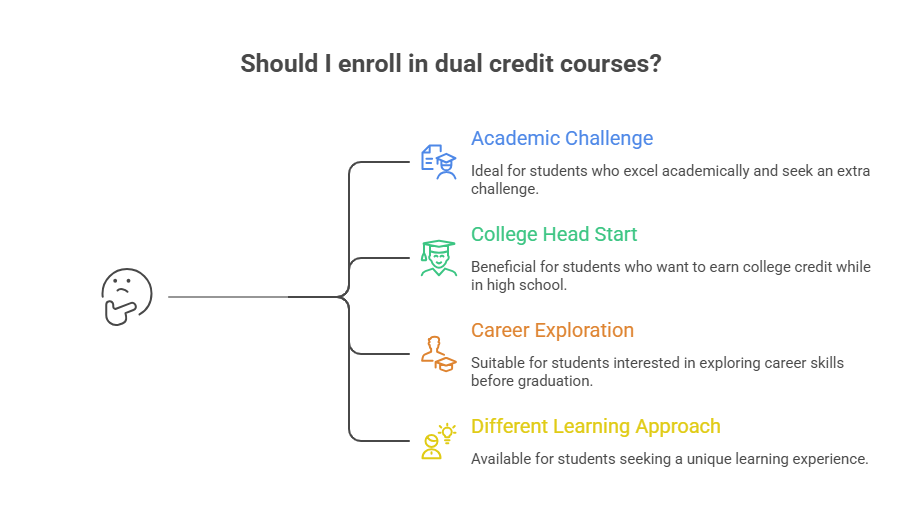
- Dual credit programs are open to students in the last years of high school, typically grades 11 and 12.
- These courses are ideal for students who perform well academically and want an extra challenge or a head start on college credit.
- Dual credit is also available for students seeking a different learning approach or wishing to explore career skills before graduation.
- Whether you attend a public, private, or homeschool, dual credit options may exist in your area check with your local school board.
- At USCA Academy, students are well-prepared for dual credit due to the school’s focus on academic excellence and independence.
Common Application Steps and Requirements
Getting started with dual credit involves a few important steps. First, talk to your high school counselor to learn about your options and see if dual credit is a good fit for you. They’ll guide you through the college application process and any required placement tests. Most programs require a minimum GPA (usually 2.5–3.0) or qualifying scores on tests like the SAT or ACT. You’ll also need a parent or guardian’s permission to participate.
Here are the common steps in the application process:
- Meet with Your High School Counselor
- Complete the College Application
- Take Placement Tests (If Required)
- Register for Classes
Benefits of Taking Dual Credit Courses
Taking dual credit courses in high school can give you some great benefits. The biggest reason to do it is to get a head start on your college degree. This can help you save both time and money later. When you earn college credits while in high school, you might lower your college costs by a lot.
But it’s not just about saving money. These programs are a great way to be ready for college. You gain important skills like critical thinking and time management, and you learn to be disciplined. These are all things you need to do well in higher education. This work also looks good when you apply to college. Let’s see more about the academic advantages and what you get for college admissions.
Academic Advantages for High School Students
The academic benefits of dual credit courses are significant for high school students. By taking these classes, you experience college-level work while still having high school support, which builds your confidence and prepares you for future challenges. You’ll develop stronger time management and study skills, making the college transition less intimidating. Completing dual credit courses shows you can handle rigorous material and higher expectations.
Here are some key academic advantages:
- Experience College-Level Rigor: Get a feel for college coursework and expectations.
- Earn College Credit Early: Gain credits that count for both high school and college.
- Explore Your Interests: Try subjects not offered at your high school.
How Dual Credit Helps with College and University Admission
- Dual credit programs in high school show college admission teams that you are willing to challenge yourself and are prepared for the demands of higher education.
- Taking college classes while in high school helps you stand out from other applicants, demonstrating true college readiness beyond just grades and test scores, which can be especially helpful in competitive admissions.
- Earning college credits early can lighten your first-year course load, making your transition to college smoother and potentially reducing college costs by allowing you to finish your degree faster.
Long-Term Outcomes and Career Pathways from Dual Credit Participation
The impact of dual credit extends beyond high school, paving the way for future career success. Here are some key outcomes:
- Skilled Trades Opportunities: Programs like the Ontario Youth Apprenticeship Program (OYAP) allow early work toward a certificate of apprenticeship.
- Specialist High Skills Major (SHSM): Provides both classroom learning and hands-on experience in specific job areas.
- Advantage for Higher Education: Students can earn enough credits to enter college as sophomores, saving time and tuition costs.
- Pathway to Advanced Degrees: An early start can facilitate double majors or pursuit of master’s degrees, enhancing career prospects.
Conclusion
To sum up, dual credit courses are a great way for high school students to get a head start in college. When you know the eligibility requirements and the benefits, you and your family can make choices that can help with your future in school and work. What are dual credit courses? They allow you to earn college credits while still in high school, which can be beneficial when you want to get into a good university. The benefits are clear.
If you want to see how dual credit courses can work for you or your child, reach out and ask. Taking this first step can lead to something good for your learning and future.
Frequently Asked Questions
1. Do Dual Credit Courses Cost Extra or Are They Free?
The cost for dual credit programs can be different. In a lot of cases, the school district or your province will pay for your tuition. This means the dual credit courses could be free or come at a low price for you. But you might still need to buy your textbooks or other things for the class. Some dual credit options can have extra fees. Even then, there is sometimes financial aid that can help.
2. Are Dual Credit Credits Accepted by All Colleges and Universities?
Many colleges and universities take dual credit, but it is not promised. It can depend on the college and also on the class. Core classes like English and math often transfer better. You should always talk to the admissions office at the schools you are looking at to find out about their rules for transfer.
3. What Subjects Are Available through Dual Credit Courses?
Dual credit courses have a lot of subjects that you can choose from. They usually give you the main classes like English, math, history, and science. You will also find some college-level starter classes in areas like psychology, sociology, and economics. Many programs add in classes that can help get you ready for work, like those in technology or health sciences. These dual credit courses make it easy to start learning what you need for both college and a job.