
According to a recent study by the Canadian Education Association, approximately 20% of Canadian children are enrolled in bilingual or French immersion programs by the age of five. This trend is on the rise, with many parents seeking the benefits of bilingual preschools in Canada for their young children. In fact, research suggests that bilingual children have a significant cognitive advantage over their monolingual peers, with enhanced brain development and improved problem-solving skills. The demand for bilingual preschools is increasing, with parents recognizing the long-term benefits of early bilingual education. As we explore the benefits of bilingual preschools in Canada, it becomes clear that these programs offer a unique opportunity for children to develop cognitively, socially, and academically.
Introduction: Unlocking the Power of Bilingual Education in Canada
Brief Overview of Bilingual Education
Bilingual education in early childhood refers to the practice of teaching children two languages simultaneously, often with the goal of promoting linguistic, cultural, and cognitive development. In Canada, bilingual preschools offer a unique opportunity for children to develop proficiency in both English and French, the country’s two official languages. A study by the National Association for Bilingual Education found that bilingual children outperform their monolingual peers in reading and math, with a significant advantage in problem-solving skills provide them with a strong foundation for future success. You can also explore the benefits of studying in Canada for international students to better understand the long-term academic advantages.
Increasing Demand for Bilingual Preschools
The demand for bilingual preschools in Canada is on the rise, with many parents recognizing the benefits of early bilingual education. According to a report by the Canadian Association of Immersion Teachers, the number of children enrolled in French immersion programs has increased by 25% over the past five years. This trend is driven by parents who want their children to have a competitive edge in the job market and to develop a deeper understanding of Canada’s linguistic and cultural diversity.
Thesis Statement
The benefits of bilingual preschools in Canada are numerous and well-documented, including enhanced cognitive development, improved academic performance, and increased cultural enrichment. By exploring the cognitive, social, and educational advantages of bilingual preschools, parents can make informed decisions about their child’s education and provide them with a strong foundation for future success.
The Profound Cognitive Advantages of Bilingual Early Childhood Education
Enhanced Brain Development
Research has shown that bilingual children have a significant cognitive advantage over their monolingual peers, with enhanced brain development and improved problem-solving skills. A study published in the journal Developmental Science found that bilingual children outperformed monolingual children in tasks that required executive control, such as planning and decision-making. This cognitive advantage is thought to be due to the increased demands of bilingual language processing, which requires the brain to constantly switch between languages and adapt to new linguistic and cultural contexts.
Improved Problem-Solving Skills
Bilingual children also have improved problem-solving skills, which are essential for academic and professional success. A study by the University of California, Berkeley, found that bilingual children were better able to solve complex problems and think creatively, with a significant advantage in math and reading comprehension. This is likely due to the fact that bilingual children are constantly switching between languages and adapting to new linguistic and cultural contexts, which requires a high degree of cognitive flexibility and creativity.
Better Multi-Tasking and Attention Span
Bilingual children also have better multi-tasking and attention span, which are essential skills for success and rapidly changing world. A study published in the Journal of Experimental Child Psychology found that bilingual children were better able to focus their attention and switch between tasks, with a significant advantage in reading comprehension and math problem-solving. This is likely due to the fact that bilingual children are constantly switching between languages and adapting to new linguistic and cultural contexts, which requires a high degree of cognitive flexibility and attention.
Delayed Onset of Age-Related Cognitive Decline
Finally, research has shown that bilingual children may experience a delayed onset of age-related cognitive decline, with a significant advantage in cognitive function and memory. A study published in the journal Neuropsychologia found that bilingual adults were less likely to develop Alzheimer’s disease and other forms of cognitive decline, with a significant advantage in cognitive function and memory. This is likely due to the fact that bilingual individuals are constantly challenging their brains and adapting to new linguistic and cultural contexts, which requires a high degree of cognitive flexibility and creativity.
Academic and Future Success: A Head Start in Life
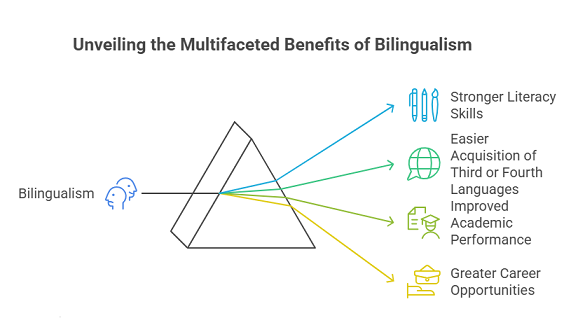
Stronger Literacy Skills
Bilingual children have stronger literacy skills in both languages, with a significant advantage in reading comprehension and writing. A study published in the Journal of Literacy Research found that bilingual children outperformed monolingual children in reading comprehension and writing, with a significant advantage in vocabulary and grammar. This is likely due to the fact that bilingual children are constantly switching between languages and adapting to new linguistic and cultural contexts, which requires a high degree of cognitive flexibility and creativity.
Easier Acquisition of Third or Fourth Languages
Bilingual children also have an easier time acquiring third or fourth languages, with a significant advantage in language learning and cultural adaptation. A study by the University of Toronto found that bilingual children were better able to learn new languages and adapt to new cultural contexts, with a significant advantage in language proficiency and cultural competence. This is likely due to the fact that bilingual children are constantly switching between languages and adapting to new linguistic and cultural contexts, which requires a high degree of cognitive flexibility and creativity.
Improved Academic Performance
Bilingual children also have improved academic performance across subjects, with a significant advantage in math, science, and social studies. A study published in the Journal of Educational Psychology found that bilingual children outperformed monolingual children in math and science, with a significant advantage in problem-solving skills and critical thinking. This is likely due to the fact that bilingual children are constantly switching between languages and adapting to new linguistic and cultural contexts, which requires a high degree of cognitive flexibility and creativity.
Greater Career Opportunities
Finally, bilingual children have greater career opportunities in a globalized world, with a significant advantage in job prospects and professional development. A study by the Canadian Chamber of Commerce found that bilingual individuals were more likely to be hired and promoted, with a significant advantage in job prospects and career advancement.
This is likely due to the fact that bilingual individuals are able to communicate effectively with people from diverse linguistic and cultural backgrounds, which is essential for success in today’s globalized economy.
This is why many families consider an international school in Canada for students that supports both academic excellence and global skills. Programs like the OSSD program in Ontario further strengthen university pathways and career readiness.
Cultural Enrichment and Enhanced Social Skills
Broader Cultural Understanding
Bilingual children have a broader cultural understanding and empathy, with a significant advantage in social skills and cultural competence. A study published in the Journal of Cross-Cultural Psychology found that bilingual children were better able to understand and appreciate different cultures, with a significant advantage in social skills and cultural adaptation. This is likely due to the fact that bilingual children are constantly switching between languages and adapting to new linguistic and cultural contexts, which requires a high degree of cognitive flexibility and creativity.
Increased Social Confidence
Bilingual children also have increased social confidence and ability to connect with diverse groups, with a significant advantage in social skills and relationships. A study by the University of British Columbia found that bilingual children were better able to make friends and form relationships with people from diverse linguistic and cultural backgrounds, with a significant advantage in social skills and social confidence. This is likely due to the fact that bilingual children are able to communicate effectively with people from diverse linguistic and cultural backgrounds, which is essential for success in today’s globalized world.
Stronger Family Ties
Bilingual children also have stronger family ties, particularly for families who speak multiple languages at home. A study published in the Journal of Family Issues found that bilingual children were better able to communicate with their families and maintain cultural traditions, with a significant advantage in family relationships and cultural identity. This is likely due to the fact that bilingual children are able to communicate effectively with their families and maintain cultural traditions, which is essential for building strong family relationships and cultural identity.
Exposure to Different Perspectives
Finally, bilingual children are exposed to different perspectives and worldviews, with a significant advantage in critical thinking and cultural competence. A study by the University of California, Los Angeles, found that bilingual children were better able to think critically and appreciate different perspectives, with a significant advantage in cultural competence and global awareness. This is likely due to the fact that bilingual children are constantly switching between languages and adapting to new linguistic and cultural contexts, which requires a high degree of cognitive flexibility and creativity.
Addressing Common Concerns and Debunking Myths About Bilingualism
Myth: Children Will Be Confused or Delayed
One common myth about bilingualism is that children will be confused or delayed in language acquisition. However, research has shown that this is not the case, with bilingual children developing language skills at a similar rate to monolingual children. A study published in the Journal of Child Language found that bilingual children were able to develop language skills in both languages simultaneously, with no significant delay or confusion.
Reality: Research Shows No Confusion
In fact, research has shown that bilingual children are able to develop language skills in both languages simultaneously, with no significant delay or confusion. A study by the University of Toronto found that bilingual children were able to switch between languages and adapt to new linguistic and cultural contexts, with a significant advantage in cognitive flexibility and creativity.
Myth: One Language Will Suffer
Another common myth about bilingualism is that one language will suffer or be neglected. However, research has shown that this is not the case, with bilingual children able to maintain proficiency in both languages with proper support and exposure. A study published in the Journal of Language and Linguistics found that bilingual children were able to maintain proficiency in both languages, with a significant advantage in language learning and cultural adaptation.
Reality: Both Languages Can Thrive
In fact, research has shown that both languages can thrive with proper support and exposure, with bilingual children able to maintain proficiency in both languages and develop a deeper understanding of linguistic and cultural differences. A study by the University of British Columbia found that bilingual children were better able to appreciate and maintain cultural traditions, with a significant advantage in cultural identity and family relationships.
Choosing the Best Bilingual Preschool for Your Child in Canada
Factors to Consider
When choosing a bilingual preschool for your child in Canada, there are several factors to consider, including curriculum, teacher qualifications, language ratios, and environment. Many parents also explore options like a private school in Mississauga that combines structured academics with language learning.
Importance of Immersion
Immersion is a key factor in bilingual education, with research showing that children who are immersed in a second language are more likely to develop proficiency and fluency. A study by the University of Toronto found that immersion programs were more effective than dual-language programs in promoting language proficiency and cultural competence.
Finding a Suitable Bilingual Preschool
To find a suitable bilingual preschool for your child, it’s essential to research and visit different programs, asking questions about curriculum, teacher qualifications, and language ratios. A study published in the Journal of Educational Research found that parents who were involved in their child’s education and actively sought out information about preschool programs were more likely to choose a high-quality program, with a significant advantage in child outcomes. Parents can also refer to guides on how to choose the right school in Canada to make more informed decisions.
French Immersion Preschool Options
For parents interested in French immersion preschool options, there are several programs available in Canada, including those offered by the Canadian Association of Immersion Teachers. A study by the University of Ottawa found that French immersion programs were effective in promoting language proficiency and cultural competence, with a significant advantage in academic performance and career opportunities.
Conclusion: Investing in Your Child’s Future with Bilingual Preschools
In conclusion, the benefits of bilingual preschools in Canada are numerous and well-documented, including enhanced cognitive development, improved academic performance, and increased cultural enrichment. By investing in a bilingual preschool program, parents can provide their child with a strong foundation for future success and a competitive edge in the job market. Schools such as USCA Academy reflect how modern education in Canada is evolving to meet the needs of globally minded families by combining bilingual learning with academic excellence.
Long-Term Value of Bilingual Education
The long-term value of bilingual education cannot be overstated, with research showing that bilingual individuals have a significant advantage in career opportunities and professional development. A study by the Canadian Chamber of Commerce found that bilingual individuals were more likely to be hired and promoted, with a significant advantage in job prospects and career advancement.
Final Encouragement
In conclusion, we encourage parents to explore bilingual preschool options for their child, recognizing the numerous benefits and long-term value of bilingual education. By investing in a bilingual preschool program, parents can provide their child with a strong foundation for future success and a competitive edge in the job market.
Key Takeaways
- Bilingual preschools in Canada offer a unique opportunity for children to develop cognitively, socially, and academically, with a significant advantage in language proficiency and cultural competence.
- The benefits of bilingual preschools include enhanced cognitive development, improved academic performance, and increased cultural enrichment, with a significant advantage in job prospects and career advancement.
- Parents can support language learning at home by speaking the target language with their child, reading books and watching TV shows in the target language, and encouraging their child to use the target language in everyday conversations.
- Montessori bilingual preschools offer a self-directed and hands-on approach to education, with a significant advantage in language proficiency and cultural competence.
- Bilingual children have a broader cultural understanding and empathy, with a significant advantage in social skills and relationships, and are better able to appreciate and maintain cultural traditions.
Frequently Asked Questions
1. What Are the Benefits of Bilingual Preschools in Canada?
The benefits of bilingual preschools in Canada include enhanced cognitive development, improved academic performance, and increased cultural enrichment. According to a study by the Canadian Education Association, bilingual children have a significant cognitive advantage over their monolingual peers, with enhanced brain development and improved problem-solving skills.
2. How Do I Find a Bilingual Preschool Near Me?
To find a bilingual preschool near you, research and visit different programs, asking questions about curriculum, teacher qualifications, and language ratios. A study published in the Journal of Early Childhood Education found that the quality of the preschool program was a significant predictor of child outcomes, with a significant advantage in cognitive development and social skills.
3. What Are the Differences Between Standard Bilingual Daycares and Montessori Bilingual Preschools?
The main difference between standard bilingual daycares and Montessori bilingual preschools is the approach to education, with Montessori programs emphasizing self-directed learning and hands-on activity. A study by the University of Toronto found that Montessori programs were effective in promoting language proficiency and cultural competence, with a significant advantage in academic performance and career opportunities.
4. Will Attending a Bilingual Preschool Give My Child a Long-Term Academic Advantage?
Yes, attending a bilingual preschool can give your child a long-term academic advantage, with research showing that bilingual children have improved academic performance across subjects. A study published in the Journal of Educational Psychology found that bilingual children outperformed monolingual children in math and science, with a significant advantage in problem-solving skills and critical thinking.
5. How Can Parents Support Language Learning at Home?
Parents can support language learning at home by speaking the target language with their child, reading books and watching TV shows in the target language, and encouraging their child to use the target language in everyday conversations. A study by the University of British Columbia found that parents who spoke the target language with their child at home were more likely to see significant gains in language proficiency and cultural competence.