


Key Highlights of Cost of Living for International Students in Mississauga
Here’s a quick view of what the cost of living looks like for an international student staying in Mississauga in 2026:
- The average monthly cost for you, if you do not count tuition, will be between CAD 1,800 and CAD 2,500.
- The biggest cost is for accommodation. If you get an off-campus shared room, you will spend between CAD 700 and CAD 1,600 every month.
- In Mississauga, student living expenses are usually lower than in Toronto. This is true mostly for rent.
- Public transportation is not too costly. You can get a MiWay student monthly pass for about CAD 131.
- If you have a smart budget, you can make your international student living expenses in Canada go down. Cooking at home and using student discounts help a lot.
These are the main points to know about cost of living, living expenses, getting a monthly pass for public transportation, and what the average monthly cost could be for an international student in Mississauga or nearby Toronto.
Introduction
Welcome to Mississauga! Choosing to study here is an exciting thing to do. It is important to plan your money and know your costs before you arrive. When you understand the cost of living for international students in Mississauga, you can make a good budget. This will help you focus on your school work and enjoy your time in Canada.
This guide will help you by giving the average cost of living for international students in Mississauga. You will find clear numbers for everything, like rent and food shopping. The average cost is based on the latest updates for 2026. It is made so an international student in Mississauga, Canada can feel sure about their spending and be ready for what is ahead.
Understanding the Cost of Living for International Students in Mississauga (2026)
Knowing what you will spend is the first step to planning your budget. The cost of living in Mississauga depends on your way of life, where you live, and how you spend your money. Mississauga is less costly than some other major cities. Still, you need a clear idea of where your money goes each month.
Mississauga student living expenses are made up of your housing, food, how you get around, and your personal needs. By looking at each of these costs, you can get ready and not get caught off guard by any extra costs. Here is a look at the things that make up your budget and about how much you might spend each month.
What Makes Up Student Living Expenses in Mississauga?
When you figure out your overall cost, it is good to sort your living expenses into groups. Your budget mostly has two parts. One is your fixed costs, like accommodation or rent, and the other is your variable costs, such as food and things you do for fun. You can control how much you spend on the second group more than the first.
Thinking in these ways helps you see where you can save money. For instance, while you cannot usually change your rent, you can eat at home more often to bring your food costs down.
The main living expenses you need to plan for are:
- Accommodation (rent)
- Food and groceries
- Utilities (internet, phone, heating)
- Transportation
- Miscellaneous costs (entertainment, shopping, personal items)
How Much Does a Student Need Each Month in 2026?
So, what is a good monthly budget for an international student in Mississauga in 2026? You should plan for an average monthly cost of about CAD 1,800 to CAD 2,500, not including tuition fees. Your actual expenses will depend on your lifestyle sharing an apartment, cooking at home, and using public transit can keep costs lower, while renting a private place and eating out can increase your spending.
It’s wise to budget on the higher end at first. This gives you a cushion as you adjust to living in Mississauga and helps you handle any unexpected expenses as you settle in.
Accommodation Options and Costs for International Students
Your biggest monthly cost will be where you live. Mississauga accommodation cost changes a lot. It depends if you stay on-campus, in a shared place, or by yourself. The average rent in Mississauga is cheaper than in Toronto. This is a big plus for any international student.
You need to know your choices before you pick a place. This helps you find something good for both your money and how you want to live. Here, we look at the different places to stay and show what you might pay in 2026. This way, you can better plan your time as an international student in Canada.
On-Campus Housing vs. Off-Campus Rentals (Shared, Private, Homestay)
You have several accommodation options as an international student in Mississauga. On-campus housing is convenient, especially for your first year, as it includes bills and meals, making budgeting easier. Off-campus rentals offer more independence. You can share with others to save money or rent a private place for more privacy, though it costs more. Homestays let you live with a Canadian family, providing meals and support while you learn about the culture.
Here’s a quick comparison:
- On-Campus Housing: Easy, all-inclusive, ideal for the first year.
- Off-Campus (Shared): Cheapest rental option.
- Off-Campus (Private): More privacy, higher cost.
- Homestay: Cultural experience and support.
Average Rent Estimates in Mississauga and Affordable Picks
To help you manage your budget, here are average rent estimates for Mississauga in 2026 and tips for finding affordable accommodation:
- Shared off-campus rooms: CAD 700–1,600/month; private one-bedroom in city centre: about CAD 2,570/month; outside city centre: around CAD 2,235/month.
- Affordable areas like Cooksville and Port Credit offer reasonable rent and great public transit access. Search for rentals on Kijiji or Facebook Marketplace.
- Consider proximity to campus and transit. Living outside the city centre can save you money and help you maximize your budget as an international student in Mississauga.
Day-to-Day Essentials: Food, Groceries, and Utilities
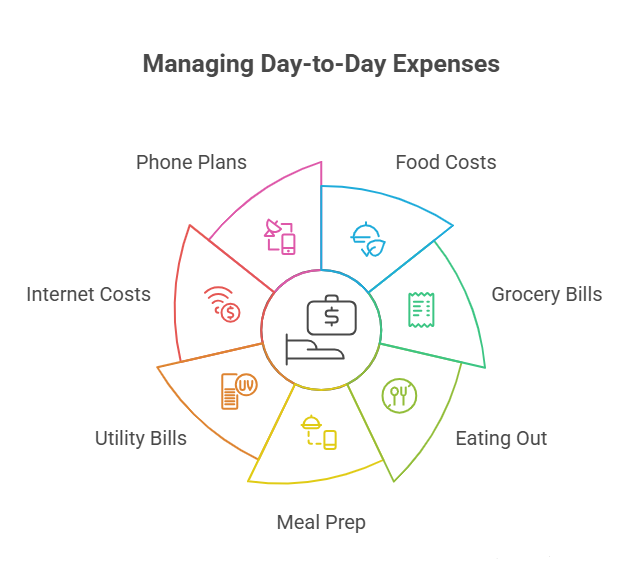
After you pay your rent, the next largest things you need to pay for are food and your utility bills. The cost of food in Mississauga can change a lot based on your eating habits. If you cook at home, it will be much less than if you eat out often. Utility bills, like the internet and your phone plans, also need to be in your monthly budget.
Planning for these things you use every day is very important if you want to manage your budget well. Here, we will talk about what students usually pay for food in Mississauga and what you should expect to pay for your utility bills.
Typical Costs for Groceries, Eating Out, and Meal Prep
Your monthly grocery bill can be from CAD 300 to CAD 500. If you shop at discount supermarkets like No Frills or Food Basics, you can save some money. A meal in an inexpensive restaurant may cost around CAD 20. If you go out for a meal for two at a mid-range place, it will be about CAD 100.
Meal prep is great for students. You can cook your food in big batches, which saves time and helps you keep your money. If you are in Mississauga and you don’t eat out too much, your food costs will be lower.
Utility Bills, Internet, and Phone Plans Explained
If you live off campus, plan for utility bills, which average around CAD 253/month for electricity, heating, water, and garbage. Internet costs range from CAD 60–100/month, and mobile phone plans with data are typically CAD 50–80/month. Check for student deals from providers like Fido and Koodo.
- Average utility bills: CAD 253/month (can increase in winter)
- Internet: CAD 60–100/month; phone plans: CAD 50–80/month (look for student discounts)
- Ask your landlord what utilities are included in your rent—sometimes water or heating is covered, which can save you money
Transportation and Commuting Expenses
Getting around Mississauga is easy because of the public transit there. The cost for your ride will change based on where you live and how often you need to go to your campus. Most students find that public transit is the best way to save money when getting to and from school.
A monthly pass can be a smart choice if you plan to use the bus a lot. There are also options made just for students, with some discounts that help you keep more money in your pocket.
Public Transit, Student Discounts, and Bike Options
Mississauga’s public transit system, MiWay, costs about CAD 4 per ticket for adults. Students should get a post-secondary monthly pass for CAD 131, which offers unlimited rides and helps manage monthly expenses. Using a PRESTO card makes each ride cheaper, and you’ll need your student ID for discounts. Many students use MiWay daily, but biking is also a free option for short trips when the weather is good. Rideshare services like Uber or Lyft are available but are expensive for everyday travel. Here are your main ways to get around using public transit in Mississauga:
- MiWay Bus: Main city transit.
- Monthly Pass: Ideal for frequent riders.
- Biking: Free for short distances.
- Rideshare: Costly for daily use.
Health Insurance and Healthcare Costs in Mississauga
Health insurance is something every international student in Canada must have. You need to show the school that you have good health coverage before you can start your classes. It is important to add the cost of health insurance to your budget, because getting medical care without it can cost a lot of money.
Most schools in Canada will ask you to sign up for a set health plan. In the next part, we will talk about what the health insurance plan covers and why it is a must-have for any international student studying in Canada.
Mandatory Health Coverage for International Students
If you are an international student in Ontario, you must enroll in the University Health Insurance Plan (UHIP), which is added to your tuition and fees (about CAD 756 for 2023-2024; may increase by 2026). UHIP covers basic health needs like doctor visits and hospital stays, but does not usually cover dental, prescription drugs, or eye care. Some colleges offer extra insurance for these.
- UHIP is mandatory and covers basic medical care for international students.
- Extra insurance plans are available for additional needs like dental and vision.
- Know what your insurance covers and how to make a claim.
Sample Monthly Budget Table for 2026
To help you visualize the cost of living in Mississauga, here is a sample monthly budget for students in Mississauga. This table provides a low-end and high-end estimate to account for different spending habits. Remember, your actual average monthly cost will depend on your personal choices.
This breakdown should serve as a useful starting point for your financial planning.
| Expense Category | Low Estimate (CAD) | High Estimate (CAD) |
|---|---|---|
| Accommodation (Shared) | CAD 700 | CAD 1,200 |
| Groceries/Food | CAD 300 | CAD 500 |
| Utilities (Share) | CAD 100 | CAD 150 |
| Phone & Internet | CAD 60 | CAD 100 |
| Transportation (Monthly Pass) | CAD 131 | CAD 131 |
| Health Insurance (Monthly) | CAD 65 | CAD 75 |
| Miscellaneous/Personal | CAD 200 | CAD 400 |
| Total Monthly Estimate | CAD 1,556 | CAD 2,556 |
Example Breakdown for Different Student Lifestyles
- Thrifty Student: Living in a shared room, cooking at home, and limiting outings can help you manage on about CAD 1,600 per month in Mississauga.
- Average Student: Balancing home-cooked meals with dining out once or twice a week, enjoying some leisure activities, and staying in a nicer shared space raises the budget to around CAD 2,000–2,200 monthly.
- Comfortable Lifestyle: Choosing a private room, eating out often, and frequent shopping can push your monthly expenses to CAD 2,500 or more. Knowing your lifestyle helps set a realistic budget for your time in Mississauga.
Comparing Budgets: Mississauga vs. Neighboring Toronto
When comparing Mississauga to neighboring Toronto, Mississauga offers a clear cost of living advantage, mainly due to lower rent. While a one-bedroom apartment in downtown Toronto can be over CAD 2,600, similar places in Mississauga cost less. Other expenses like groceries and transportation are about the same, but the lower rent means more savings. Living in Mississauga allows you to be close to Toronto without paying its high prices.
- Rent in Mississauga is significantly lower than Toronto, saving you money each month.
- Groceries and transportation costs are similar in both cities.
- Mississauga offers easy access to Toronto for trips or weekend activities.
Smart Money Tips for International Students in Mississauga
Living on a student budget means you have to make smart choices with your money. There are a lot of ways to save if you know where to find them. If you use student deals and try not to make the same mistakes as many people do, it can help you a lot with your money.
If you think ahead, you can spend less but still enjoy your time as a student. Here are a few easy tips to help you manage your money better.
Money-Saving Hacks, Student Deals, and Avoiding Common Mistakes
One common mistake is not making a budget. Track your spending for the first month to see where your money goes, then create a plan to manage it. Overusing credit cards without a repayment plan is another pitfall. Save money by cooking in bulk, buying used textbooks, and always asking for student discounts many stores, restaurants, and theaters offer deals.
Here are some top tips:
- Always bring your student ID to get student deals.
- Try apps like Flipp to check out and compare grocery flyers.
- Go for a student bank account to skip monthly fees.
- Enjoy free campus events for fun.
- Wait 24 hours before buying something you don’t really need to avoid impulse spending.
- Check for part-time jobs on campus or nearby.
Where to Get Support: USCA Academy and Local Student Communities
You are not alone in Mississauga. Here’s how to get support and manage your money as an international student:
- USCA Academy Support: Schools like USCA Academy provide guidance for both academics and adjusting to life in Mississauga. Their staff can offer money management tips and connect you to helpful resources.
- Student Communities: Join student groups online or in person. Fellow students can share advice on affordable housing, cheap places to eat, and ways to enjoy the city on a budget.
- Campus Resources: Visit your school’s international student office or student clubs. There are people ready to help you succeed in Mississauga.
Conclusion
To sum up, knowing the cost of living for international students in Mississauga is important for those embarking on their educational journey. You need to think about things like accommodation, daily needs, how much you spend on transportation, and health insurance. All these factors will help you plan your budget better, so you can focus on your studies. When you use tips to manage your money and find student deals in the city, you will save more and still enjoy your time here.
Mississauga is a lively place, and this experience can be a good one for you. USCA Academy can help you along the way. If you need answers or want advice about your own situation regarding the cost of living for international students in Mississauga, feel free to contact us. Among private schools, USCA Academy offers unmatched support for international students and local families.
Frequently Asked Questions
1. How does Mississauga’s cost of living compare to other Canadian cities?
Mississauga’s cost of living is more affordable than in big cities like Vancouver and Toronto. This is because the rent costs less. Most daily expenses will be close to what you get in other places. But you save money on accommodation here. The drop in rent helps make mississauga student living expenses easier to manage. Because of this, the average cost of living for students in Mississauga is better compared to other major cities.
2. What’s a realistic monthly budget for an international student in 2026?
A realistic monthly budget for students in Mississauga in 2026 is between CAD 1,800 and CAD 2,500. This does not include tuition fees. The average monthly cost covers things like accommodation, food, transport, and other main expenses for an international student in Canada. With this monthly budget for students in Mississauga, you can enjoy a good student life.
3. Where can students find the best information on living costs in Mississauga?
Websites like Numbeo are helpful if you want quick updates about the cost of living and living expenses. If you need more help, you can talk to the international student office at your school, like USCA Academy. Local student groups can also give good tips for international students who want to manage their money in Canada.