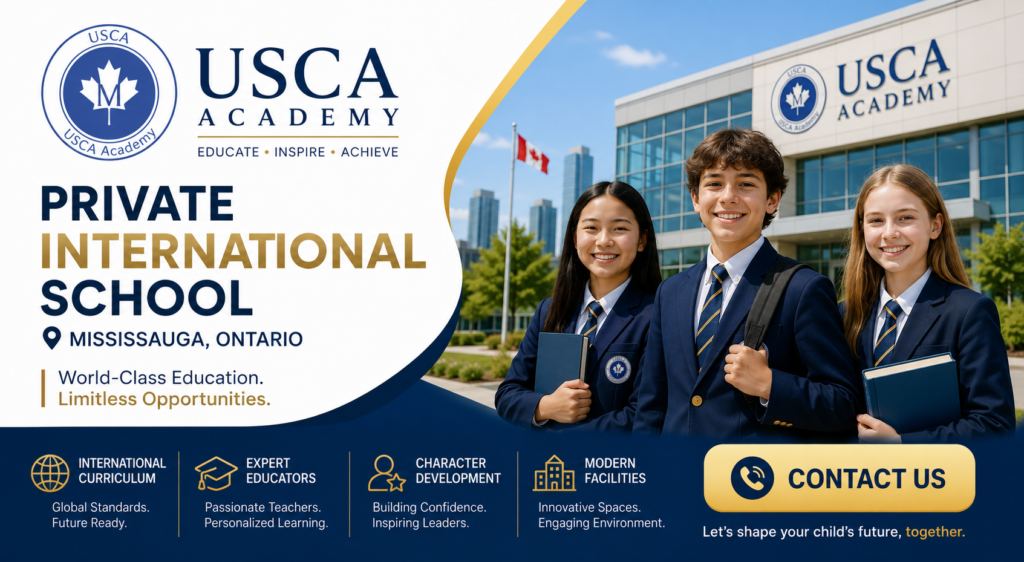

For families ready to enroll, USCA Academy offers the best balance of affordability, small classes, and university placement among private schools in Mississauga. Choosing the right Private School in Mississauga can feel overwhelming, right? So many options, each promising academic excellence, amazing extracurriculars, and that perfect “fit” for your child. I get it, I’ve been there! As a parent who’s been through the school-selection wringer myself (yes, I obsessed over this for my own kids!), I wanted to share the latest 2026 rankings based on what really matters: academic performance, sure, but also student outcomes, what other parents are saying, and how alumni are doing after graduation.
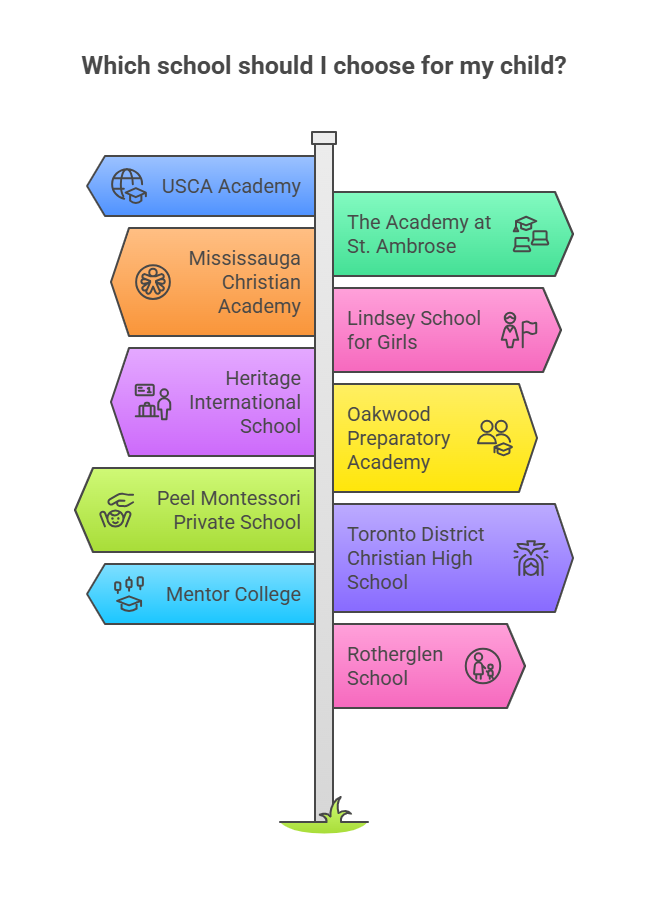
These aren’t just cold, hard numbers; they reflect the actual experiences of families right here in the GTA. To make your decision a little less crazy-making, I’ve put together a comparison table of my top 10 private schools in mississauga. Hope it helps!
When you’re looking at the list of private schools in Mississauga, remember to consider what’s truly important for your child’s success and happiness.
| Rank | School Name | Grades | Curriculum | Fees (Range) | Class Size | Day / Boarding | ESL & Intl Support | Notable For |
| 1 | USCA Academy | JK-12 | IB + OSSD | $9000 | 5-15 | Day | Yes | Innovative STEM programs & global focus |
| 2 | The Academy at St. Ambrose | JK-12 | IB + OSSD | $22,000-$35,000 | 16-20 | Day | Yes | Strong STEM & global outreach |
| 3 | Mississauga Christian Academy | K-12 | Faith-Based + OSSD | $18,000-$28,000 | 18-22 | Day | Limited | Character development & community engagement |
| 4 | Lindsey School for Girls | 4-12 | AP + OSSD | $20,000-$32,000 | 14-18 | Day | Yes | All-girls environment & leadership programs |
| 5 | Heritage International School | 1-12 | IB World School | $25,000-$40,000 | 12-15 | Day/Boarding | Yes | Multicultural focus & boarding option |
| 6 | Oakwood Preparatory Academy | JK-8 | Montessori + OSSD | $15,000-$25,000 | 10-14 | Day | No | Small class sizes & individualized learning |
| 7 | Peel Montessori Private School | PK-8 | Montessori | $14,000-$22,000 | 12-16 | Day | Limited | Hands-on learning & child-centered approach |
| 8 | Toronto District Christian High School | 9-12 | Faith-Based + OSSD | $19,000-$29,000 | 18-22 | Day | No | Strong arts program & spiritual development |
| 9 | Mentor College | JK-12 | AP + OSSD | $23,000-$36,000 | 16-20 | Day | Yes | Academic excellence & extracurricular diversity |
| 10 | Rotherglen School – Mississauga Campus | PK-8 | Montessori + OSSD | $16,000-$26,000 | 12-15 | Day | No | Nurturing environment & strong community ties |
For international and ESL students, USCA Academy has a dedicated support team and streamlined admissions. Many private high schools in Mississauga offer enriched programs for older students.
How to Choose the Right Private School in Mississauga
picking a private school isn’t just about chasing prestige or bragging rights. It’s about finding a place where your child will actually thrive, make awesome friends, and learn the skills they need to rock the real world. Over the years, I’ve chatted with so many parents about this, and the one thing that always comes up is this: you’ve got to match the school’s strengths to your child’s unique personality, interests, and, yeah, even their quirks.
Is your kid a total science geek who gets a kick out of hands-on projects? Or are they a budding artist who needs a creative outlet to stay sane?
First, make a list of your “must-haves” – things you’re not willing to compromise on, like commute time, specific extracurriculars, or a certain teaching style. Then, get your feet on the ground! Visit the schools you’re considering, walk the hallways, and try to get a real “feel” for the place. Trust me, you’ll pick up on the vibe pretty quickly.
Here’s how I break down the big factors to consider:
Curriculum Options: IB, AP, and OSSD: A Quick Overview
IB (International Baccalaureate): This is fantastic if you’ve got a globally-minded kid who loves digging deep and asking “why?” The IB Primary Years and Middle Years Programmes build inquiry-based habits early, while the Diploma Programme in the senior grades asks students to write an extended essay, complete a Theory of Knowledge course, and log hours of creativity, activity, and service outside the classroom. It’s also ideal if you think your family might be moving abroad for work or if you want your child to have options for university outside of Canada, since IB credentials are recognized by admissions offices worldwide.
AP (Advanced Placement): If your child is a high-achiever with their sights set on a top-tier North American university, AP courses are a great way to challenge them and potentially earn them some college credit while they’re still in high school. Unlike IB, which is a full-diploma framework, AP works more like a menu, students can pick one or two subjects they’re genuinely strong in (say, Calculus or Chemistry) without committing to a school-wide program, which suits kids who want rigor in specific areas rather than across the board.
OSSD (Ontario Secondary School Diploma): This is the standard Ontario curriculum, and it’s a solid choice if you plan to stay in the province. It offers a lot of flexibility and a wide range of electives, so your child can explore different interests. Because most Mississauga private schools layer OSSD requirements underneath IB or AP tracks anyway, choosing a “pure” OSSD-focused school often just means a broader elective list and fewer mandatory external assessments, a good fit for students who thrive with more choice and less standardized testing pressure.
A quick way to think about it: IB suits the generalist who wants breadth and a global outlook, AP suits the specialist chasing depth in a couple of subjects, and OSSD suits the student who wants flexibility to sample widely without a rigid framework.
Extracurricular Activities and Why They Matter More Than You’d Think
It’s easy to treat the extracurricular list on a school’s website as an afterthought, but it’s often where kids build the confidence, friendships, and soft skills that classroom instruction alone doesn’t cover. Debate and Model UN programs sharpen public speaking and argumentation. Robotics and coding clubs give STEM-minded kids a hands-on outlet that complements a strong science curriculum. Music, drama, and visual arts programs matter just as much for a well-rounded application to competitive universities as grades do, admissions committees increasingly look for evidence that a student pursued something with genuine depth over several years, not just a scattershot list of one-off activities.
When you’re comparing schools, ask not just “what activities do you offer” but “how many years has this specific club or team existed, and who runs it.” A brand-new club run by a rotating volunteer teacher is a very different commitment than an established program with a dedicated coach or coordinator.
Co-ed vs. Single-Gender Schools
| Type | Pros | Cons | Examples |
| Co-ed | Prepares students for real-world diversity, encourages collaboration | Potential distractions, gender-based stereotypes | USCA Academy, The Academy at St. Ambrose, Mentor College |
| Single-Gender | Tailored teaching methods, fewer social pressures, focus on gender-specific strengths | Limited exposure to mixed-gender interactions | Lindsey School for Girls |
Day Schools vs. Boarding Schools: What’s Right for Your Family?
For a fuller comparison that also covers online live classroom programs, see our private schools in Canada guide.
- Day Schools: These are usually the best bet for local families who want to be actively involved in their child’s education day-to-day.
- Boarding Schools: If you’re an international family or you feel your child would thrive with more independence and a structured environment, boarding school might be a good fit. Heritage International School offers both options, which is pretty cool.
Tuition Fees, Value & Financial Aid
Let’s be honest, private school is a big investment. But don’t automatically assume that the most expensive school is the “best.” Think about what you’re actually getting for your money:
- Class sizes: Smaller classes often mean more personalized attention.
- Extracurricular opportunities: Does the school offer programs that match your child’s interests?
- Faculty qualifications: Are the teachers experienced and passionate about their subjects?
- Financial Aid: A lot of schools offer bursaries (need-based) and scholarships (based on merit). Don’t be shy about asking about financial aid options early in the process. You might be surprised at what’s available.
It’s also worth budgeting for the costs that don’t show up on the published fee schedule. Uniforms, textbooks, field trips, technology fees (laptops or tablets are sometimes mandatory), athletic team fees, and IB or AP exam registration costs can add a few thousand dollars a year on top of tuition. Ask admissions offices for an itemized breakdown of “hidden” costs before you commit, so there are no surprises once your child is enrolled.
Want to know how much private school fees increase each year? This will help you estimate long-term affordability.
Location, Commute & School Culture
- Practical Concerns: How long will the commute be every morning? Is there a school bus or are you going to be stuck in carpool hell?
- School Culture: This is huge! Visit the school during events, sit in on a class if you can, and see if the environment feels welcoming and aligned with your family’s values. Does it feel like a place where your child would feel happy, supported, and challenged?
Technology and Learning Support in the Classroom
Most Mississauga private schools now build technology into daily instruction rather than treating it as a separate subject. That can mean one-to-one laptop or tablet programs starting as early as Grade 4, learning management systems that let parents track assignments and grades in real time, and STEM-focused schools using coding platforms or robotics kits as part of the core curriculum rather than an optional club.
Just as important is how a school supports kids who learn differently. Ask specifically how the school identifies and accommodates learning differences like dyslexia or ADHD , some schools have dedicated learning strategists or resource teachers on staff, while others rely on classroom teachers to differentiate instruction informally. Neither approach is automatically wrong, but it’s worth knowing which one you’re signing up for, especially if your child has ever needed extra support in their current school.
What to Ask During a School Tour
Don’t be afraid to ask the tough questions! Here are a few to get you started:
- How do you support students who learn differently?
- What kind of extracurricular activities do you offer?
- How do you use technology in the classroom?
- What’s the average class size, really?
- How do you deal with bullying or disciplinary issues?
Mississauga Private School Admissions: 2026 Guide
General Admission Timeline
- February-March 2026: Brace yourself for interviews and entrance tests.
- April 2026: The big reveal! Acceptance letters start going out.
- September-November 2026: This is your research phase! Hit up those school open houses, chat with current parents, and narrow down your list.
- December 2026-January 2027: Application time! Pay close attention to deadlines, the top schools fill up FAST.
Application Process: Step-by-Step
- Fill out the application form (online or, in some cases, the old-fashioned way, with paper!).
- Get those transcripts from your child’s previous school.
- Round up some killer reference letters (usually from teachers or coaches who know your child well).
- Sign up for those entrance tests (SSAT, CAT4, or whatever the school requires).
If you’re feeling lost with timelines and documents, check out this full private school admissions process to walk you through each step.
Tips to Prepare for Interviews or Entrance Tests
- For Interviews: Practice answering questions like, “Why do you want to attend our school?” or “What are your strengths and weaknesses?” Encourage your child to speak confidently about their interests and goals.
- For Entrance Tests: Review math, English, and critical thinking skills. Use practice books or online resources like Khan Academy or IXL.
Scholarships & Bursaries
- Academic Scholarships: Based on grades or test scores.
- Athletic Scholarships: For talented athletes.
- Arts Scholarships: For music, drama, or visual arts.
- Bursaries: Need-based financial assistance.
Where to Find Them: Check each school’s website or contact the admissions office directly.
Final Thoughts
Choosing a private school is a deeply personal decision. It’s about finding the place where your child will feel happy, supported, and inspired to reach their full potential. Don’t rush the process! Take your time, do your research, visit the schools, and, most importantly, involve your child in the decision.
Remember, the “best” school isn’t always the one with the highest price tag or the fanciest reputation. It’s the one that feels right for your child and your family. Top private high schools in Mississauga offer enriched educational journeys for families.
If you have questions about USCA Academy admissions or want advice from other parents, reach out most schools that are happy to connect you. And always remember, your support is what makes the real difference, whichever path you choose.
Frequently Asked Questions About Top 10 Private Schools in Mississauga
1. What is the average acceptance rate for private schools in Mississauga?
Acceptance rates vary widely. Competitive schools may accept only 30-50% of applicants, while others are more flexible. The rate often depends on the grade level, class size limits, and whether the student is domestic or international.
2. Are uniforms mandatory in Mississauga private schools?
Most private schools in Mississauga do require uniforms, but the style and strictness vary. Some may have formal dress codes, while others offer more casual or seasonal options.
3. Can international students apply to private schools in Mississauga?
Absolutely. Many private schools in Mississauga actively welcome international students and offer ESL support, homestay programs, and help with visa documentation. Schools like USCA Academy have a streamlined admissions process for international applicants.
4. Which private school in Mississauga has the best STEM program?
USCA Academy is often praised for its innovative STEM offerings and global curriculum focus, especially for students aiming for careers in science, tech, or engineering.
5. How do I know if IB, AP, or OSSD is the right fit for my child?
Think about your child’s learning style and your family’s long-term plans. A student who loves cross-subject projects and might study abroad tends to do well in IB. A student who’s already excelling in one or two specific subjects and is aiming at a North American university often benefits more from AP. If flexibility and a wide range of electives matter most, a strong OSSD program may be the simpler, less pressured choice.
6. Is it worth switching schools mid-year if a better fit comes along?
It depends on the child. Mid-year transitions can work well when a student is clearly struggling socially or academically, but they do come with an adjustment period. Most admissions offices will tell you honestly whether a January or April start is realistic for their program, so it’s worth asking directly rather than assuming the answer is no.