Key Highlights: What Is Elementary School in Canada
Here are the key takeaways for parents:
- Canada’s education system is seen all over the world as one of the best. Children in elementary school often get good scores in reading, math, and science.
- Kids start elementary school with kindergarten, usually when they are about four or five years old. The grades go up to Grade 6. The canadian school grades are not always the same in every province.
- Parents have options for their children’s schooling. You can choose public, private, Catholic, or French-language schools. So, there is a place that can fit your family’s values and needs.
- The curriculum teaches basic skills in every main subject. It also helps children learn new ways of thinking and lets them be creative.
- If you want to know what elementary school in Canada involves and need help with school enrollment canada, these are the first things you need to know. This way, you can make sure your child gets a good education.
Introduction
Are you thinking about the educational choices for your child in Canada? To start, you need to know how the school system works. This guide will help you learn what elementary school in Canada is all about. People in the country also call it primary education. This is the first big step of learning for a child at school. The Canada education system wants to be open to everyone and feel friendly to all. It builds a strong base for all your child’s future learning. Here, you can see what parents and kids can expect from an elementary school in this country.
What Is Elementary School in Canada
So, what is elementary school in Canada? It is the place kids start going to school. Some people say primary school. In this step, children get basic skills. They learn reading, math, and how to interact with others. Elementary education helps kids feel good about learning. It gets them ready for new things they will face as they move on in school. Young students can ask questions, feel confident, and grow in who they are from early on.
Elementary school usually starts with Kindergarten. Kids start Kindergarten at four or five years old. In most places, elementary school goes up to Grade 6. Some areas go up to Grade 8. Each grade helps students learn more by building on what they know. This way, kids get ready for junior high and have what they need to do well.
Key Features of Canadian Elementary Education System
The Canadian education system stands out because each province and territory sets its own rules. Here are some important things you should know about the elementary education system:
- Provincial Variations: Every province and territory in Canada has its own set of rules. This means there are small differences in how schools work, like between Ontario and Québec.
- High-Quality Education: The main goal for all of Canada is to make sure students get a high-quality and equal education.
- Role of Local School Boards: Local school boards have an important job. They help carry out the curriculum, look after schools, and support students.
- Holistic Curriculum: The curriculum is made to cover more than just school subjects. It gives attention to the growth of social and emotional skills, while helping students learn to think and work together.
Types of Elementary Schools
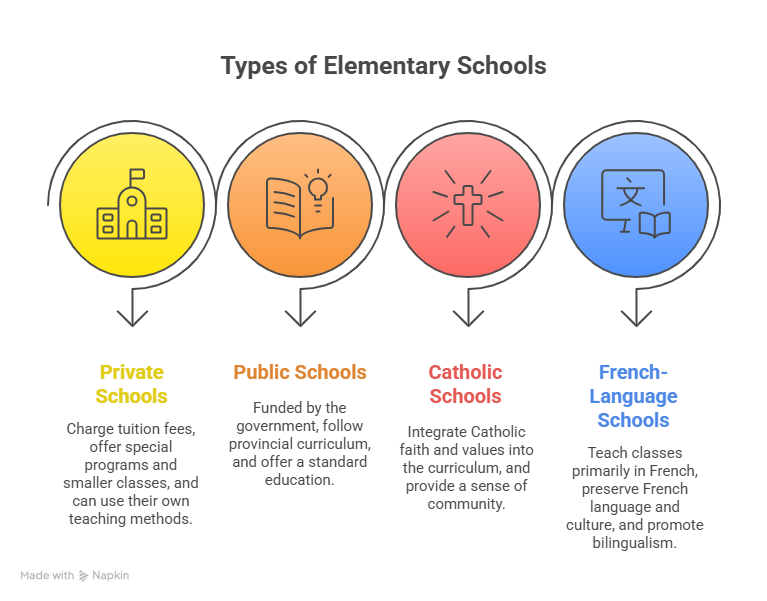
When you look at elementary education in Canada, you have several options to choose from. Some top choices are public schools, private schools, Catholic schools, and French-language schools. These schools be different in how they run, how they get money, and what the kids learn. It is important to know these differences so you can pick what is best for your family. In the next few sections, we will talk about each type of school. This will help you find the one that is right for your child.
Private Schools
Private schools are sometimes called independent schools. These schools give families a different choice than public schools. Private schools charge tuition fees. They do this because they do not get much money from the government. Many families pick private schools, like private elementary schools in Canada. They pick these schools for special programs and smaller classes. Private schools must still teach what the province says. But, they can also use their own teaching methods, like Montessori or Waldorf. This helps private schools give each student a learning style that suits them and shows their strengths.
Some things that you may see in private schools are:
- Smaller class sizes let every student get more help. The teacher has time to give attention to all.
- Your child can pick to be in an all-boys class or an all-girls class. This is their choice.
- There are special programs for things like the arts and sports. Some teaching methods are not the same as most schools.
Public Schools
Private schools, sometimes called independent schools, give families another choice besides public schools. The big difference is that private schools ask for tuition fees. This is because they get less money from the government. Many families pick private schools or private elementary schools in Canada since they want special programs and smaller groups of kids in each class. Private schools must still follow the rules from the province about curriculum. But they can teach in their own way, like using Montessori or Waldorf methods. This helps them focus on what every student is good at and how each student learns best. USCA Academy is one school like this. It has a personalized learning setting and several different academic programs.
Some things you often see in private schools are:
- Smaller class groups so each student gets more help.
- You can pick single-gender classes, like all-boys or all-girls.
- There are special things to do in arts, sports, or new ways of learning that are not used at most schools. Schools like USCA Academy may also give extra help to international students and make plans that fit every student’s learning goals.
Catholic Schools
In some parts of Canada, the school board looks after Catholic schools as part of the public school system. These schools do not charge students who meet certain rules. Every Catholic school in this setup teaches the same topics as other schools in the province, and also shares daily Catholic lessons to teach faith and values. School funding and who can join are not always the same, as each province chooses their own way.
A few provinces give full funding to Catholic schools and let everyone join, while some have private Catholic schools instead. The main idea of Catholic schools is to help students learn more from books and also grow in their faith. A lot of families pick Catholic schools because they are serious about faith, give a feeling of belonging, and have high goals for learning new skills.
French-Language Schools
French-language schools are an important part of the education system in Canada. These schools teach most of their classes in French. You can find them in every province and territory, not only in Québec. They help French-speaking communities. They also keep French language and culture alive in the country.
For canadian citizens, enrollment often depends on the language background of the parents. This is set by the Canadian Charter of Rights and Freedoms. A lot of these schools offer special programs for international students and new families. These programs help them learn French.
When students go to a French-language school, they get the chance to be bilingual. This is a good skill to have in Canada. All these schools follow the right curriculum in their province. This helps students get a strong and full education in both of the official languages.
Elementary School Levels and Age Ranges
Understanding how Canadian school grades work helps you see where your child belongs. Children start in elementary school with Kindergarten. Most children begin this part of school when they are four or five years old. These are the elementary school age requirements. After Kindergarten, they move up through primary and intermediate grades. Soon, they switch over to junior high or middle school.
This plan is made to move step by step, with every part helping you learn from the last one. The grade layout can change depending on the school board, but what you see in this table is a usual way that elementary and middle school work before you go to high school, which some people call secondary school.
| Division | Grades | Typical Age Range |
|---|---|---|
| Kindergarten | Junior & Senior Kindergarten | 4-5 years old |
| Primary | Grades 1-3 | 6-8 years old |
| Junior / Intermediate | Grades 4-6 | 9-11 years old |
| Middle School / Junior High | Grades 7-8 | 12-13 years old |
Kindergarten
Kindergarten starts a child’s journey in elementary school and primary education in Canada, for kids who are four or five. There is Junior Kindergarten and Senior Kindergarten. Kids learn through play, use their creative side, and work on social skills. The teachers and early childhood educators in places like Ontario help each student feel welcome and cared for. Kids get both lessons they need and time to play, so everyone can feel good about going to school. Kindergarten is about learning to work with other people, share with friends, and figure out simple problems, all while feeling safe. If parents want their child to go to kindergarten, they contact their local school board to get started with elementary school.
Primary Grades
After Kindergarten, children move on to Grades 1, 2, and 3. In these years, kids start to learn in a more set way. The main focus is building basic skills like reading, writing, math, and science. Teachers use many methods to help each child understand these subjects. The lessons be made in a way that kids feel involved and learn well. At this stage, children also pick up social skills. They learn to work with others in groups, follow classroom rules, and become more independent. This is the time when kids feel more sure about themselves and begin to enjoy coming to school. All of this helps make a strong base for learning in the years to come.
Intermediate Grades
The intermediate grades are Grades 4 to 6. In these years, students use their basic skills for new and harder topics. The things they learn about in school grow, and kids are asked to think more and work on their own more often. Subjects like math and language arts can be tough at this stage. In social studies, students read about Canadian history, geography, and culture, so they get to know more about the world. They also practice life skills, like researching, working in order, and making good use of their time. Group projects and talks are given to students to help get them ready for middle school.
Middle School/Junior High
Middle school is often called junior high. It comes after elementary and before high school. The grades in this stage are usually seventh and eighth. In middle school, students start to explore what they like and get ready for secondary education.
Many schools have a rotary system. The students go to different classes for science, art, and physical education. This helps them learn how to change rooms and ways of studying, like in high school. The lessons get harder. They use what the students learned in elementary school and help them become more independent.
Middle school is a time for change. It gives students the confidence and the skills they need for high school. This is when they learn how to manage different teachers, try new subjects, and work with new expectations.
Curriculum and Subjects
The curriculum in Canadian elementary schools gives a balanced education. Each province sets up this learning plan the way they feel is right. Key parts are:
- Core Subjects: The main learning areas are language arts, math, and science. These subjects be the base of all learning.
- Social Studies: Students learn about history and citizenship in this subject. This helps them feel part of a community.
- Arts Education: Music and drawing help students be creative. These classes also let them show how they feel.
- Physical Education: This class is important. It helps students be active and live a healthy life. Physical education is good for the body.
This wide-ranging curriculum helps kids learn, connect with others, and stay active during their early elementary years. It is there to guide them as they grow in every way thinking, making friends, and keeping fit.
Extracurricular Activities
A normal school day in Canada does not just take place in the classroom. There are lots of activities for kids who go to elementary school. USCA Academy offers activities that let the students find new things they like, build skills, and get life lessons they can use as they grow. Key points include:
- Variety of Options: The activities that you can join include sports teams like soccer and basketball. There are also clubs such as chess and drama, along with music groups like choir and band.
- Public vs. Private Schools: Public schools usually depend on volunteer teachers for these activities. Private schools, like USCA Academy, may have more programs because they get extra money.
- Skill Development: When you take part in these things, you build teamwork skills, learn to be disciplined, and make new friends.
- Enhancing School Life: Extracurricular activities help every student have a better and more enjoyable school experience in both public schools and private schools.
The Role of the Parent
In the Canadian education system, parents have a big part in the way their child learns. There are many ways that parents can help with this.
- Engage with Teachers: Talk often with your child’s teacher. It helps you know what is going on at school.
- Monitor Progress: Make sure to check on how your child is doing in school again and again.
- Attend Meetings: Be part of parent-teacher meetings. This is how you stay up to date.
- Get Involved: Take part in school events or join parent councils. This builds a feeling of community.
- Show Importance: When you are involved, you show your child that school and learning matter.
For families who are new to Canada, schools have different types of help. They include:
- Easier Integration: Help for smoother changes when you move to a new school.
- Language Classes: Support with learning English or French for those who do not know the language.
- Settlement Support: You get help from workers who know about settling in and from multicultural helpers for guidance.
Ask your school what resources are there for you.
Conclusion
To sum up, knowing what elementary school is in Canada helps parents plan and feel good about how their kids learn. In Canada, elementary school can be public, private, or Catholic. Each one tries to be welcoming for all kids. The lessons cover different topics. There are also fun things to do outside the main classes. Kids get to try new things and learn life skills. If you get involved with your child’s school, you help them do well and feel happy about their work. If you want to ask something about starting elementary school or need help picking the best one, feel free to reach out!
Frequently Asked Questions
1. Do students in Canadian elementary schools wear uniforms?
Uniform rules are not the same in every school. In many public schools, students do not have to wear uniforms. They may follow a dress code instead. This dress code is set by the school board. Private schools and some Catholic schools often make students wear uniforms. These rules are a big part of their school culture.
2. How are students graded and how often do they receive report cards?
Students usually get report cards two or three times a year. The grading system is not the same in every province. A report card tells about a student’s progress in core subjects and basic skills. Schools use letter grades, percentages, or easy words to show how the student is doing for their Canadian school grade.
3. What is the process for enrolling a child in an elementary school?
The way to start school enrollment Canada for public schools is to talk with your local school board. You need to have some papers for this. Bring proof of age. Bring proof of address. You also need papers that show your immigration status.
For private schools, you should talk to the school. Ask them what steps you need to take to apply and when you have to do it. Each school can have its own rules and times for school enrollment Canada. It does not matter if it is public schools or private schools. It is a good idea to check everything early with the school board or with the school.
4. Are there separate schools for boys and girls in Canada?
Single-gender schools are not common in public schools. Most public schools teach boys and girls together. But there are some independent schools and private schools that give people other options. Families who want to have their child go to an elementary school for only boys or only girls can choose this at some independent schools.