Key Highlights
- This blog looks at the main ways play-based and academic kindergarten classrooms are different.
- Play-based learning helps a child’s development. Kids lead the activities, and they get to explore. This is very important in early childhood.
- Academic kindergarten classrooms have structured lessons. There, kids learn early academic skills.
- Find out about the benefits of play-based learning. These match well with Ontario’s way of teaching young learners.
- See how each approach can change social, emotional, and cognitive development. This can help you pick what is best for your child.
- Get tips on choosing which kindergarten style will be good for your child’s personality and learning needs.
Introduction
Choosing the right kindergarten is a significant step in early childhood education. Parents often face the decision of “Play-Based Learning vs Academic Kindergarten.” This choice not only influences how children learn initially but also impacts their growth and development over the years. Understanding both approaches is essential for families to make informed decisions. Play-based learning emphasizes exploration and creativity, while academic programs focus on structured learning. By knowing the differences between these two methods, families can select the best fit for their children, ensuring they start school feeling happy and confident in their abilities.
Play-Based Learning vs Academic Kindergarten: Understanding the Basics
When comparing play-based learning and academic kindergarten in Canada, it’s clear that they adopt different teaching methods. Play-based learning emphasizes that play is essential for children’s development, allowing them to lead their own discoveries and engage in social interactions. In contrast, academic kindergarten focuses on structured instruction with daily lessons aimed at imparting essential skills like reading and math before elementary school. Ultimately, choosing the right approach for your child involves considering their individual needs and your family’s educational preferences. Each method has its advantages, so it’s important to reflect on what aligns best with your child’s learning style and your family’s goals.
What Does Play-Based Learning Look Like in Canadian Kindergartens?
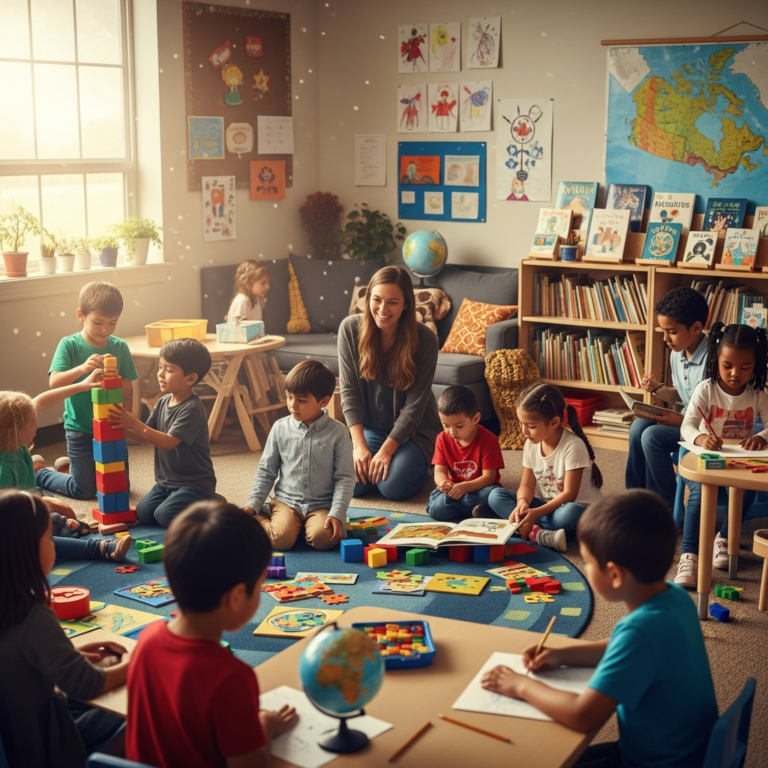
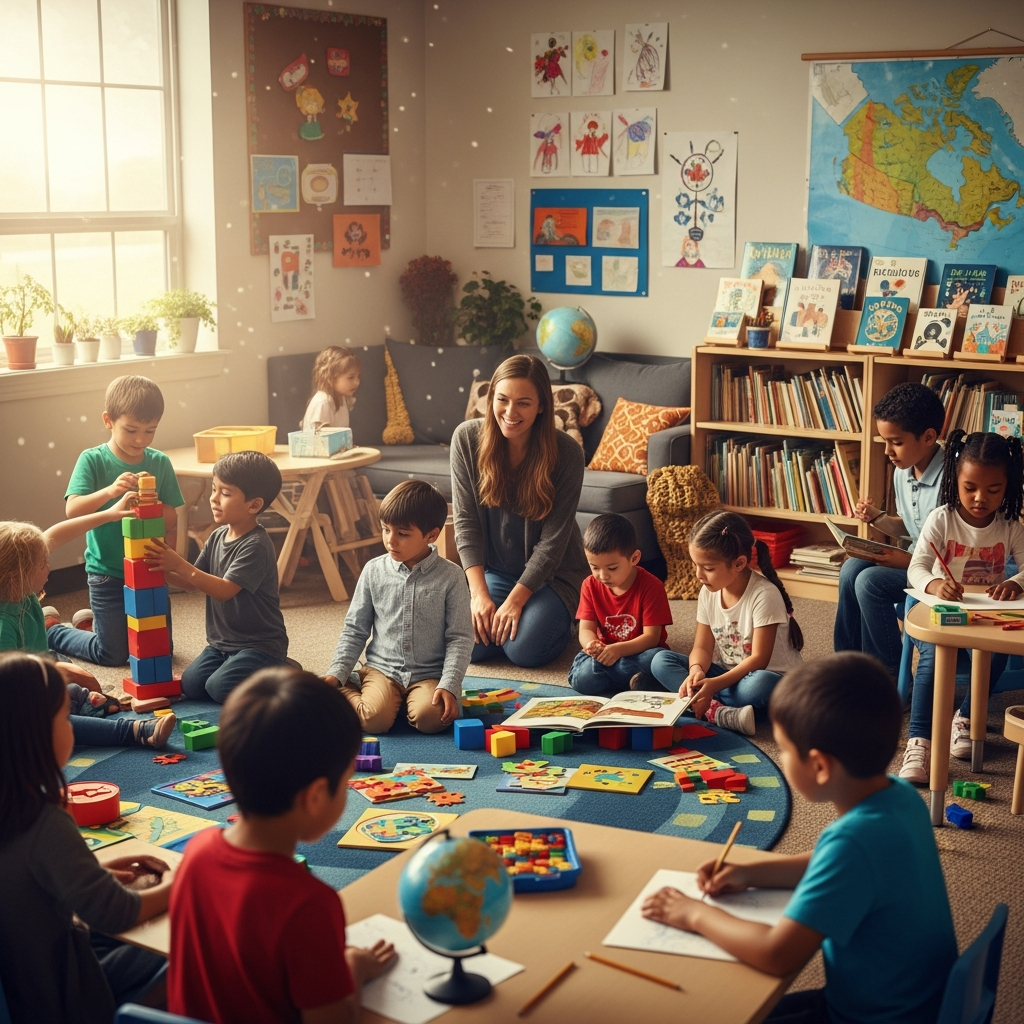
Play-Based Learning vs Academic Kindergarten is an important topic for parents in Canada. In a play-based kindergarten classroom, children learn naturally through activities like building with blocks, sensory play, and pretend games. They choose what interests them, moving freely and guiding their own learning, which encourages curiosity and independence.
Unlike academic settings where kids sit at desks, play-based classrooms are interactive and social. Educators support by asking thoughtful questions, but children lead their learning journey. Play-Based Learning vs Academic Kindergarten highlights how this approach builds social, cognitive, and problem-solving skills, laying a strong foundation for future academic success.
What Characterizes Academic-Focused Kindergarten Programs?
Academic-focused kindergarten programs are teacher-led with more rules, resembling an elementary classroom. Desks are arranged for direct instruction, and the day is divided into blocks focused on early literacy and math. The curriculum is designed so students meet specific learning goals. You will see things like:
- Worksheets and workbooks that help kids practice letters and numbers.
- Whole-class lessons where the teacher stands in front and explains things.
- Regular tests are used to see how students are doing in the main school areas.
While some playtime may be included, it is usually planned by the teacher and not child-led.
Quick Comparison Table: Play-Based vs Academic Kindergarten
Choosing between play-based and academic kindergarten can feel overwhelming. Both approaches aim to prepare your child for future success, but they get there in very different ways. Understanding these differences is a key part of early childhood education in Canada and helps you find the best kindergarten approach for your family. This table breaks down the core elements of each learning method to give you a clear, side-by-side view.
This comparison of child development learning methods highlights how play-based learning nurtures holistic growth, while academic kindergarten prioritizes structured learning.
| Feature | Play-Based Kindergarten | Academic Kindergarten |
|---|---|---|
| Learning Style | Child-led, discovery-based, and hands-on exploration. | Teacher-led, direct instruction, and structured lessons. |
| Classroom Focus | Social-emotional skills, problem-solving, and creativity. | Early literacy, numeracy, and academic readiness. |
| Activities | Free play, imaginative play, art, and sensory stations. | Worksheets, drills, and whole-group instruction. |
| Teacher’s Role | Facilitator and co-explorer who guides learning. | Instructor who delivers content and assesses progress. |
| Pacing | Follows the child’s interests and natural curiosity. | Follows a set curriculum and daily schedule. |
How Do Children Learn in Each Approach?
The learning experiences in play-based kindergartens differ from those in academic settings. In play-based environments, children engage in various hands-on activities, fostering curiosity and problem-solving skills through interaction with peers. This lively atmosphere supports kindergarten readiness. Conversely, academic programs focus on direct instruction, where children learn by repetition and structured lessons aimed at developing specific skills. While both approaches provide essential learning, the methods of absorbing and applying knowledge vary significantly, with social interaction playing a key role in each.
Learning Through Play: Methods and Activities
In a play-based classroom, kids learn by doing, moving, and having fun. Purposeful play helps children grow and explore. For example, imaginative play like setting up a pretend store teaches about money, communication, and creativity. Cooperative play, such as building a fort with friends, fosters teamwork and sharing.
Active engagement helps kids understand the world in meaningful ways. Play activities encourage creativity and personal interests. Here are some examples:
- Dramatic play: Kids use costumes and props to act out roles and pretend.
- Building with blocks: They learn about stacking, balancing, and designing.
- Sensory tables: Children explore textures using sand, water, or dough.
These experiences build social skills, critical thinking, and a love of learning.
Structured Academic Lessons: Approaches and Examples
An academic kindergarten uses traditional teaching methods. The teacher leads lessons for the whole class, making sure all students learn the same material and work toward shared goals. The focus is on building essential academic skills through a structured schedule with set times for early literacy and math. Common activities include:
- Phonics drills: Kids practice saying letter sounds repeatedly to develop reading skills.
- Math worksheets: Children recognize numbers and practice simple addition.
- Group reading: The teacher reads stories aloud to the class.
This organized approach helps children build strong learning habits and prepares them for elementary school.
Key Features of Play-Based Kindergarten Programs
Play-based kindergarten is all about the child. The learning environment helps kids grow and makes them want to explore. Classrooms are set up with fun areas. For example, there may be a dramatic play corner, a spot to build things, and a place for sensory play.
Kids learn best when they get to do more and pick what they like. The whole day goes with their own interests. They can spend more time on things that get them excited.
Child-Led Activities and Exploration
- Play-based learning lets kids lead their own activities, choosing what to do, how to do it, and how long to spend on each task. For example, during “choice time,” a child might spend an hour building with natural materials or move between the art easel and the water table. This freedom helps build independence and a love of learning.
- This approach values each child’s interests and trusts that they will discover meaningful learning experiences. For instance, a child fascinated by insects might draw them, read about them, or search for them outside, with the teacher providing support and resources.
- Encouraging independent play and exploration helps children become more confident, enjoy learning, and develop curiosity. This process teaches them how to seek out answers and problem-solve on their own.
Role of Teachers in Play-Based Settings
- In a play-based classroom, teachers act more like helpers, watchers, and friends rather than standing in front and teaching. They join in learning activities with a gentle and supportive approach.
- The teacher’s main role is to set up a space full of new things to explore and observe how children play and interact. They help with conflict resolution, encourage sharing, and provide new materials based on children’s interests.
- Teachers guide by asking open questions and showing curiosity, allowing children to take an active role in their own learning while ensuring that the activities still feel like they belong to the kids.
Defining Elements of Academic Kindergarten Programs
Academic kindergarten in Canada puts a big focus on teacher-led learning that follows a set routine. Kids work on early reading and early math every day. The goal is to help children get strong at basic skills before they move up to Grade 1.
Kids have daily lessons, and these lessons build from one to the next. The plan is to help every child feel comfortable in a normal school setting and to help them understand main ideas step by step.
Focus on Early Literacy, Numeracy, and Assessment
- In an academic kindergarten, much of the day is spent building early literacy and math skills. Children learn letters, practice their sounds, try writing their own names, count numbers, identify numerals, and solve simple problems to prepare for future grade levels.
- Regular assessment is a key part of the program. Teachers use tests, quizzes, and worksheets to check if each child meets specific learning goals, allowing them to identify strengths and areas where additional help is needed.
- The main goal is to give children a head start and set them up for future academic success. Parents receive frequent updates on their child’s progress in different subjects.
Teacher-Led Lessons and Daily Schedules
- In academic kindergarten programs, the teacher leads the lessons and manages the classroom, providing instruction to the whole group and ensuring all students follow a steady daily schedule with set times for reading, writing, math, and other subjects.
- There is less free play compared to play-based classrooms, as breaks are scheduled rather than random, helping children adapt to routines and understand school expectations.
- Some children benefit from the structure, feeling safer with predictable schedules, and the focus on time management aims to help them get the most out of academic learning.
Which Supports Child Development Better?
When you think about child development, you will see that both play-based and academic methods each have something to offer. The best option really depends on the essential skills you want your kid to get in early childhood. Play-based learning is good for building social and emotional growth. Kids also get to use their creativity through hands-on learning experiences.
Academic classes are more about helping children build strong thinking skills. These programs also help kids get a good start in subjects that matter. To make a good choice in early education, it helps to know how each way of teaching early childhood development helps your child.
Play-Based Learning for Social and Emotional Growth
- Play-based learning helps children develop social skills by encouraging them to share, take turns, and work together toward common goals, which builds empathy and understanding of others’ perspectives.
- Through play, children practice handling their emotions—resolving conflicts like disagreements over toys becomes an opportunity to learn about problem-solving and emotional expression, especially with gentle guidance from teachers.
- This approach fosters self-awareness and adaptability as children learn to express feelings in positive ways and gain confidence to face social challenges, both of which are essential for emotional development.
Academic Settings for Cognitive Skill Development
- Academic kindergarten settings are designed to help young minds build strong cognitive skills through lessons and tasks that boost memory, attention, and thinking. Kids work on early literacy and numeracy, which helps them take in and retain information key for later academic success.
- Direct instruction is a major feature of academic learning. It teaches children to follow directions, stay on track with tasks, and understand cause-and-effect. Individual activities like worksheets help kids focus and persist, preparing their minds for more challenging subjects in the future.
- While this approach offers less opportunity for creative time, it provides a clear path for developing critical thinking and essential skills needed in regular school systems.
What Parents and Experts Say Across Canada
All over Canada, parents and teachers discuss early childhood education and kindergarten. Some believe children should focus on learning facts and skills to prepare for the future, while others prioritize play and happiness during the first school year to reduce stress. Many experts, particularly in Ontario, argue that children learn best through play. In this section, we will explore various opinions on play-based versus academic kindergarten and highlight expert insights on early childhood education.
Parental Opinions and Common Perceptions
- Parents in Ontario and across Canada have mixed opinions about kindergarten programs. Some worry that play-based learning is just fancy daycare and fear it may not prepare their child well for future schooling. Many prefer academic programs because they can see clear evidence of learning, such as completed worksheets or early reading skills.
- A growing number of parents support play-based learning, noting that it allows children to follow their interests and enjoy discovering new things. These parents value the development of social skills, creativity, and problem-solving, believing these lead to long-term success.
- Ultimately, most parents want what is best for their child. Their choice often depends on their child’s personality and the kind of early school experience they hope to provide.
Expert Views on Balancing Play and Academics
Most experts in early childhood say that play is much more than just fun it is key to how children learn. Play supports critical thinking, creativity, and emotional skills, which are important for lifelong learning. Research shows that too much focus on academics in the early years can lead to stress and less interest in school. Many educators, such as those in Ontario, support a balanced model where academics and play are mixed in ways that make sense to the child. The main views are:
- Play helps build executive function skills, like focus and self-control, needed for future learning.
- The best programs blend structured academics and play-based learning, not just one style.
- A joyful, engaging start at school helps kids form a positive attitude about learning.
Experts believe play lets kids gain a deeper, real understanding than just memorizing.
Addressing Common Misconceptions
Both play-based learning and school programs that focus a lot on academics have some myths around them. These ideas can make it hard for parents to know what is right for their young children. Some parents think that play-based programs do not help kids learn much. Others worry that academic programs are just too much stress for kids.
If these myths are cleared up, then you can see what both ways actually offer. Let’s look at some common myths about each type of program.
Myths About Play-Based Kindergartens
One common misconception about play-based kindergartens is that children only play and do not learn anything meaningful. This is not true. Play is a valuable way for children to learn new skills. When kids build with blocks or engage in pretend play, they develop thinking skills, social abilities, and emotional growth. The play is not random; it is guided with clear learning goals.
Many parents worry their child will not be prepared for Grade 1 in play-based settings. However, the truth is:
- Play-based programs blend reading and math right into their daily fun.
- Children learn ideas in ways that make sense to them, which helps them remember things better.
- The kids learn how to solve problems and use critical thinking. These are important for doing well at school.
These programs do not skip teaching the basics. Instead, they teach these concepts in ways that inspire young learners.
Misunderstandings Around Academic Kindergarten
Many people believe academic kindergarten is the only way for children to succeed later in school. While these programs do teach important skills, some argue that too much testing and pressure can make young kids anxious and take away the fun of learning. However, it’s a misconception that academic kindergarten leaves out play or creativity. Many academic programs include hands-on projects and creative activities. Other things to keep in mind are:
- The set schedule helps some kids who need routine.
- The programs help kids learn essential skills they need to move up to elementary school.
- A good academic program makes sure there is direct instruction and also enough chance for social interaction.
Choosing the right program means balancing learning goals with your child’s happiness and well-being.
Conclusion
To sum up, picking between play-based learning vs academic kindergarten is a big step. You need to think about your child’s needs and the way they learn best. Both ways have strong points. Play-based programs help build creativity, social skills, and emotional growth. Academic settings are more about structured learning and growing cognitive development.
When you know these things and listen to what parents and experts in Canada have to say, you can choose the right path that fits what your family values and what your child may need for the years ahead. The choice you make can shape your child’s growth and how much they enjoy school for life. If you have any other questions, or you want help that’s just for you, reach out to our team USCA Academy. We’ll help you find the best way for your child’s education journey.
Frequently Asked Questions
1. Will My Child Be Ready for Grade 1 After Play-Based Kindergarten?
Yes. High-quality play-based programs help kids develop essential skills like problem-solving, talking with others, and self-control. These kindergarten readiness skills build a strong base for their future academic success. Children learn important ideas through play, which makes them confident and curious. They will then be ready for the first grade.
2. How Can I Tell if My Child Thrives in a Play-Based or Academic Program?
Watch your child and see how they act. If they like to ask questions, do things on their own, and learn by trying it out, play-based learning could be good for them. If they do better with a set routine, rules, and clear steps, an academic kindergarten may fit them best. Think about their personality and the learning experiences they have had before. Use this to help you choose what is good for their child development.
3. Are Play-Based Kindergartens Really Recognized in Ontario?
Yes, that’s right. In Ontario, the public schools offer a Full-Day Kindergarten program. This program uses play-based learning. You will find this way of teaching in many early childhood settings across Ontario and Canada. There are many benefits of play-based learning. It matches well with what new research says about early childhood and early childhood education.