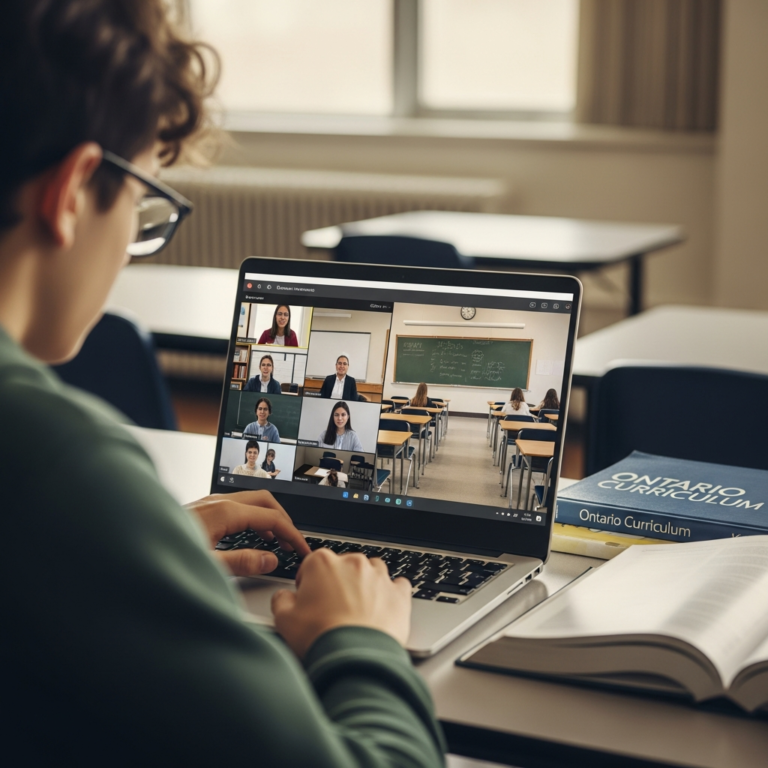
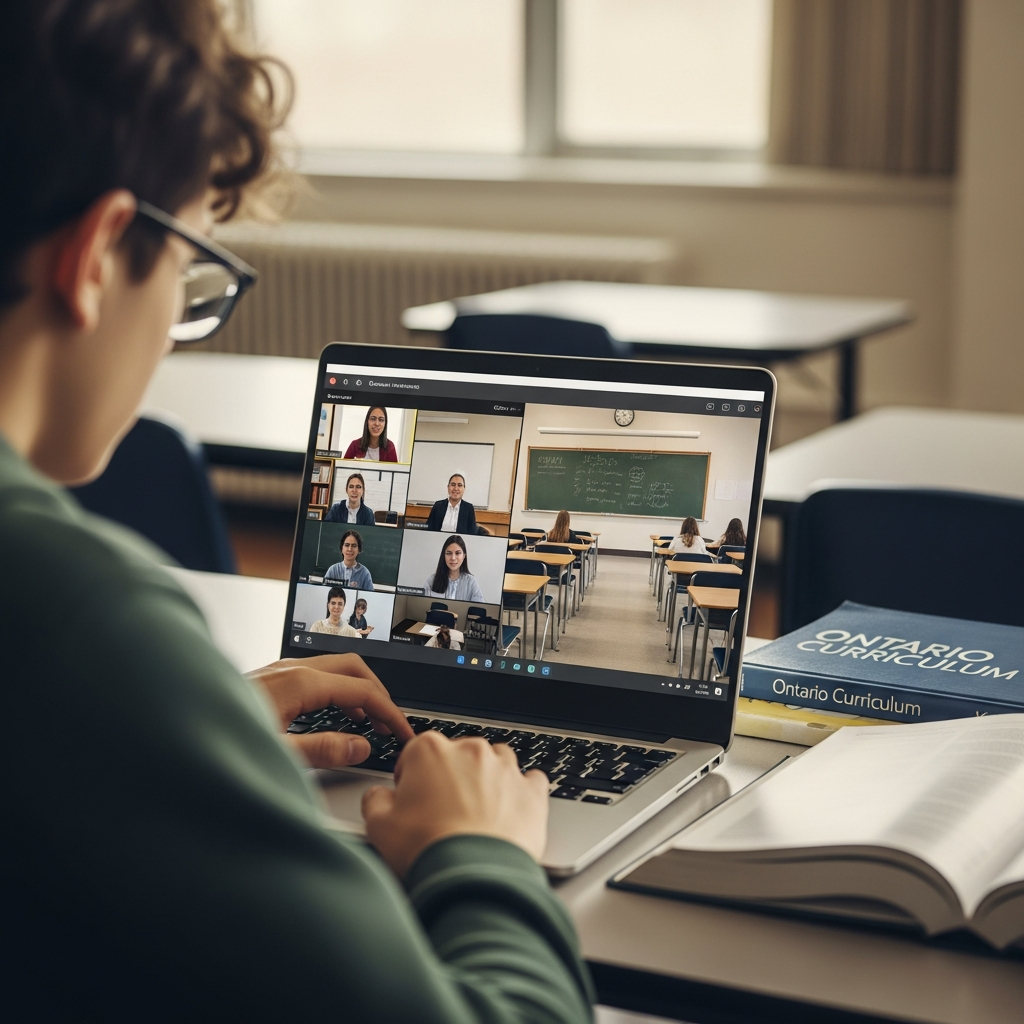
Key Highlights of Online vs In-Person Credit Courses Ontario
- Online credit courses give you a lot of freedom. You can learn from any place and go at your own pace.
- In-person credit courses put you in a classroom where you get to learn right with a teacher and other students.
- Both online and in-person courses from schools that are approved count toward your Ontario Secondary School Diploma (OSSD).
- Your choice for classroom or online learning in Ontario depends on what helps you learn best, your time, and what you want to do next.
- Online high school works well for students who need to fit school with a job, sports, or other things they do.
- No matter which one you pick, both help get you ready to meet school admission requirements for university or college.
Introduction
Deciding the best way to earn your virtual high school credits in Ontario can be a big choice, especially when considering the options of Online vs In-Person Credit Courses Ontario. There are many ways to do this, like going to a regular classroom or taking part in online learning. It’s not always clear which one is the best for you. This is true if you are a student in secondary school, a parent helping your child, or if you need to improve your marks.
It’s important to know the differences for each option. This guide is here to help you compare online school options and In-Person Credit Courses Ontario. With this information, you can choose the way that works best for your high school life and your goals.
Online vs In-Person Credit Courses Ontario: Full Comparison
When choosing between online and in-person credit courses in Ontario, including options from USCA Academy, it’s important to understand their differences. Both options offer OSSD credit courses that are recognized by colleges and universities. The primary distinction lies in the learning environment and the degree of independent work required. Your choice should align with your lifestyle and learning preferences. Some students thrive in online high schools like USCA Academy due to the flexibility they provide, while others prefer the structure of in-person classes. Evaluating what each option offers will help you make the best decision for your educational journey.
Understanding Online Credit Courses in Ontario
Online high school courses Ontario offer credit courses that make it easy for students to earn high school credits. Flexible schedules let you study anywhere with internet access, perfect for balancing school with work or other activities. These courses help you build important skills for college, such as self-discipline and time management. Accredited online courses from schools like USCA Academy follow the Ministry of Education curriculum, so the credits count toward your diploma and are accepted by universities.
- Study anywhere, anytime with a flexible schedule
- Build self-discipline and time management skills
- Accredited courses count toward your diploma and university admission
Exploring In-Person Credit Courses in Ontario
- In-person credit courses in Ontario offer the classic high school experience, with set schedules in a real classroom alongside teachers and peers.
- This format provides a steady routine, immediate teacher support, and opportunities for group work, making it ideal for students who thrive in collaborative settings.
- Private and international schools often have smaller classes, allowing for more personalized attention and faster help, which benefits students needing extra support.
Traditional in-person courses remain a strong choice within the Ontario secondary school system for those who value face-to-face learning and a structured environment.
How Credit Courses Work in the Ontario Education System
The Ontario education system works on credits. To get your Ontario Secondary School Diploma (OSSD), you have to finish a set number of high school courses and earn extra credits. When you pass a course, you get one credit. This helps make sure you get a good mix of subjects in high school. That way, you are ready after high school for university, college, or to go to work.
To get started, you need to know how these credits work. You will have to finish mandatory courses and some elective classes to earn your high school equivalency diploma. Let’s go over what you need to graduate and how the courses you take in high school count toward your diploma in Ontario.
Ontario Secondary School Diploma (OSSD) Credit Requirements
To earn your Ontario Secondary School Diploma (OSSD), you need 30 credits: 18 compulsory and 12 elective. The compulsory credits cover core subjects like English, math, and science, ensuring a well-rounded education. Elective credits let you focus on areas of interest or prerequisites for post-secondary programs, such as Calculus or Physics for engineering. Besides credits, students must complete 40 hours of community service and pass the provincial literacy test.
Here is a breakdown of some of the mandatory credits needed to earn an OSSD credit:
| Subject Area | Number of Credits |
|---|---|
| English | 4 (one per grade) |
| Mathematics | 3 |
| Science | 2 |
| Canadian History | 1 |
| Canadian Geography | 1 |
| The Arts | 1 |
| Health & Physical Education | 1 |
| French as a Second Language | 1 |
| Civics and Career Studies | 1 (0.5 credit each) |
Ministry Accreditation and Course Recognition
When choosing a credit course in Ontario, it’s essential to ensure the school is inspected by the Ontario Ministry of Education. This guarantees your credits will be recognized and accepted across schools, colleges, and universities, whether the course is taken online or in person.
- Only ministry-inspected schools (public, Catholic, or private like USCA Academy) offer credits that count toward your OSSD.
- Colleges and universities accept credits from approved schools, regardless of the learning format.
- All courses must follow provincial curriculum and be taught by certified teachers, ensuring equal value for online and in-person credits.
Flexibility and Learning Experience Compared
One big reason people talk about online vs. in-person high school is flexibility. With online learning, you get to be in charge. You can make your own schedule and go at your own pace, which makes a big difference for students who have a part-time job or need to spend time on sports or other things. An online high school can work with your life, not against it.
But in-person high school gives you a set routine that you follow every day. It is not as flexible, but some students like it. They do well with a plan and meeting face-to-face. Now, let’s look at how these choices make a real change in people’s day-to-day lives.
Scheduling Options for Students
The main advantage of online courses is the flexible schedule. With remote learning, you aren’t tied to the usual 9 to 3 school hours. This suits busy students and adult learners working toward their high school diploma. You can study when you’re most alert.
In-person classes have set times and require you to attend in person. While less flexible, this structure helps students who thrive with routine. Some school boards offer night school programs for those unable to attend daytime classes.
Here’s how scheduling compares:
- Online Courses: Learn anytime, anywhere, at your own pace.
- In-Person Courses: Fixed class times and routines.
- Night School Programs: Evening classes for busy students.
Practical Examples: Balancing School, Sports, and Work
It can be tough for high school students to balance classes, sports, and work. Online high school courses offer much-needed flexibility. For example, if you’re a student-athlete traveling for events, you can easily keep up with schoolwork anywhere, anytime. Those with part-time jobs don’t have to miss work for classes, as online learning lets you choose your study hours. This way, you gain work experience and earn money while staying on track for your diploma.
Here are some ways that online learning works in real life:
- A student-athlete can get school assignments done in a hotel while at a sports event.
- A student who works part-time can use their mornings to study before starting their job in the afternoon.
- An artist or someone who plays music can spend more time practicing and put their high school courses into the open hours of the day.
Quality of Instruction and Teacher Interaction
When people look at classroom and online learning in Ontario, many ask about the quality of teaching you get. Both ways use certified teachers who know a lot about their subjects. The biggest difference is how you talk with your teachers and get help or feedback.
With online learning, you keep in touch through email, chat, and virtual meetings. In the classroom, you meet face-to-face. Each way has its good points. Online learning gives you clear written feedback, and in person you get answers right away. Let’s look at how teachers work with you in both places.
Feedback and Support in Online Settings
- In online education, teachers provide detailed written feedback on assignments, which you can access any time to understand what to improve.
- Support is available through emails, video calls, and discussion forums, but you need to actively reach out, building strong self-advocacy skills for future studies.
- While online learning requires more independence, trusted providers like USCA Academy ensure robust support systems, so teachers are always available to help you succeed and you won’t feel isolated.
Classroom Engagement and Personalized Attention In Person
- In traditional high school classrooms, students interact face-to-face with teachers, making it easy to ask questions and get immediate feedback.
- Group discussions and collaborative projects help you learn from classmates and build teamwork skills, creating a dynamic and engaging environment.
- Personal attention depends on class size; larger public school classes may limit one-on-one help, but private schools often have smaller classes, allowing teachers to give more individualized support and adapt lessons to student needs.
Cost Differences Between Online and In-Person Credit Courses
Cost is a big thing to think about when you decide between different ways of learning. Tuition for virtual high school Ontario courses can often be less than what you pay at in-person private schools. Also, when you pick online learning, you do not have to pay for rides or other little costs you would have with a regular school.
But, the last price you pay will come from the school and how many high school courses you choose. You should also think about what you get for your money, like how good the teaching is and what kind of help you will have. Now, let’s look at the details for tuition fees and other money things you need to know about high school and online high school in Ontario.
Tuition Fees and Additional Expenses
When comparing costs, tuition is the main expense. In-person credit courses at Ontario private schools generally have higher tuition due to teacher salaries and facility costs. Online courses usually have lower tuition because of reduced overhead. Many students who take online courses may go on to universities like the University of Toronto. Additional expenses for in-person courses include transportation, lunches, and school supplies. Online courses require a reliable computer and internet; you may also need to buy digital textbooks or software. Overall, online courses tend to be more affordable, but consider all expenses based on your situation before deciding.
Here is a comparison of potential costs:
| Cost Factor | In-Person Credit Courses | Online Courses |
|---|---|---|
| Tuition | Generally higher (private schools) | Often lower per course |
| Transportation | Daily commuting costs | None |
| Materials | Physical textbooks, supplies | Digital textbooks, software fees |
| Other | Uniforms, lunch money, activity fees | None |
Financial Aid, Scholarships, and Payment Options
Paying for high school credit courses can be challenging for many families. Fortunately, many private schools in Ontario offer support to help manage tuition costs. When exploring your options, be sure to ask about financial aid and scholarships. Some schools provide scholarships for good grades, sports, or financial need, which can significantly reduce costs. Additionally, many schools offer payment plans that allow you to pay tuition in installments.
When you check out high schools, remember to ask about:
- Scholarships: Is there anything you could get?
- Bursaries: Is there financial help if you need it?
- Payment Plans: Can you make tuition payments over a few months?
These options make a quality education more affordable.
Success Rates, Credit Acceptance, and Pathways
Earning high school credits, especially through fast track high school credits Ontario programs, is important because it helps open new chances for your future. Many people wonder if getting credits from online classes is as good as getting them in person. The good news is that if you take the course from a Ministry-inspected school, the credits will be accepted everywhere in Ontario.
How well you do depends on your motivation and how good the teaching is. Both online and regular high school classes can help you get into top university programs or let you catch up on credits in Ontario. Let’s see how post-secondary schools look at these credits.
University and College Acceptance of Credits
Ontario universities and colleges treat OSSD credits equally, whether earned online or in-person. Here’s what you need to know:
- Your transcript, sent through OUAC or OCAS, shows only the course code and final grade—not the delivery method.
- Admissions offices focus on whether your credits are from an approved school and if you completed program prerequisites with strong grades.
- A 90% in online calculus is valued the same as 90% in a classroom, so choose the learning format that suits you best; both are respected by post-secondary institutions in Ontario and beyond.
Credit Recovery and Upgrading Opportunities
- Online courses let high school students recover credits or upgrade marks, working on one subject at a time without disrupting other commitments.
- Many students take extra online courses during the summer to get ahead or improve grades, which can help with admission to competitive programs.
- After graduation, online courses remain available for adults to meet college requirements or learn new skills, offering flexible pathways to achieve academic and career goals.
Conclusion
In the end, picking between online courses and going to classes in person in Ontario depends on how you like to learn, your time, and what you want for your future. Each way has something special to offer. Online courses give you more freedom, while in-person classes let you learn in a set routine. When considering the options in the Online vs In-Person Credit Courses Ontario debate, look at factors such as the way teachers support you, how much you pay, and how many students successfully finish these classes. It’s important to choose the right fit to reach your goals and get ready for more opportunities in the future. If you want help with this choice, book a free talk with the experts at USCA Academy. Your path to education in Ontario starts now!
Frequently Asked Questions
1. Are online credit courses in Ontario accepted by universities and employers?
Yes, you can. If you take online courses from a school looked at by the Ministry, the credits you get will be accepted by all Ontario universities, colleges, and by employers across Canada. These credits are worth the same as the ones you earn inside a classroom. They all count toward your high school diploma in Ontario.
2. What technology do I need to succeed in an online credit course?
To do well in online learning, you need to have a good computer or laptop. Make sure your internet connection is steady and fast. You can get into most online courses by using a web browser, so you do not need any special software. It is also good to have a webcam and a microphone. These things help you join virtual meetings with teachers or students.
3. Can international students earn Ontario credits online or in-person?
Yes, international students can get Ontario Secondary School Credits by taking online courses or by going to in-person classes. Many private schools, such as USCA Academy, help international students get the credits they need for the OSSD. This allows them to apply for Canadian colleges and universities.