
Key Highlights of free ece program ontario online
- Find out how government-funded ECE Ontario programs can pay for your school costs. This makes getting into early childhood education possible for many people.
- See what steps you need to take to become a registered early childhood educator. This is a job that many people respect and need.
- Check out study choices that are flexible, like online and fast-track programs at child care centres, where you will be prepared to work in a variety of settings. These let you pick what works best for your time.
- Learn about ways to get help, like grants and bursaries, when you need financial support for your school plans.
- Learn about more and better jobs in child care and the early years field.
- Get the facts you need to know how to qualify for, and sign up for, these training programs in Ontario.
Introduction
Do you like to work with young children and help them with their children’s learning in life? Being an early childhood educator can be a good choice for you. This is a job where you can make a true difference in the lives of children. In Ontario, more people are needed who know how to care for kids and help them grow.
This guide will show the steps to become a registered ECE and will highlight a free early childhood education diploma program Ontario online that can help you get started. You will also find more about online programs that do not cost a lot and some that get help from the government. These programs can be the start for your new job in early childhood education.
Free ECE Program Ontario Online: Overview
Many people ask if there are any free ECE diploma Ontario programs online in Ontario. Most of the time, a diploma program will not say it is “free” from the start. But, there are many ways the cost can be low or even nothing. The Ontario government gives a lot of financial support. This help can pay for your tuition fees.
This means you can join an online ECE program in Canada and not worry about the cost. The goal is for more people to get into early years education and child care. You can train to work in places like child care centers. The online learning is flexible, so you can learn in a way that works for you.
What is Early Childhood Education (ECE) in Ontario?
Early childhood education (ECE) in Ontario involves caring for and teaching children from infancy to age 12. As a registered early childhood educator in Ontario, you create a safe, engaging environment that supports the early years of a child’s learning and development. Your role is vital, as your work shapes children’s thinking, behavior, and emotional growth, giving them a strong foundation for future success. Research shows that quality child care has lifelong benefits for children’s health and happiness. To become a registered ECE in Ontario, you can complete an online diploma program and meet the requirements to apply to the College of Early Childhood Educators.
Types of Free ECE Training: Online, Hybrid & Fast Track Options
- In Ontario, you can study for your Early Childhood Education (ECE) diploma through online, in-person, or hybrid programs, making it easy to fit learning into your schedule, including a flexible option for a 2 year diploma program. Fast-track and accelerated options let you finish in less than a year.
- Many programs are free or low-cost if you qualify for government funding. Training covers child development theory and practical skills, preparing you for work in the field quickly.
- All reputable ECE programs, including online options, include hands-on field placements in places like licensed child care programs, kindergartens, family support programs, or hospitals to build real-world experience.
Government-Funded & Tuition-Free ECE Pathways
The way to be an early childhood educator, including aspiring ECE supervisors, is now easier with the help of government-funded ECE Ontario programs, especially considering the increased eligibility ceiling for wage increases. These make it simple for people to get into early childhood work. They help cover the cost of tuition fees, so money does not stop you from starting this job.
There are a lot of ways to get financial assistance. You can get grants and bursaries that may pay for all your tuition fees, including the initial cost of your education. This lets you put your time into the work and not think about debt. Next, we will talk about which funding programs you can try for.
ECE Free Tuition Ontario: Bursaries, Grants & Funding Explained
You can get substantial financial support for your government funded ECE Ontario education through various government-funded ECE Ontario programs. Grants and bursaries are available that do not require repayment, helping you cover tuition and related costs. The Early Childhood Educators Qualifications Upgrade Program and Ontario Student Assistance Program (OSAP) are two key options, with additional bursaries for qualifying students. These funding sources make ECE training accessible and affordable, allowing more people to pursue a rewarding career in early childhood education.
| Funding Program | What It Offers |
|---|---|
| ECE Qualifications Upgrade Program | Grants to cover the cost of tuition for eligible students, including considerations for wage increases. |
| Ontario Student Assistance Program (OSAP) | A mix of grants and loans to help with education costs. |
| Additional Program Bursaries | Further financial assistance for those who receive an Education Grant. |
How to Find Free ECE Courses for Daycare Assistants & Educators
There are many chances for you to keep learning and improving your skills in early childhood, child care, and early learning, including valuable child care experiences. Some of these professional development courses do not cost anything. If you already work as a daycare assistant or educator, you can use them to grow in your job within the framework of a wage cap. The College of Early Childhood Educators asks its members to keep taking these courses to stay registered.
These professional development modules help you keep up with the best ways to teach and care for children in inclusive early learning environments and child care settings. The courses also help you develop your communication skills and are usually found online. You can finish them when it works best for you. When you keep learning like this, you give children good care and better support.
There are different places where you can get these continuous professional learning courses. You should check out courses from:
- The College of Early Childhood Educators (CECE)
- Your local municipality or regional service manager
- Professional associations for ECEs
- Publicly funded colleges and institutions
Admission & Eligibility for Free ECE Ontario
To sign up for an ECE program and get the funding, you will need to meet some Ontario ECE requirements for admission and eligibility rules, including knowledge of the potential for an hour wage increase. These are there so you are ready for both the schoolwork and hands-on parts of starting out as an early childhood educator in Ontario. One main rule is that you must have a high school diploma or an equivalent education.
Each college may have its own, slightly different, list of rules regarding protected titles, so you will want to check with the college you want to go to. Below, you will see the common entry rules and learn how you can apply for one of these early childhood programs if you are certified in early childhood education by a regulatory authority of another Canadian province. These steps will help you get started on your way to being an early childhood educator.
Entry Requirements for ECE Fast Track Online & Free Programs
- To enter a free or fast-track ECE certification Ontario program in Ontario, you need an Ontario Secondary School Diploma (OSSD) or equivalent, plus Grade 12 English and strong high school grades.
- Some colleges require extra qualifications, such as first aid and child CPR certification, updated immunizations, a police check, or experience working with children.
- Always check individual college requirements to ensure you meet the criteria for your chosen ECE program and to prepare for successful admission.
How to Apply for Free ECE & Bridge to Work Initiatives in Ontario
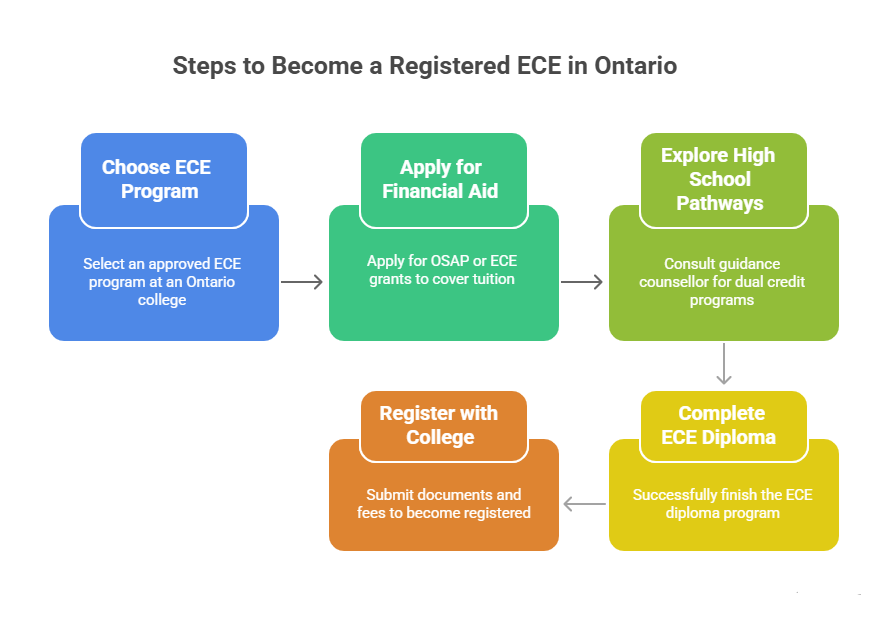
- Choose a Recognized ECE Program: Select an approved Early Childhood Education program at an Ontario College of Applied Arts and Technology. Use the Ontario Colleges application service to submit your application.
- Apply for Financial Assistance: After acceptance, apply for financial aid such as OSAP or ECE Qualifications Upgrade Program grants to help cover tuition costs during your first year.
- Explore High School Pathways: If you are still in high school, consult your guidance counsellor for options like dual credit programs or the Ontario Youth Apprenticeship Program (OYAP) along with related college courses for an early start toward a college ECE program.
- Complete Your ECE Diploma: Successfully finish your chosen ECE diploma program to meet the educational requirements for professional registration.
- Register with the College of Early Childhood Educators: Submit your diploma and transcripts, pay required application and registration fees, provide proof of good character, and fulfill any additional requirements to become a registered early childhood educator in Ontario.
Career Paths After Completing a Free ECE Program
Finishing an ece program can help you start a rewarding career with good prospects. If you become a registered early childhood educator, you will get to make a significant difference and real positive change in children’s futures, early learning, and development. This career choice lets you play an important role in your community.
The need for early childhood educators in Ontario is high, especially for early childhood educator Ontario roles. The child care spaces are growing because of the Canada-Wide Early Learning and Child Care agreement. This gives you more job security and ways to grow in your work as members of the college. Here are some job titles you can go after.
Job Opportunities Registered Early Childhood Educator & More
As a registered early childhood educator, you can create a lifelong impact while working in many different settings, as your skills are in demand in the early years sector. After completing a free ECE program, you’ll find job opportunities on major job boards and organization websites. A Google search for early childhood educator positions will provide many options. Most graduates begin their careers in licensed child care centers, and some work alongside teachers in kindergarten classrooms. Other options include roles in family support programs such as EarlyON centers, hospitals, or community play-and-learn spaces. With experience, you could advance to a supervisor role. Here are some common job titles and workplaces:
- Registered early childhood educator in a child care center
- Early childhood educator in a kindergarten classroom
- Home child care visitor
- EarlyON program helper
Conclusion
To sum up, looking into a free ECE program Ontario online or a study ece online canada option can help you find a good job in early childhood education. These programs teach you what you need to know to gain valuable work experience and help young children grow and learn. You can choose from online, hybrid, or fast-track programs. There are options for how you want to learn and what fits your time. If you learn about what you need to get in and ways to get funding, you can start your way toward a rewarding career as an early childhood educator or in related jobs. If you want to start this path, get in touch with us today to find out more about what you can do!
Frequently Asked Questions
1. Are There Fully Funded Online ECE Programs for Ontario Residents?
Yes, many people in Ontario can get into online ECE course online Ontario programs without paying, including options for free ECE courses Canada. These programs are not often called “free,” but there are government funds and bursaries, like the ECE Qualifications Upgrade Program. These can pay for your full tuition, so your early childhood education does not have to cost you money. This helps make early childhood training open to more people.
2. Are there any prerequisites for joining a free online ECE program in Ontario?
You need an Ontario Secondary School Diploma (OSSD) or the same level of education to get started. Some colleges may ask for a Grade 12 English credit too. You might also need a record check from the police and proof of valid registration that you have up-to-date first aid training as a member of the college. Be sure to look at the entry rules for the school you want to go to.
3. How does the curriculum of an online ECE program compare to traditional classroom-based programs?
The online course and traditional ECE programs offer the same quality and content. They both have the same material training on child development and provide field placement opportunities with each program. Online options just give you more freedom to fit your individual education needs while making sure you meet all the practical requirements for registration.