
Key Highlights of does-summer-school-help-you-get-scholarships-in-canada
- Summer school in Ontario can really help high school students in Canada get scholarships by raising your GPA.
- You get a chance to ease your course load during the school year, so you have more time for other activities.
- These summer courses let you recover credits or improve your marks, helping you reach academic success.
- If you pick the right summer courses, you can lift your top six average, which matters for many scholarships and university admissions.
- You can find both private and public summer school options, so there is more flexibility for your school and financial aid needs.
Introduction
Are you a high school student in Ontario thinking about how to use your summer well? The time between one academic year and the next can help you get ahead. Many parents and students think summer school is only for making up lost courses. But, it can help you work toward academic success, boost your grades, and build your profile for university and scholarships. So, does summer school help you get scholarships in Canada? Let’s look at how high school summer school can help you and make your summer count.
Does Summer School Help You Get Scholarships in Canada?
Taking summer school courses can enhance your chances of obtaining scholarships in Canada. Scholarship organizations seek students with strong academic records, and summer school provides a targeted opportunity to improve grades. If you struggle in a critical subject, summer school allows you to concentrate on that area, ultimately boosting your GPA.
Your Grade 11 and 12 marks are crucial for scholarship applications, with many schools considering your best six Grade 12 U/M courses. By using summer school to raise your average or complete challenging classes, you demonstrate your commitment to academic success, making you a more competitive candidate for scholarships.
How Summer School Courses Influence Scholarship Eligibility in Ontario
Ontario summer school courses can support your scholarship goals by helping you earn OSSD credits and manage your workload. Taking summer classes allows you to spread out your courses, giving you more time to focus and potentially improve your grades. Retaking a required class over the summer can also replace a low mark, which may boost your scholarship eligibility.
Universities in Canada generally treat summer school credits the same as regular school credits if they’re from an accredited school. However, some programs prefer core courses completed during the regular year. Always check with your chosen university’s admissions office for their specific scholarship policies.
Impact of Summer School Grades on Scholarship Applications and University Admissions
- The grades you get in summer school can really help your chances when applying for a scholarship. In Ontario, many scholarships use your top 6 averages, so every chance you get to do better in school is important. If you take a summer course, it can help make your average higher, making you stand out more for awards that look at merit.
- If you retake a class over the summer and get a better grade, most universities in Canada will count your new grade, which can raise your overall average. Scholarship committees notice people who improve and appreciate students who show hard work and learn from past experiences.
- Summer school usually does not hurt your eligibility for scholarships as long as you take the course at an accredited school and complete it. Finishing a summer class, which is often shorter and more intense, shows you can handle challenging work. However, be careful not to overload yourself, as poor performance could affect your chances, so ensure you have enough time to do your best.
Summer School Options in Ontario: Public, Private, and Online Programs
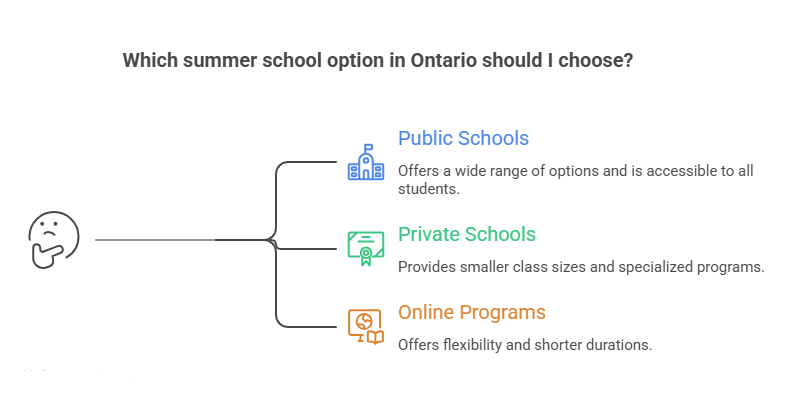
When you think about signing up for summer school in Ontario, you have a few choices. You can pick a program from your local public school board, go with a private school, or use an online provider. Each one has something different to offer. The right one for you will depend on what you want, how you like to learn, and your schedule.
Public schools have many summer school options. Private school summer programs in Mississauga, as one example, may give you smaller class sizes or special classes. For instance, a student at a private school might become a Schulich Leader Scholarship ($100k) recipient at USCA, showcasing the potential benefits of a focused educational environment. Online summer school in Ontario is the most flexible way to learn because you can do it anywhere. The duration is often shorter. You will cover a whole semester in just a few weeks. If you know what each type is like, it will help you pick how to use the summer to get ahead in your studies.
Comparing Public versus Private Summer School (Including USCA Academy)
Choosing between public and private summer schools in Ontario depends on your needs and goals. Public summer schools are usually more affordable and accessible, but may have larger classes and standard support. Private schools like USCA Academy offer smaller class sizes, more course options, and dedicated guidance for university applications. While summer school itself rarely offers scholarships, excelling in a quality program can boost your eligibility for university scholarships. Personalized support in private schools can make a significant difference.
| Feature | Public Summer School | Private Summer School (e.g., USCA Academy) |
|---|---|---|
| Class Size | Generally larger | Smaller, more personalized attention |
| Flexibility | Fixed schedules and locations | Often more flexible scheduling options |
| Support | Standard academic support | Enhanced guidance and university counseling |
| Cost | Often lower cost or free for residents | Tuition fees apply, but with added value |
Online versus In-Person Summer School: Flexibility and Academic Impact
| Aspect | In-Person Summer School | Online Summer School |
|---|---|---|
| Flexibility | Fixed schedule and location; requires daily attendance in a classroom. Less flexibility for travel or work during the summer. | Highly flexible; study from home or anywhere with internet. Easy to combine with summer jobs, family commitments, or travel plans. |
| Academic Impact | Offers direct access to teachers and structured learning, which can help students stay focused and improve grades. | Allows self-paced work; best for motivated students. Can improve grades but requires strong organization and time management. |
| Scholarship Relevance | Completing or upgrading courses in-person can raise your GPA and reduce next year’s course load, supporting scholarship applications. | Completing or upgrading courses online also counts toward your academic record, helping with scholarship eligibility and applications. |
Note: The most important thing is to choose the format where you do your best work, as both online and in-person summer school options in Ontario can help you finish high school courses faster and enhance your academic profile for scholarships.
How Summer School Helps Build a Strong Scholarship Profile in Canada
Summer school is more than just a way to earn credits; it’s a valuable tool for enhancing your scholarship profile. It allows you to improve your grades, focusing on one or two subjects at a time, making it easier to achieve higher scores than during a regular school year. These improved grades are favorable when scholarship programs evaluate your academic performance.
Attending summer school demonstrates your commitment to academics, which scholarship organizations appreciate. Additionally, summer school can help you complete coursework early, freeing up time for extracurricular activities that strengthen your scholarship applications. Consider summer school to achieve your academic and personal growth goals.
Boosting GPA and Meeting OSSD (Ontario Secondary School Diploma) Requirements
- Summer school helps raise your GPA, making your scholarship application more competitive in Canada. Improving grades in key courses can attract the attention of scholarship committees.
- It’s essential for meeting OSSD requirements, such as completing credits, retaking failed classes, or finishing volunteer hours. This ensures you’re eligible for university scholarships.
- Attending summer school shows commitment and initiative. By taking steps to improve your academic standing, you demonstrate persistence and responsibility qualities valued by scholarship reviewers.
Summer school is a practical way to strengthen your scholarship profile and meet both academic and graduation requirements in Ontario.
Enhancing Extracurricular Activities and Leadership Skills in Summer Programs
While grades matter, Canadian scholarships also value extracurriculars and leadership. Taking summer school can free up your schedule during the year, letting you join clubs, volunteer, or take on new activities that make your scholarship profile stand out. Some summer programs, especially at private schools, offer leadership and skill-building lessons that look impressive in essays and interviews. By combining strong marks with involvement outside class, you create a well-rounded application that attracts scholarship committees. They want to see:
- Leadership: Did you lead a project over the summer?
- Time Management: Did you balance summer school and other commitments?
- Initiative: Did you choose summer school yourself?
- Commitment: Did you use summer to improve?
How Scholarships Are Awarded in Canada (Ontario Context)
In Canada, there are scholarships for high school students. Most of them are given for two main reasons. The first is having top grades, and the second is needing money for school. Some places have their own Canadian university scholarship requirements, but all of them look at grades. This is true, especially for entrance scholarships you get as soon as you are accepted.
Some awards will also look at your leadership, things you have done for your town, and other personal wins. If you know about all the kinds of scholarships you can get, it can help you choose what to focus on. You will see that some scholarships are all about having good grades. Others are based on who needs financial aid the most. Now, we will look more at each kind, and learn who can get them.
Merit-Based vs Need-Based Scholarships
Merit-based scholarships are awarded mainly for high grades, so your GPA is important. Attending summer school can help you improve your grades, making you more competitive for these scholarships, which can range from a few hundred to thousands of dollars. Need-based scholarships, or bursaries, are for students who need financial support. You must show financial need and meet minimum grade requirements. Forms about your family’s finances are required. In Ontario, government aid like OSAP may also be available for summer school, depending on your course load and duration.
- Merit-based scholarships: Focus on high grades.
- Need-based scholarships: Focus on financial need.
- Combined awards: Consider both grades and financial need.
- Government aid (OSAP): May be available for summer studies, check eligibility requirements.
What Universities Look For Beyond Grades
Good grades matter, but Canadian universities also want students who contribute beyond academics. They value leadership, community involvement, and special skills gained from sports, clubs, the arts, volunteering, or part-time work. These experiences show you can manage time, work with others, and stay committed to your goals.
Summer school can help by freeing up your schedule during the regular school year, allowing you to join more activities. In your essays and reference letters, highlight your story and achievements. For example, balancing summer school with leading a volunteer program shows you’re someone who will add value to campus life.
Conclusion
To sum up, summer school gives many good things to students in Ontario who want scholarships, addressing the question: Does Summer School Help You Get Scholarships in Canada? It helps boost your GPA and finish your OSSD needs. Taking summer programs can also make your school record look better and show you are serious about learning. You can pick public, private, or online summer school, which lets you find what works best for you. This choice can help you become more likely to get a scholarship.
Schools now do not look at grades only, so summer courses are a good way to do more things outside of class. You can learn new skills and take on leadership roles in these classes. This makes your scholarship application stronger.
If you want to see how summer school can help you on your school path, reach out USCA Academy today!
Frequently Asked Questions
1. Do Canadian universities value summer school credits for scholarships?
Yes, Canadian universities do accept OSSD credits that you earn during the summer break. If your course is from a school that is recognized, the grade will count toward your total average. This average is used to decide if high school students in Canada can get most scholarships. It also shows that you are willing to work hard on your studies.
2. Can summer school improve my chances of getting scholarships in Canada?
Yes, summer school can be a good way to get better in your high school classes. You will have more time to work on a hard subject and can bring up your grade. This helps lift your GPA, too. Getting a higher average makes you stand out for scholarships in Canada. It is a smart choice for those who wonder how to get scholarships in Canada high school.
3. Are there scholarships linked to summer programs in Ontario?
Direct scholarships for summer school are not easy to find. The main thing you get from summer school is better grades. This matters because high-quality private school summer programs give you help to do well in your classes. If you get better grades there, you are more likely to get university entrance scholarships and other financial aid later.
4. How will I get into uni if I take a summer school class?
Taking a summer school class can enhance your university application by demonstrating your commitment to learning and improving your academic skills. It may also provide you with additional credits, potentially boosting your overall GPA, which can positively influence scholarship eligibility and admission decisions at Canadian universities.