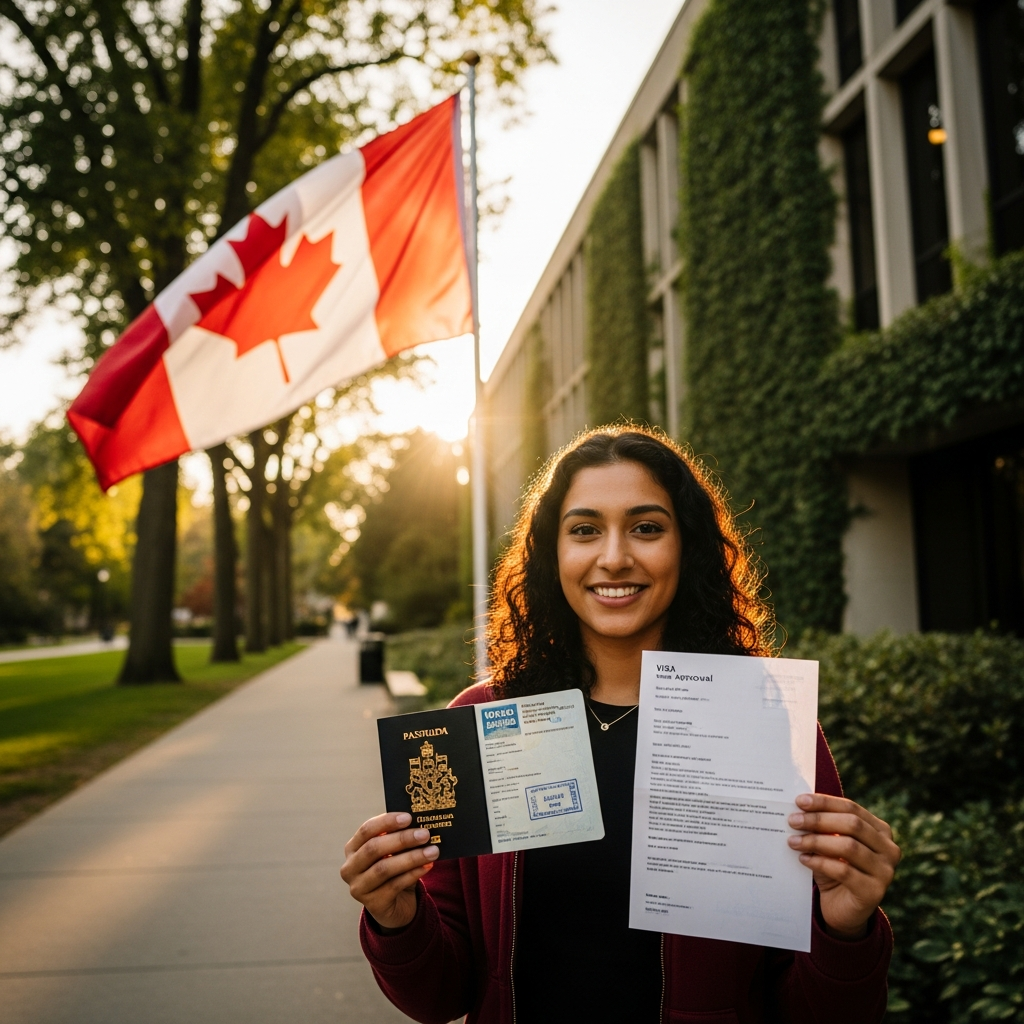
Key Highlights of Canada Study Visa Rejection Reasons
- The most common reason for study permit refusals is the immigration officer’s doubt that you will leave Canada after your studies.
- Insufficient financial proof is a major factor, with the canada visa rejection reasons 2026 highlighting issues with GIC, tuition, and living cost funds.
- A weak Statement of Purpose (SOP) or a study plan that doesn’t align with your goals can lead to a permit refusal.
- Not showing strong ties to your home country is a significant red flag for visa officers.
- Understanding the difference between SDS and Non-SDS applications is crucial to avoid common pitfalls and a high canada study visa refusal rate.
Introduction
Getting a Canadian study permit turned down can feel very hard. Many times, the mistake can be fixed. The main reasons for Canada Study Visa rejection reasons include not showing enough money, having a weak study plan, and not providing strong reasons that you will go home when your studies end. For international students who want to study in Canada, knowing these common Canada Study Visa rejection reasons is key. This helps you make your study permit application stronger. This guide will help you see why permits get denied and what you can do to get your study permit approved.
Canada Study Visa Rejection Reasons: 2026 Updated Insights
The reasons for a study permit refusal for Canada can be hard to understand. In 2024, there was a drop in approval rates. This shows that officers are looking at permit applications much more closely. The biggest issue is still this: the officers do not feel sure that students will leave Canada after their studies.
To build a better application, you need to know about these refusal reasons. Every detail is important. This includes proof of money and the college that you pick. We will go over the main factors that cause rejection and what you can do about them.
Top Factors Leading to Study Permit Refusal in Canada
- Immigration officers may refuse a study permit if they believe your main goal is not to study but to settle or work in Canada permanently.
- Lack of clear financial proof is a major reason for refusal. You must show you have enough funds for tuition, living expenses, and travel; unclear or insufficient financial documents can lead to rejection.
- Weak ties to your home country can also cause refusal. Officers look for evidence, such as family, property, or employment, to prove you’ll return after your studies. If you don’t provide strong proof, your application may be denied.
Financial Proof Issues: GIC, Tuition, & Proof of Funds
Proving you have enough money is a key step in your visa application. You need to show that you can pay your tuition fees and handle the higher cost of living. For 2024, you must show proof of funds of at least $20,635. This amount does not include tuition. This is why the GIC requirement for a Canada student visa matters.
If you do not give clear and enough proof of funds, your visa can be denied. The officers will check your bank statements and other money documents carefully. They want to see that there are no mistakes or gaps. Now, let’s talk about the main mistakes people make with proof of funds and how you can use your documents to show you have stable finances.
Common Mistakes in Proof of Funds
Many students face Canada study visa rejection due to mistakes in their proof of funds. A common error is showing large, unexplained deposits in your bank statement just before applying, which may raise doubts for visa officers. Another mistake is not submitting enough bank statements—Canada’s student visa rules require at least four to six months of financial history. Always ensure documents are complete, translated if needed, and include explanations for any major deposits.
Common mistakes to avoid:
- Unexplained, large deposits in recent bank statements
- Not providing 4–6 months of financial history
- Missing explanations or documents for funds received
How to Show Strong Financial Stability
To prove strong financial stability for your Canada study visa, demonstrate where your money comes from with clear documents. Start with a Guaranteed Investment Certificate (GIC) from a recognized Canadian bank, which proves you have funds for living expenses. Add other documents like paid tuition receipts, recent bank statements, or a sponsor letter to strengthen your case.
Key documents to show financial stability:
- A GIC of at least $20,635 to cover living expenses.
- Bank statements (last 4-6 months) or tuition and housing payment receipts.
- A detailed sponsor letter with income proof and relationship to you.
SOP & Study Plan Mistakes That Cause Rejection
Your Statement of Purpose (SOP) is how you share your story with the visa officer. Many times, sop mistakes for a Canada student visa happen when the letter is too general or does not make clear the purpose of your visit. If your canada study plan does not make sense, or if it does not match your past education or future career goals, your application may be rejected.
Officers want to see that you are really interested in study. Some common canada study plan errors are not telling why you picked your program or why you want to study in Canada. Let’s look at a few weak SOP examples and see how you can write a statement of purpose that is strong, clear, and helps you get approved.
Weak SOP Examples
A weak Statement of Purpose (SOP) lacks detail and fails to show genuine interest in studying. Simply saying “Canada has a great education system” is not enough. Your SOP should clearly connect your chosen program to your background and future plans. Focusing too much on finding a job after graduation can raise suspicion that study is not your main purpose, increasing your risk of refusal.
Here are examples of weak points in an SOP:
- Vague Goals: “I want to study business in Canada to get a good job.”
- Irrelevant Information: Mentioning Canadian views or lifestyle without relating them to study.
- Plagiarized Content: Copying templates or online text.
How to Write a Strong Study Plan
A strong study plan should clearly show your main reason for studying is to gain an education. Start by explaining why you chose your program and school, and connect your studies to your previous education or work experience. Then, discuss your career goals and explain how a Canadian qualification will help you achieve them when you return to your home country, showing you’re not just using study as a path to immigration.
To make your study plan better, be sure to include:
- Specific Reasons for Choosing Canada: Focus on the school’s reputation, research options, or special faculty.
- Clear Connection to Your Future: State your intended job after returning home.
- Acknowledgement of Your Responsibilities: Show you understand student rules in Canada.
Academic Gaps, Low Grades & Course Mismatch
Your school record matters a lot when you apply for a visa. If you have time off from school that you cannot explain, if you have low grades, or if you pick a program that does not match what you studied before, this can be a problem. Getting into a program that does not fit with your past courses for a canada student visa can make an officer think you do not really want an education.
This can cause an academic gaps canada visa rejection, or even a low grades canada student visa rejection. Officers want to see that your education choices make sense over time. Let’s talk more about how your academic history is checked and why it is so key to pick the right program at a well-known college.
How Academic History Impacts Approval
Your academic record shows your commitment as a student. If you have any study gaps, clearly explain them such as working, and mention what skills or experience you gained. Not addressing these gaps can lead to a Canada study visa rejection due to academic history concerns.
Consistently low grades may also worry visa officers. Address this in your SOP by explaining any challenges and highlighting other strengths, like work experience or recent improved grades. To improve your chances, connect your past studies, work, and future goals in a logical, honest way to show you are a genuine, motivated student.
Choosing the Right Program and Recognized Colleges (DLI Matters)
The school and program you choose are key to your Canada study permit approval. Always get your acceptance letter from a Designated Learning Institution (DLI) only recognized schools like USCA Academy can admit international students. USCA Academy helps by offering guidance to select suitable programs that match your academic background or career goals. If you pick a new field or lower-level program, you must justify your choice.
- Ensure your school is a DLI; USCA Academy is a recognized DLI.
- Choose a program aligned with your education or work experience.
- USCA Academy provides expert counseling to help explain and support your study plan.
Proving Ties to Home Country & Genuine Intent
One of the most common reasons for getting a refusal is that people do not convince the visa officer they will leave Canada when their studies are done. You have to show strong ties to your home country. This tells the officer that your visit is only for school and that you have good reasons to return home.
Canada does allow dual intent, which means you can plan to study for a short time and later hope for permanent residence. Still, your primary purpose should be your education. When you apply for a Canada visa, you should show you really want to study, but also show you will go back to your home country. This balance is very important. Let’s talk about why this matters so much and how you can prove it well.
Why This Is a Top Rejection Reason
Not showing strong ties to your home country is a main reason for Canada study permit refusals. Immigration officers want clear proof you will return home after your studies, not just move to Canada. Common refusal reasons include not enough family, financial assets, or a stable job in your home country. These factors show you have reasons to return. Officers especially look for these ties:
- Family Obligations: Spouse, kids, or parents depending on you.
- Economic Roots: Owning property, a business, or having a job offer.
- Social Connections: Community involvement or group memberships.
Provide proof of these ties to strengthen your application.
How to Prove Strong Intent
To prove strong intent, clearly show that your main reason for going to Canada is to study, and explain how this education will help your career in your home country. Back this up with solid proof of your ties at home don’t just mention family, but include documents like property deeds, business papers, or a letter from your employer about your job waiting for you. These add credibility and lower refusal risk.
Here are some good ways to show your intent:
- Document Everything: Provide proof of family, property, or investments.
- Get a Letter of Leave: Secure a note from your employer.
- Explain Your Goals Clearly: Outline post-study plans in your SOP.
SDS vs Non-SDS: Key Differences & Rejection Risks
If you want to obtain a Canadian study permit, you can apply through either the Student Direct Stream (SDS) or the non-SDS (regular) stream. The SDS offers a quicker process but is available only to students from specific countries and has stricter initial requirements. Understanding the differences between SDS and non-SDS is crucial for your application. Choosing the wrong stream or failing to meet the specific criteria could lead to a permit refusal. Therefore, it’s essential to prepare your application according to the right stream. Here’s an overview to help you decide which Canadian study permit stream suits you best.
Which Path Is Safer?
Deciding between SDS and non-SDS for a Canada study visa depends on your ability to meet requirements. SDS is safer and faster if you can show proof like a $20,635 GIC and full first-year tuition payment upfront. This reassures officers about your finances and usually leads to quicker approvals.
If you can’t meet SDS criteria, non-SDS is an option but comes with stricter checks on finances and ties to your home country, making refusals more common. Choose the path you’re fully prepared for, and ensure all documents are strong to improve your chances of getting approved to study in Canada.
Documentation Comparison
The main difference between SDS and non-SDS Canada visa streams is in documentation, especially proof of funds. SDS has strict, upfront requirements like full first-year tuition payment and a $20,635 GIC, making the process faster and more predictable. Non-SDS offers more flexibility but demands varied proofs like bank statements, sponsorship letters, or assets, increasing rejection risk if documents are insufficient. Below is a quick comparison:
| Requirement | Student Direct Stream (SDS) | Non-SDS (Regular Stream) |
|---|---|---|
| Proof of Tuition Payment | Required (Proof of full payment for the first year) | Recommended |
| GIC | Required (Minimum $20,635) | Recommended, but not mandatory |
| Language Test | Required (IELTS score of 6.0 or higher in each band, or equivalent) | Required, but scores can be more flexible depending on the DLI |
| Medical Exam | Required upfront | May be requested later |
Real Visa Refusal Examples (What Went Wrong)
Seeing real-life examples can help you see why applications be denied. Refusal letters use the same phrases a lot, but if you look closer, you can find the real problems. The extensive use of this reason, “I am not satisfied that you will leave Canada at the end of your stay,” was repeated often last year.
This be a general reason. It can stand for many things, like not enough home ties or a study plan that does not fit. By looking at common examples, especially for students who want to go to places like Ontario, we can see what went wrong. This way, you know how to avoid getting the same refusal letters in the future.
Common Situations International Students Face (Toronto, Mississauga, Brampton)
If you’re an international student aiming to study in Ontario cities like Toronto, Mississauga, or Brampton, understanding visa refusal reasons is essential. Many applications are rejected because officers doubt the applicant’s study plan or financial stability. For example, choosing a basic business diploma at a private college after earning a technical degree can raise questions. Officers may suspect the intent is immigration rather than education. Here are common issues leading to refusal:
- An IT graduate from India applies for a hospitality diploma in Brampton without clear justification.
- Large unexplained cash deposits from relatives.
- Weak proof of home country ties.
- Choosing a small college despite qualifying for university.
How to Avoid Canada Study Visa Rejection
It is important to know how to avoid Canada study visa rejection. You need to get ready and check every detail. The aim is to give a full, clear, and strong application that will not leave any doubt for the visa officer. You should try to have your application readiness set from all sides.
It helps to think about everything, from the program you pick to the way you show your money details. Every step is important. If you use a checklist and follow good steps, you can make your chances of success go up. Here is an important checklist and useful tips to help you go through the process with fewer problems.
Essential Checklist for a Successful Application
Using a clear Canada student visa checklist is key to a successful application. Before submitting, double-check all required documents and ensure nothing is missing or incomplete. Consistency across your SOP, proof of funds, and academic records is important to show your genuine intent to study in Canada. An organized application improves your chances of approval. For example, if you’re applying to a reputable school like USCA Academy, clearly explain how their program fits your career goals.
Here is a Canada student visa checklist of key items you must have for a good application:
- Complete and Accurate Forms: Check all your information, dates, and get all the right signatures.
- All Required Documents: Have your valid passport, a letter of acceptance from a DLI, and a provincial attestation letter (PAL).
- Strong Proof of Funds: Get a GIC, your tuition receipt, and 4-6 months of clear bank statements.
- Compelling SOP: Write a letter about your study plan, career goals, and how you are linked to your home country.
Actionable Tips for Parents, Students, and Consultants
For students, start your Canada study visa application process early. Gather all needed documents ahead of time, including your SOP and financial proofs. Always provide honest information and ensure your application reflects your goals. Parents should organize finances well in advance and avoid large last-minute deposits; stable funds are important. Consultants must clearly explain steps and document requirements to students.
Here are some tips to strengthen your application:
- Students: Always be truthful, including about past visa refusals.
- Parents: Provide clear sponsorship letters and accurate financial documents.
- Consultants: Check the full application for errors.
- Everyone: Consider expert help from schools like USCA Academy.
Reapplication Strategies After Refusal
Getting a Canada visa refusal after biometrics can be hard to take. Still, this does not mean you have to give up. You can reapply after a permit refusal. The most important thing is to find out why your application got denied. You will see the reasons in your refusal letter. You should also get the visa officer’s notes for more details.
If you send in the same application again without making any changes, they will likely refuse your permit another time. You need to fix the exact worries the visa officer had. Next, let’s talk about ways to make your case stronger for your next try and what happens if you want to make an appeal.
How to Strengthen Your Case When Reapplying
When reapplying for a Canada study visa after a refusal, focus on the reasons for rejection. Carefully read the officer’s notes to understand what needs to be improved. For financial insufficiency, provide clear, well-organized proof of funds. Write a new Statement of Purpose, directly addressing the refusal and including new supporting documents. If intent to return is questioned, add solid proof like a property deed or employer letter.
To strengthen your reapplication:
- Address Every Concern: Respond to all issues from the refusal notes.
- Provide New and Improved Information: Submit updated documents.
- Write a Strong Letter of Explanation
- Seek a Second Opinion
Appeal Process Explained and Timeline
If you believe the visa officer made a mistake in fact or law, you can ask the Federal Court of Canada to review the decision. This appeal is a legal process, not simply reapplying, and you cannot introduce new documents. The appeal process can be lengthy, often taking several months or more than a year. Because it involves complex laws, it’s wise to seek help from an experienced immigration lawyer who can assess your case and guide you.
Here’s how the appeal works:
- File for Leave: Request a review within 15 days of refusal.
- Judicial Review: A judge checks for mistakes.
- Possible Outcomes: Appeal denied or case returned for reconsideration.
Conclusion
To sum up, it is important for international students to know the main Canada Study Visa Rejection Reasons that can lead to a permit denial. If you want to get your permit, you need to pay close attention to showing enough money, writing a clear statement of purpose, and picking the right courses and colleges. This will help you raise your chances of approval. It also helps to show strong ties to your home country and to choose the best way to apply, either SDS or Non-SDS. Remember, it is always good to be well prepared and careful with your application. If you are still not sure or if you need more help, our experts are here for you. They can guide you and make it easier as you go through the application process.
A strong application starts with the right academic choices. USCA Academy supports students with program selection, high school pathways, and preparation for studying in Canada helping you reduce common mistakes that lead to visa refusal.
Frequently Asked Questions
1. Does a Canada study visa refusal rate impact future applications?
No, the high Canada study visa refusal rate does not impact your own application. If you got a permit refusal before, you have to tell about it in any new application. If you are honest and talk about why you got the permit refusal, it does not have to hurt your chances for a study permit.
2. What documentation errors should I avoid when applying?
Do not let missing documentation be a problem for you. A lot of people make simple mistakes. Some do not finish all forms. Others do not explain large deposits in their bank statements. Many forget to include certified translations for their supporting documents. Make sure your proof of funds is clear. Fill out all the forms needed for your study permit fully and the right way. This helps you avoid having your study permit application rejected.
3. How can I improve my chances after a Canada study visa rejection?
To have better chances of success, first get the officer’s notes. These notes will help you see why your study permit was refused. When you apply again after a permit refusal, include new proof that answers these problems. Make sure to write a clear and strong new SOP. Show in it how you made your study permit application better. This is one of the best Canada study visa success tips.