
Key Highlights of accommodation in mississauga
- Mississauga has many kinds of places where you can live. You will find apartments, condos, basement apartments, and rentals that you share with others.
- The usual rent depends on what kind of accommodation you pick. Shared rental places are the most affordable ones.
- There are many neighborhoods in Mississauga. City Centre is good for people who work, while Erin Mills is a good choice for students and families.
- In Ontario, the Residential Tenancies Act keeps your rights safe as a tenant. It covers things like your lease, deposits, and your privacy.
- If you are new here, take some time to look into different neighborhoods. You will need to know your lease terms and also plan for what you spend on utilities and transportation.
- If you do not have a credit history in Canada, you can still find housing in Mississauga. You just need the right papers and to be ready.
Introduction
Welcome to Mississauga! You have picked a great place if you want a new home. The city is one of Canada’s most diverse and is growing every year. It is good for newcomers, students, and families. The people here are welcoming. Finding the right accommodation in Mississauga is an important first step for you in this city.
This guide talks about housing options, including modern condos located in the city center and quiet family homes. The tips in this guide will help you feel sure when you make your choice. You will find what you need as you start your new life in this vibrant city. For families considering education options, you can also explore USCA Academy’s Elementary School programs in Mississauga.
Accommodation in Mississauga: What You Need to Know
Looking for accommodation in Mississauga requires knowledge of the local market and available options. The rental process involves searching online listings, viewing properties, and submitting applications. Be prepared to provide proof of income, references, or consent to a credit check. Before signing a lease, consider the overall cost of living, including utilities and transportation.
Planning for these expenses ensures you choose a place within your budget. International students should familiarize themselves with lease rules and their rights before making any deposits. You may also want to check International School programs for accommodation and student support options.
What Does “Accommodation” Mean in Mississauga & Who Rents It
In Mississauga, “accommodation” refers to any place you can rent and live in, such as a single room, apartment, or house. The renter is the tenant, and the property owner is the landlord. Many types of people rent in Mississauga: international students, newcomers to Canada, young professionals, and families. Renting is popular because it offers flexibility and doesn’t require buying a home. Shared accommodation is a common choice for students and newcomers, as it helps save money and make new friends. Whether you’re a student or starting a new life, Mississauga offers a variety of rental options for everyone.
Smaller class sizes at Mississauga private school ensure every student receives personalized support.
Types of Accommodation in Mississauga
Mississauga offers several accommodation types for newcomers, students, families, and professionals. The table below compares the most common options, typical prices, and who they are best suited for.
| Accommodation Type | Typical Monthly Rent (CAD) | Best For | Key Pros | Key Cons |
|---|---|---|---|---|
| Apartments & Condos | $2,200–$2,800 (1-bedroom) | Families, professionals | Private, secure, close to transit | Higher rent |
| Basement Apartments | $1,400–$1,900 | Newcomers, small families | Lower cost, private space | Limited light |
| Shared Rentals / Rooms | $800–$1,200 | Students, singles | Most affordable | Less privacy |
| Homestay | $900–$1,300 (often incl. meals) | Newcomers, minors | Supportive, furnished | Less independence |
| Student Accommodation | $1,000–$1,600 | International students | Close to schools (e.g., near USCA Academy) | Limited availability |
| Short-Term Rentals | $90–$150 per night | Temporary stays | Flexible, furnished | Expensive long-term |
Best Mississauga Neighborhoods for Newcomers
Picking the right area to live in is as important as choosing the right house. Mississauga, a large city in Ontario, features diverse neighborhoods, each with its unique feel. For those seeking action, City Centre, centered around Square One Shopping Centre, offers condos, dining, and excellent public transit. Quieter areas like Streetsville and Clarkson are ideal for families. If you prefer a waterfront vibe, Port Credit boasts charming shops and parks with views of Lake Ontario. Nature lovers may enjoy Rattray Marsh Conservation Area, known for its serene walking trails. Explore each neighborhood to find the best fit for you.
Best Areas for Students, Families, and Working Professionals
For students at the University of Toronto Mississauga (UTM), Erin Mills and Cooksville are great choices due to direct bus lines and student-friendly amenities. There are many apartments and rooms available, making it easy for students to find housing. For those attending private or international schools like USCA Academy Private School in Mississauga, living centrally with easy access to transit is smart.
Families look for safe areas with quality schools, parks, and activities:
- Streetsville: Historic charm, community events, and excellent schools.
- Clarkson: Diverse housing and easy GO Transit access.
- Lorne Park: Spacious yards, mature trees, and top schools.
Working professionals often choose City Centre for its condos, highway access, and proximity to transit.
Ontario Rental Rules and Tenant Rights
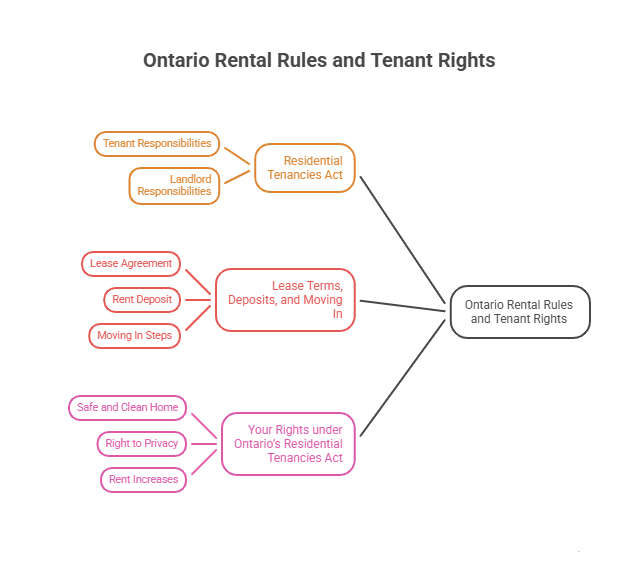
When you rent a home in Mississauga, you have some protection because of the laws in Ontario. The main rule for rental housing in Ontario is called the Residential Tenancies Act (RTA). The RTA explains what tenants and landlords must do during the rental process. This helps make things fair for both sides.
It is important to learn about your main tenant rights. When you know these, it is easier to deal with your landlord, starting from when you sign your lease until you move out. You need to know about things like rent going up, how to ask for repairs, and your right to privacy. We are going to look at some of the main rules for tenants and landlords in Ontario rental housing.
Lease Terms, Deposits, and Moving In
A lease is a legal contract between you and your landlord. In Ontario, leases are usually for one year and then switch to month-to-month, giving you more flexibility. Always read and understand your lease before signing to know your rights and responsibilities.
Landlords can only ask for a rent deposit equal to one month’s rent, which covers your last month security or damage deposits are not allowed by law.
When moving in, follow these steps:
- Take photos or videos of any existing damage.
- Walk through with your landlord and sign a checklist.
- Ask which bills you pay (gas, water, power).
- Learn how and when to pay rent.
These steps help both tenants and landlords start smoothly.
Your Rights under Ontario’s Residential Tenancies Act
- The Residential Tenancies Act gives you important rights as a tenant, such as living in a safe, clean, and well-maintained home. Landlords must repair issues and follow health and safety laws.
- You have a right to privacy; landlords usually need to provide 24 hours’ written notice before entering your unit, except in emergencies, and must state the reason and time.
- Rent can only be increased once every 12 months with 90 days’ written notice. The Ontario government sets a yearly limit on rent increases to protect you from sudden, large hikes.
How to Avoid Common Mistakes as a Newcomer
The housing search for accommodation in Mississauga can be tough, but knowing what to check helps avoid problems. Never send money before seeing a rental in person and always read the lease before signing. Visit any place before agreeing. Ask if utilities are included, since some rentals are “all-inclusive” but others charge extra for things like heat and water. If you want to save money, consider finding roommates to split costs.
Here are a few mistakes to avoid:
- Ignoring Location: When looking for accommodation in Mississauga, check for easy access to transit, grocery stores, and your work or school.
- Not Getting a Written Agreement: Always get a written lease.
- Paying with Cash: Only pay cash if you get a receipt.
- Skipping References: Ask for references when choosing roommates.
Conclusion
To sum up, you do not have to feel stressed when looking for accommodation in Mississauga. There are many choices like apartments, condos, and shared options, including accommodations specifically tailored for students, such as those offered by USCA Academy. Newcomers, families, and international students can find a place that fits what they need. When you know more about the rental market in the city, your rights as a renter, and which neighborhoods are good, you can make better choices.
Stay aware of what problems might come up and make use of the resources that are in the community. This will help you handle your housing search with more confidence. If you have questions or want help made just for you, reach out. This way, you can find the best option for you, including USCA Academy accommodation, and make your move to Mississauga easier.
Frequently Asked Questions
1. Is Mississauga expensive compared to Toronto?
The cost of living in Mississauga is usually a bit lower than in Toronto, but the price for a place to live is almost the same. When you look at apartments for rent in Mississauga, you might find some that cost a little less, but there is not much of a gap. Both cities are in the Greater Toronto Area. The cost of living in Mississauga and Toronto is high when you compare it to most other places in Canada.
2. Can international students rent without a Canadian credit history?
Yes, international students can rent a place in Canada even if they do not have a Canadian credit history. But you might need to do a bit more to show landlords you can pay rent. Many landlords will take other papers instead, like proof you are enrolled in a school, a letter from your school, or proof you have enough money to pay for the rent. You can also offer a guarantor. This is a Canadian resident who will co-sign your lease with you. It helps make your rental application stronger.
3. Is accommodation in Mississauga furnished or unfurnished?
Most of the long-term places to stay like apartments and houses in Mississauga do not come with furniture. You will have to bring your own things to these types of accommodation. But, some options that are made for students, like rooms for rent, homestays, or Mississauga accommodation for students in special buildings, often have furniture. Always check what will be in the place before you agree to stay there.
4. How much income or documents are required to rent accommodation in Mississauga?
Landlords usually ask for proof of income. This can be a job letter or pay stubs. They also want references from past landlords and a filled-out rental application. Many landlords will do a credit check. If you don’t have income, you may show a bank statement. The bank statement should prove you have enough money to pay rent for a few months. This can often work with landlords.