
KEY HIGHLIGHTS
- E-learning is the delivery of education through digital tools and the internet, including video lessons, interactive quizzes, and live virtual classrooms.
- The global e-learning market was valued at approximately USD $325 billion in 2025 and is projected to reach $665 billion by 2031, according to Arizton Advisory.
- E-learning improves knowledge retention by 25 to 60 percent compared to 8 to 10 percent for traditional classroom instruction, according to research compiled by Didask.
- In Canada, e-learning includes accredited options such as Ontario’s eLearning credits, virtual high schools, and private online schools that follow provincial curricula.
- For high school students, e-learning through accredited platforms allows you to earn recognized credits toward your Ontario Secondary School Diploma (OSSD) or BC Adult Graduation Diploma.
Introduction
E-learning is education delivered through electronic devices and the internet. Instead of sitting in a physical classroom at a fixed time, you access lessons through a computer, tablet, or phone on your own schedule or in a live virtual session with a teacher. The concept covers everything from a short video tutorial to a full Ontario high school credit course completed entirely online.
According to Arizton Advisory, the global e-learning market was valued at approximately $325 billion USD in 2025. That scale reflects how deeply digital education has entered schools, workplaces, and homes worldwide. In Canada, governments, universities, and private schools have all built structured e-learning systems that align with provincial curricula and national credential standards.
This guide explains exactly what e-learning is, how it works, what the main types are, and what it means specifically for students and parents navigating school options in Canada.
What Is E-Learning? The Core Definition
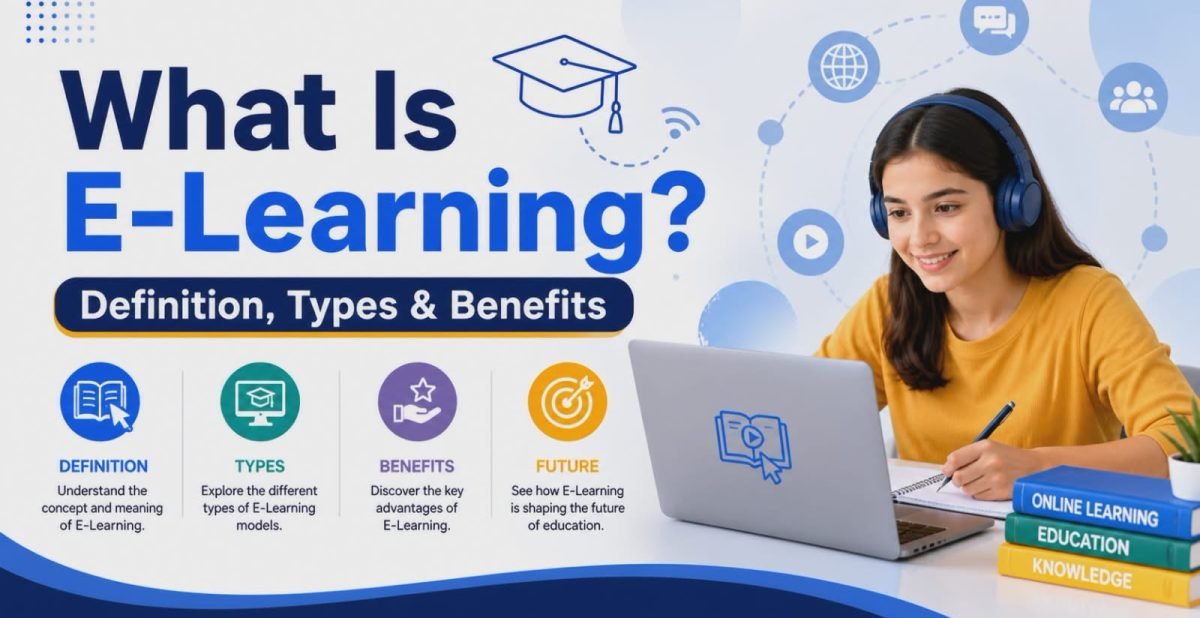
E-learning stands for electronic learning. It refers to any form of education or training delivered through a digital device using the internet or a local network. The term covers a wide range from self-paced video courses to instructor-led virtual classrooms and interactive simulations.
E-learning is not a single format. It is a broad category that includes how content is delivered, how students and teachers interact, and how progress is tracked. A student watching a recorded lesson on Khan Academy and a student attending a live Zoom class with a certified Ontario teacher are both engaging in forms of e-learning. What distinguishes e-learning from simply “using a computer” is that it is structured, tracked, and designed around specific learning outcomes.
| Feature | Traditional Classroom | E-Learning |
| Location | Fixed physical school | Anywhere with internet |
| Schedule | Set timetable | Flexible or scheduled |
| Pace | Group-paced | Self-paced or structured |
| Teacher interaction | In-person | Virtual (live or recorded) |
| Tracking | Paper-based tests | Digital dashboards, real-time data |
| Accreditation | Ministry-approved | Can be Ministry-approved (if school is inspected) |
For Canadian students, the key factor is whether the e-learning program is accredited. In Ontario, for example, the Ministry of Education inspects private online schools. Credits from Ministry-inspected schools whether you take the course online or in person count equally toward your OSSD. You can read more about this in our guide to online school Ontario options.
The Main Types of E-Learning
Synchronous E-Learning
Synchronous e-learning happens in real time. Teachers and students meet at a scheduled time through video conferencing or a live virtual classroom platform. You can ask questions, participate in discussions, and receive immediate feedback the same as a classroom, but online.
This format suits students who benefit from structure and direct interaction. Many private schools use synchronous sessions for core subjects to maintain engagement and replicate the in-person school experience.
Asynchronous E-Learning
Asynchronous e-learning lets you access recorded lessons, readings, and assignments on your own schedule. There is no fixed class time. You submit work by deadlines but learn at a pace that fits your daily routine.
This is the most common format in online learning courses in Canada offered by universities, colleges, and private high schools. Asynchronous learning works well for students balancing school with athletics, part-time jobs, or family responsibilities.
Blended or Hybrid E-Learning
Blended learning combines in-person and online elements. A student might attend school two days a week and complete coursework online on the other three days. Many Canadian schools adopted this model permanently after the 2020 shift to remote learning, including several private schools in Ontario.
Self-Paced E-Learning
Self-paced learning means you move through course content at your own speed with no set deadlines for individual lessons. Progress tests unlock the next module. This format is common in platforms like Khan Academy and in certain private online high school programs. It suits independent learners who have strong self-discipline.
How E-Learning Works in Canadian Schools
The Ontario eLearning Credit Requirement
Since 2020, Ontario’s Ministry of Education has required graduating high school students to earn at least two eLearning credits as part of their 30-credit OSSD requirement. This policy recognizes that digital literacy and the ability to learn effectively online are essential skills for post-secondary study and work. You can read more about the full Ontario credit structure in our Ontario high school curriculum guide.
Accredited Online High Schools in Ontario
In Ontario, private online high schools that are inspected by the Ministry of Education deliver e-learning courses that count fully toward your OSSD. These schools employ Ontario-certified teachers, follow provincial curriculum guidelines, and submit student results to OUAC (the Ontario Universities Application Centre) for university admissions.
At USCA Academy, for example, students access a fully accredited online OSSD program through an interactive digital platform that includes multimedia lessons, virtual labs, and real-time teacher support. Accreditation is what separates a recognized diploma-granting program from a course that simply exists online.
E-Learning for International Students in Canada
International students in Canada increasingly use accredited e-learning to complete their Canadian high school diploma while managing study permit requirements or living outside major urban centres. If you are an international student comparing your education options, our guide to cheap courses for international students in Canada covers cost-effective pathways including online study options.
The Benefits of E-Learning for School Students
Flexibility. You control your schedule. Students in sports programs, performing arts, or jobs can structure study hours around other commitments without falling behind.
Access. A student in a rural area of Canada can take the same Advanced Functions or Biology course as a student in downtown Toronto. TheCanada education rate report shows that geographic access to quality schooling remains unequal in many provinces e-learning directly addresses that gap.
Personalized pace. Asynchronous formats let you re-watch a lecture on quadratic equations as many times as needed, or skip content you already know.
Documented progress. Digital platforms track every assignment, quiz score, and lesson completion. Teachers and parents get real-time dashboards that show exactly where a student needs support.
Retention advantage. Research compiled by Didask shows that e-learning improves knowledge retention by 25 to 60 percent compared to 8 to 10 percent in traditional face-to-face settings, partly because students can revisit material and receive immediate feedback.
The Challenges of E-Learning
E-learning works best when students have reliable internet, a suitable device, and a structured environment at home. Without these, engagement drops. A 2025 survey by the World Economic Forum found that more than 54 percent of students globally prefer flexible learning schedules but that same flexibility requires strong self-discipline to maintain.
Common challenges include:
- Screen fatigue from extended device use
- Reduced social interaction with peers
- Difficulty concentrating without a scheduled classroom environment
- Unequal access to devices and bandwidth in lower-income households
- Not all online courses are accredited you must verify the school’s inspection status before enrolling
E-Learning vs Traditional School: Which Is Better?
Neither format is universally better. The right choice depends on your learning style, life circumstances, and the specific program’s accreditation status.
Students who thrive in e-learning tend to be self-motivated, comfortable with technology, and managing commitments that make a fixed school schedule impractical. Students who benefit most from in-person school include those who learn through discussion, hands-on experiments, and consistent peer interaction.
Many families in Canada choose accredited private schools like USCA Academy that offer both structured in-person support and online flexibility. You can explore a full comparison in our guide to best private schools in Ontario.
Conclusion
E-learning is education delivered through digital platforms and the internet, covering everything from self-paced video lessons to live virtual classrooms with certified teachers. In Canada, it includes accredited programs that count toward provincial diplomas the Ontario OSSD being the most recognized and flexible options that serve international students, adult learners, and high school students managing full schedules.
For families choosing between online and in-person school, the most important question is accreditation. A Ministry-inspected online school delivers the same recognized credentials as a physical classroom. If you are exploring online education options in Canada, start by reviewing what virtual school programs exist in your province, and then confirm that any school you consider is approved by the relevant provincial ministry before enrolling.
Frequently Asked Questions
1.What is the difference between e-learning and online learning?
The two terms are used interchangeably in most contexts. “E-learning” is the older technical term that emphasizes the electronic delivery method, while “online learning” describes the same concept with a focus on internet access. In Canadian school systems, both refer to courses taken via digital platforms rather than in a physical classroom.
2.Is e-learning effective for high school students?
Research from Didask shows e-learning improves retention by 25 to 60 percent compared to traditional formats when the material is well-structured and students stay engaged. Effectiveness depends heavily on the quality of the program, whether a certified teacher is involved, and the student’s self-discipline. Ministry-inspected online programs in Ontario meet the same quality standards as in-person schools.
3.Does e-learning count toward an OSSD diploma in Ontario?
Yes if you take your courses through an Ontario Ministry of Education-inspected online school. Credits earned through an accredited private online school count the same as credits from a public school. Since 2020, Ontario also requires students to complete at least two eLearning credits as part of their 30-credit graduation requirement.
4.What technology do you need for e-learning?
At minimum, you need a reliable internet connection and a device laptop, desktop, or tablet. Most accredited e-learning platforms in Canada work through a standard web browser. Some programs use Google Classroom, Moodle, or proprietary school portals. A quiet study space and headphones for live sessions improve focus.
5.Can international students in Canada take e-learning courses?
Yes. Many private schools in Canada, including USCA Academy, offer accredited online programs accessible to international students. These programs allow students to earn an Ontario Secondary School Diploma from outside Canada, which is recognized by universities in Canada, the US, UK, and Australia.
6.What are the disadvantages of e-learning compared to traditional school?
The main limitations are social isolation, screen fatigue, and the need for strong self-management. Without a scheduled classroom and peer group, some students lose motivation. Students who need hands-on experiments, group work, or frequent in-person teacher support often perform better in a traditional or hybrid setting.