


Key Highlights of political science for law school in canada
- A political science undergraduate degree provides an excellent pathway and strong foundation for legal education at Canadian law schools.
- The program develops essential critical thinking, analytical, and writing skills that are highly valued by law school admissions committees.
- Studying political science gives you a thorough understanding of political systems, which is directly relevant to many areas of law.
- Top Canadian law schools like the University of Toronto and McGill University have well-regarded political science programs for future law students.
- While a popular choice, a political science degree is not the only path; other majors like history, English, and criminology also prepare you for law school.
- Career opportunities after law school with a political science background extend beyond the legal profession into public policy and international relations.
Introduction
Are you thinking about going to law school in Canada? You might wonder what undergraduate program is best for you. Many people who want to be lawyers pick political science. It is a good choice. Choosing political science for law school in Canada can be a smart move. It helps you get ready for what comes in legal studies and helps with your career. This guide will tell you why political science is popular and how it can help you as you go to a Canadian law school.
Political Science for Law School in Canada: Is It the Right Academic Pathway?
Yes, political science is an excellent choice for aspiring law students in Canada. This field closely aligns with legal studies, providing insights into how governments function, the structure of the legal system, and the processes of lawmaking. Many students choose political science as their undergraduate degree because it builds a solid foundation for the principles encountered in law school. A political science degree demonstrates to law faculties that you are committed to a legal career and prepared for the rigors of legal education, making the transition from undergraduate studies to law school smoother.
What Is Political Science? An Overview for Future Law Students
Political science teaches you about government, public policies, and political actions, exploring how power operates at local, national, and global levels. It covers how different countries use their own political systems and the core ideas that influence political life.
As an undergraduate, you’ll study topics like Canadian politics, elections, and human rights. This broad approach helps you understand how political forces shape society and laws. Political science gives you valuable insights into how politics and government work knowledge that is essential if you’re considering law school in Canada.
Why Political Science Matters for Law School in Canada
Having a political science background is valuable for law school in Canada. Political science and law are closely related, letting you learn about the legal system, government operations, and public policy creation. This foundation prepares you for law school subjects like constitutional and administrative law. Studying political science also encourages critical thinking about societal issues from multiple perspectives. Here are the main ways political science helps you in law school:
- Direct Alignment with Legal Concepts: You see how law and government interact.
- Essential Skill Development: You build research, analysis, and writing skills.
- LSAT Preparation: Logical reasoning and reading abilities improve.
- Contextual Understanding: You understand why and how laws are made.
The Academic Pathway: From High School to Law School in Canada
The pathway to law school in Canada begins well before your application. It starts in high school, where having a strong academic background is essential. Following high school, you will pursue an undergraduate degree, which is a crucial step before applying to law school. Your performance at each stage is significant as it helps you fulfill admission requirements. Making informed choices about your high school courses and your undergraduate major is vital. Planning ahead is necessary to develop the skills and grades that law schools seek, ultimately shaping a successful journey to a legal career.
Choosing the Right High School Courses for Law School Aspirations
Getting ready for law school can start in high school by picking courses that build key skills. While there are no mandatory classes, subjects that focus on writing, research, and critical thinking are helpful. Choose courses that develop your abilities in reading, analysis, and argumentation, as these skills are essential for legal studies later on. Consider the following subjects:
- English (ENG3U/ENG4U): Builds writing, reading, and analytical skills.
- History (CHY4U/CHC2D): Teaches research skills and historical context.
- Social Sciences (HSP3U/HHS4U): Offers insights into society and current issues.
- Debate or Public Speaking (IDC4U/GLS1O): Increases your confidence in presenting and defending arguments.
How Political Science Prepares You for Canadian Law Schools
Studying political science as your undergraduate degree effectively prepares you for law school in Canada. The curriculum encourages critical thinking akin to that of a lawyer, as you engage with complex texts, debate various ideas, and craft well-reasoned arguments. These skills are essential for legal education.
A political science program offers insights into the societal factors influencing law, covering government, public policy, and political theories. This knowledge not only aids in understanding legal issues but also enhances your analytical abilities. This blend of skills and information positions you for success in law school and your future career.
Skills Developed Through Political Science Studies
A political science degree builds strong skills that Canadian law schools value. You’ll improve at breaking down complex problems, analyzing facts, and understanding different sides of an issue. For example, writing research papers on new laws helps you gather data, read important sources, and make clear arguments. Doing this regularly strengthens your research, logical reasoning, and critical thinking all essential for law school success.
The key skills you will get include:
- Analytical and Critical Thinking Skills: Break down hard topics and consider many viewpoints.
- Research and Writing Skills: Find solid sources and express ideas clearly.
- Communication and Debate: Share and discuss ideas effectively.
- Logical Reasoning: Build strong, fact-based arguments.
Relevance of Political Science Coursework to Law School Admissions
In Canada, law schools don’t require a specific major, but political science can strengthen your application. Admissions committees appreciate students who handle challenging coursework. Political science, with classes like public law, constitutional theory, and international relations, directly connects to legal studies and demonstrates academic readiness. Seeing these courses on your transcript signals familiarity with key legal concepts and boosts your application. A background in political science can give your law school application a boost by showing:
- Academic Preparation: You’ve studied topics essential for legal studies.
- High GPA Potential: Success in a rigorous major shows you’re capable academically.
- Informed Interest: Your major demonstrates genuine interest in society’s rules.
Is Political Science the Best Major for Law School Aspirants in Canada?
Political science is often regarded as a strong major for law school in Canada due to its alignment with essential legal skills. It covers topics like government, public policy, and legal institutions, which can be beneficial for aspiring lawyers. However, the best major is one that excites you and allows you to excel. Law schools prioritize high grades and strong LSAT scores. If you enjoy political science, you’re likely to achieve a good GPA. Other majors in social sciences, humanities, or STEM can also prepare you for law school, as they contribute to developing critical thinking and writing skills.
Comparing Political Science with Other Common Pre-Law Majors
When deciding on a pre-law major in Canada, political science is popular, but other options like criminology, business, history, or English have their strengths. Political science provides a broad understanding of government and policy, while criminology focuses on the justice system. Humanities majors excel in writing and critical thinking, and science or business backgrounds help in specialized legal fields. Law schools accept many degrees; political science remains the most common.
| Major | Key Strengths for Law School |
|---|---|
| Political Science | Understanding of government, law-making, and public policy. Direct relevance to constitutional and administrative law. |
| Criminology | In-depth knowledge of the criminal justice system, criminal law, and procedure. |
| History | Strong research skills, analysis of precedent, and evidence-based argumentation. |
| English | Advanced textual analysis, nuanced language skills, and persuasive writing. |
| Business/Economics | Analytical skills, understanding of regulatory law, and data-driven analysis. |
Pros and Cons of Political Science for Law School Candidates
Choosing political science as your undergraduate major offers a solid foundation for law school, as both areas share many subjects. You gain essential skills and relevant knowledge before starting your legal education. However, since many law school applicants have this major, you’ll need to stand out with excellent grades or unique experiences.
- Pro: You develop skills needed for law school Canada, such as critical thinking and analysis.
- Pro: You get a strong foundation in topics like constitutional law and public policy.
- Pro: The program shows admissions committees that you are interested in law and governance.
- Con: You are competing with many political science graduates for law school places.
Political Science Degree vs. Pre-Law Programs: Understanding the Difference
| Aspect | Political Science Degree | Pre-Law Programs |
|---|---|---|
| Definition | A Bachelor of Arts focusing on politics, government, and theory. | Not a major; offers guidance for law school applications. |
| Structure | Involves a set curriculum of courses. | Provides suggested courses and resources. |
| Purpose | Prepares students for various careers. | Helps students prepare specifically for law school. |
| Flexibility | Primarily political science, but any major is acceptable. | Advising available regardless of major choice. |
| Resources | Academic support in political science. | Advice on LSAT, personal statements, and course selection. |
Top Canadian Universities Offering Political Science for Law School Preparation
Canada has many excellent universities that prepare students for law school through strong political science programs. Notable institutions include the University of Toronto, McGill University, and the University of British Columbia. These universities offer diverse courses, experienced faculty, and valuable resources.
What distinguishes these programs for aspiring law students is their emphasis on research, critical thinking, and debate. They often collaborate with their respective law faculties, providing opportunities for guest speakers and mentorship. Choosing a reputable undergraduate program can enhance your law school applications, increasing your chances of acceptance. The University of Ottawa and the University of Saskatchewan are also commendable options.
Best-Ranked Programs for Future Law Students
- The University of Toronto’s political science department is renowned for its focus on theory and Canadian politics, offering excellent preparation for law school.
- McGill University features a strong political science program with a global perspective, ideal for students aiming for international law careers.
- The University of Ottawa is uniquely positioned in the nation’s capital, giving students access to government offices and federal organizations.
When choosing a program, consider faculty quality, research opportunities, and the alumni network. Excelling in your Ontario Secondary School Diploma (OSSD) is essential for admission to these top Canadian universities for law school preparation.
Unique Opportunities and Support Services (Include USCA Academy if relevant)
Many Canadian universities offer political science students unique support for law school preparation. You’ll find pre-law clubs, moot court competitions, and undergraduate research opportunities. These resources help strengthen your law school applications and offer valuable insight into the legal field. Some programs connect you with current law students or lawyers. International students also receive support to adjust to studying in Canada.
Here are some resources to look for:
- Pre-Law Advising: Guidance on course selection, LSAT prep, and applications.
- Internship Programs: Real-world experience in legal or government settings.
- Debate and Model UN Clubs: Build public speaking and argument skills.
- Academic Support: USCA Academy, a top private school, helps with law school planning and strong university applications.
Admission Requirements for Political Science and Law Schools in Canada
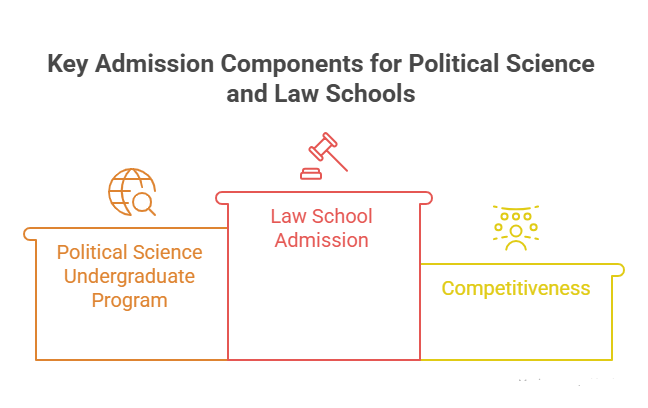
The admission requirements for political science and law schools in Canada differ significantly:
- Political Science Undergraduate Program: Requires good high school grades, particularly in English and social sciences, and applications are typically submitted through systems like the Ontario Universities’ Application Centre (OUAC).
- Law School Admission: After completing an undergraduate degree, you need a high GPA, a solid LSAT score, a compelling personal statement, and strong letters of recommendation.
- Competitiveness: Admission to law school is highly competitive, necessitating a standout application.
- Preparation: Focus on achieving top grades, preparing thoroughly for the LSAT, and excelling in all application components.
Career Outcomes: Where Can a Political Science Pathway Lead After Law School?
Having a background in political science combined with a law degree opens many career doors. While legal careers are common, opportunities also exist in government, public affairs, and the non-profit sector. Your understanding of political systems and public policy positions you well for roles that influence policy, such as in social justice or international relations. In Canada, you can choose from various career paths that align with your interests, whether in courtrooms, government offices, or international organizations.
Legal and Non-Legal Careers for Political Science Graduates
In the legal field, a political science background prepares you for roles in public law, criminal law, human rights, and international law, such as government lawyer, public defender, or positions with international tribunals. Many graduates branch out beyond traditional law careers, leveraging skills in public policy and administration to become policy analysts, legislative aides, or campaign managers, making an impact on law and governance even without practicing law.
Other career options include:
- Foreign Service Officer: Representing Canada abroad.
- Human Rights Advocate: Advancing social change for non-profits.
- Public Relations Specialist: Managing communication for government or political figures.
- Lobbyist: Influencing legislation for specific groups.
Common Mistakes Students Make When Choosing Political Science for Law School
One common mistake high school students make is assuming a political science major guarantees admission to law school. Admissions committees evaluate various factors beyond your major, so it’s crucial to maintain a strong GPA and LSAT score. Here are some key pitfalls:
- Relying solely on a political science degree without focusing on grades and LSAT performance.
- Choosing political science over a subject you’re more passionate about, leading to lower engagement and grades.
- Neglecting extracurricular activities and volunteer work that enhance your application.
- Failing to research law schools’ diverse requirements and expectations.
Choosing a major you enjoy can lead to better outcomes.
How to Decide if Political Science for Law School in Canada Is Right for You
Deciding if a political science undergraduate program is right for you involves self-reflection. Consider your interests, strengths, and future goals. If you enjoy reading about current events, discussing government issues, and contemplating societal dynamics, political science could be a fitting choice.
Explore law school preparation courses within political science, such as public law and political theory, to gauge your interest in the subject. Ultimately, select a path that aligns with your law school aspirations while ensuring the undergraduate program is enjoyable and engaging for you.
Key Questions to Ask Yourself Before Committing
Before choosing political science for law school in Canada, reflect honestly on your motivations and interests. Are you genuinely drawn to politics and government, or just following what you think is the “right” path? Your passion will help you succeed. Consider these questions:
- Do I enjoy reading, writing, and talking about big ideas?
- Am I interested in how laws come to be and how the government works?
- Will I work hard to get a good GPA in this area of study?
- Does this major give me a strong foundation for the kind of law I want to do?
Signs That Political Science May Be the Right Fit
There are several signs that political science may be the right major for you, especially if law school is your goal. If you enjoy discussing government, justice, or legal issues and are curious about the world, political science could be a good fit. An interest in news, policies, and politics helps develop research and analysis skills.
Here are some signs that political science might fit you:
- You care a lot about Canadian politics and how the government works.
- You like comparative politics. You are interested in learning about political systems from other places.
- You have good critical thinking skills. You like to look at problems from many sides.
- You want to improve your writing and research skills. These are important if you want to work in this field.
Conclusion
In the end, choosing political science for law school in Canada can be a smart move. It gives you important skills and ideas that help with legal studies. When you know how political theory and legal systems work together, you make it easier to handle law school.
Looking at different majors will also help you see why political science for law school in Canada is different from other options. It is important to match your education with what you want to do in your career. Take some time to think about if political science is the right path for you. If you have questions or need help with your studies, reach out; we are here for you!
Frequently Asked Questions
1. Do Canadian law schools prefer political science majors over other majors?
No, law schools in Canada do not ask you to pick any one undergraduate major. admissions committees value that you do well in school, get a high lsat score, and have the skills needed for law, no matter which field you studied in. However, a political science degree fits the study of law quite well, so many people pick it. It is a popular and smart choice.
2. Are there combined law and political science programs in Canada?
Most universities do not let you get a law degree and a political science undergraduate degree at the same time. Some places have programs that combine them or a path where you study legal subjects as part of your first degree, but that is not the usual way. Usually, you finish a four-year undergraduate degree, like political science, and then you go to law school to get a three-year Juris Doctor (JD) law degree.
3. Does studying political science make law school easier in Canada?
Studying political science can help you get ready for law school. It does not make law school easy, but you will know some things in advance. You learn about legal ideas, how government works, and you use critical thinking. This gives you a better start than some people. Still, law school is hard for everyone, no matter what undergraduate program you were in. That is just how legal education works.