
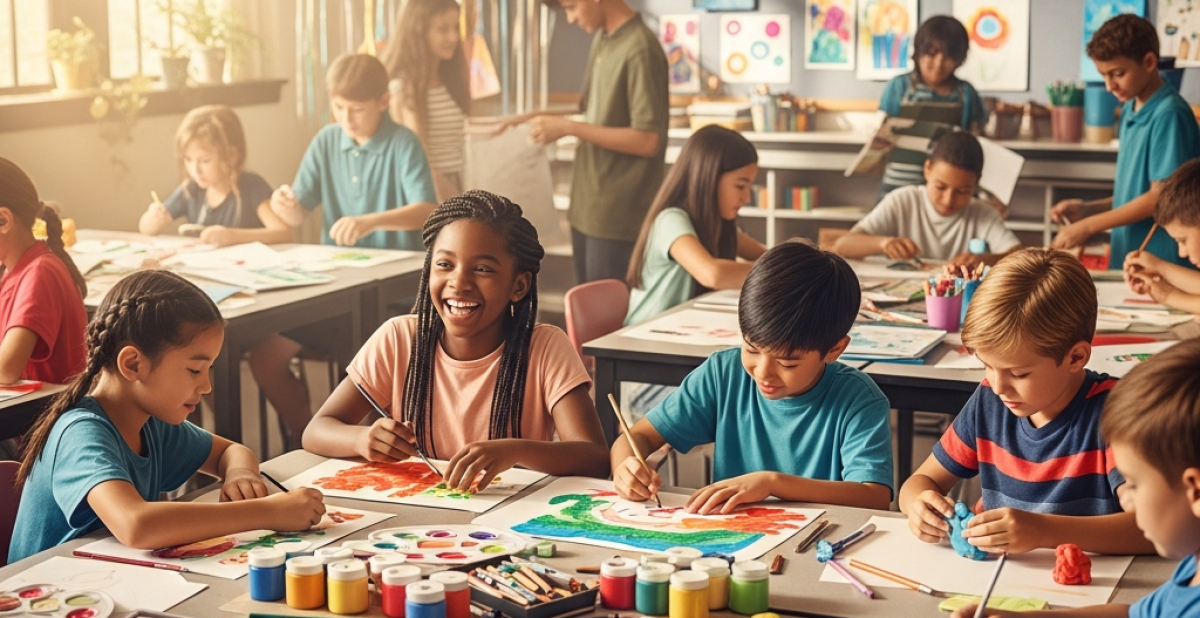
Key Highlights of Benefits of Arts Education in K–12
- Arts education helps students do better in school. They often get higher grades in math and language arts.
- Taking part in the arts builds emotional intelligence. It helps students grow self-confidence, show empathy, and be strong in hard times.
- Creative activities help train critical thinking and good problem-solving skills. These skills are needed for the future.
- Art classes support social growth. They show students how to work together and build teamwork. There is a chance to make good friends.
- In art, students learn more about cultural awareness. They see many new histories and look at life from different points of view through artistic expression.
- Being part of arts programs helps students get more into school. It keeps them interested. It works well for students who have different ways to learn.
Introduction
Many people think of subjects like math and science first when it comes to their child’s education. But, the benefits of arts education in K–12 are also very important. Arts education is not just about painting or singing; there is much more to it. It plays an important role in helping young people grow in a lot of ways.
Arts curriculum in schools helps children in early childhood develop fine motor skills. As students get older, the benefits of arts education in K–12 help them learn critical thinking in high school. The arts give young people skills and confidence that last for years. With a strong arts curriculum in schools, your child can get the chance to reach their full potential.
Benefits of Arts Education in K–12: Academic, Emotional, and Social Gains
The advantages of arts education go far beyond the art room. It really helps a student’s academic achievement, emotional intelligence, and social skills. When students join arts programs, they don’t just learn how to draw or play music. They also build a strong base for success in every part of their lives. These creative ideas give them a special place to grow.
More and more studies show that the arts help shape students into well-rounded people. Let’s take a look at some specific proof on how arts education helps with academic performance and grows new thinking skills.
Research-Backed Evidence on Academic Performance
Research has shown a strong connection between arts education and better academic performance in K–12 students. Studies, including one in npj Science of Learning, report that high schoolers involved in arts workshops achieve higher grades in language arts and math. Neuroscience also indicates that activities such as musical training boost brain development, helping with information processing and motor skills.
Integrating the arts into the curriculum can make core subjects more memorable, especially for students who struggle with traditional instruction. For instance, drawing a scientific concept can help students remember it better, making learning more engaging and effective.
| Benefit Area | Specific Impact |
|---|---|
| Standardized Test Scores | Students with high arts involvement score higher on standardized tests. |
| GPA and Grades | Arts participation is linked to higher overall GPAs and better grades in core subjects. |
| Engagement and Motivation | Arts-integrated learning boosts student motivation and attendance. |
| Information Recall | Creative activities like drawing or singing can enhance memory for academic content. |
Cognitive, Communication, and Critical Thinking Skills Developed
Arts education goes beyond improving grades it builds valuable skills. Creating art requires students to solve problems, such as mixing colors or composing melodies, which boosts critical thinking. These skills transfer to other subjects and everyday life. The arts also enhance communication; students learn to express ideas clearly when presenting or performing. Understanding art from different cultures sharpens the ability to analyze visual information critically. Students gain:
- The ability to spot small things and put ideas together.
- Being able to think differently and try new ideas.
- A better way to come up with new solutions or think outside the box.
- Improved ways to share thoughts with words and without them.
Social and Emotional Growth Through Arts in K–12
The emotional benefits of arts education are as strong as the academic ones. The arts give students a safe space to learn about and share their feelings. This is important for good emotional growth. When a child makes something that feels personal and shares it, they get more sure of themselves. They also start to see why what they have to say matters.
This process helps build better social skills. Things like theater, band, and dance let students work together. They listen to what others have to say and help reach one goal as a group. Now, let’s see how the emotional benefits of arts education help give people traits like caring for others and dealing with tough times.
Building Empathy, Self-Confidence, and Resilience
- Arts education helps students build empathy by encouraging them to see the world from different perspectives, such as acting in plays or analyzing historical artworks, making them kinder and more open-minded.
- Creating art boosts self-confidence, especially for students who may struggle in other subjects, giving them a chance to shine and feel good about themselves, as shown by students who find their identity through theater.
- Art teaches resilience, as students learn to persist through challenges, accept feedback, and improve their work, developing skills that help them overcome setbacks and succeed throughout life.
Fostering Collaboration and Positive Peer Relationships
Many art experiences involve teamwork, making them great for building collaboration skills. In groups like school bands or drama clubs, everyone musicians, actors, backstage crew, and directors must work together for success. These group activities encourage students to communicate and develop positive relationships.
Being part of a team helps young people feel a sense of belonging and the importance of working toward a shared goal. Art teachers guide students to care about the final project and support each other. Through arts education, students learn to collaborate by:
- Requiring students to share ideas and jobs on group projects.
- Teaching them to give feedback and also listen when others talk.
- Building a group feeling, with everyone aiming for the same goal.
- Helping them learn to speak with and listen to their classmates.
Practical Applications of Arts Learning in Canadian Schools
So, how does this work in a real school? Many schools across Canada are coming up with new ways to bring arts into what they teach. Arts integration in education is more than just having one art class. It is about using creative ideas and methods to help students learn other things, like science and history. This way, all students can enjoy learning more.
At top schools like USCA Academy, which is a private school, arts education is a key part of what students learn. They use art to help students understand different subjects better. Let’s look at how teachers do this in the classroom and how they mix art with other topics.
Classroom Integration, Extracurriculars, and Interdisciplinary Learning
Arts integration brings learning to life by connecting subjects in practical ways. For example, history students might create a mural, while science students could use dance to show biological processes. These activities help students understand, remember, and relate to ideas better. Arts learning also extends outside the classroom through plays, bands, and clubs, helping students build identity and community.
Here are some real ways to use arts integration:
- STEM to STEAM: Adding art to STEM encourages creative problem-solving.
- Literature as Performance: Acting out stories deepens understanding.
- Visual Arts in Social Studies: Drawing or making cultural artifacts aids learning.
- Music in Math: Music and rhythm teach fractions.
Arts Education as a Foundation for Future Success
The skills that young people get from arts education match what employers want in today’s world. These youth skills help in any job because the arts teach you how to think in new ways, adjust to changes, and solve problems. Anyone who can look at a problem from more than one side or come up with something new is valuable on a team.
It does not matter if your child chooses to be an artist or an engineer, the youth skills learned through arts education will help them face challenges later in life. Kids learn to start things on their own, handle projects, and share their ideas. Now, let’s look at how these things help kids get ready for a job.
Creative Thinking, Problem-Solving, and Career Readiness
- A 2024 survey by the National Association of Colleges and Employers highlights that employers value skills like problem-solving, teamwork, and communication skills that are strengthened through arts education.
- Arts projects encourage students to think creatively, adapt to challenges, and complete tasks, mirroring real-world work scenarios and building perseverance.
- Presenting or performing art boosts students’ confidence, public speaking, and collaboration abilities, all of which are essential for career readiness and success.
Real-Life Scenarios Showing Student Outcomes
Let’s look at some real-life high school examples. A shy student joins the drama club, and by the end of the year, gains confidence speaking in front of others and makes new friends. Another student struggles with math but, through music class and learning rhythms and patterns, improves their math skills and grades.
Here are a few more stories:
- A student uses artistic skills in photography and design to create a strong history presentation, earning high marks.
- Some students work together on a mural, learning teamwork and giving back to the community.
- Another student attends school more regularly thanks to band class.
Arts education helps students gain confidence, improve academically, and discover their passions.
How Community Partnerships Strengthen Arts Education
Schools do not have to do everything by themselves. Strong partnerships with groups in the area can really help arts education. The schools get new things and real-life experiences for students. When schools work together with local museums, theaters, and community organizations, they set up a better learning space. This way, learning goes beyond just the classroom.
This setup is good for both sides. Students meet professional artists and enjoy many kinds of cultural experiences. Community organizations also get to mix and talk with the next group of people coming up. When they do this, people learn more about other cultures, and students feel more connected to their school. Now, let’s look at how this works in real life.
Enhancing Cultural Awareness and School Engagement
- Community partnerships give students hands-on arts experiences, like museum field trips or theater workshops, making learning more engaging and increasing school involvement.
- These collaborations grow cultural awareness by exposing students to diverse art forms and traditions, such as Indigenous art workshops with local artists and elders.
- By connecting classroom lessons with real-world art and community members, students see the relevance of their studies, which strengthens their connection to school and brings the school community closer together.
Role of Local Institutions and School Initiatives
Local groups like galleries, orchestras, and dance companies play a big role in arts education by partnering with schools. They offer guest speakers, mentorship programs, and performance spaces for students. School arts programs, especially those led by dedicated arts educators, are key in building these connections. For instance, a school music team might host a concert for senior citizens, giving students the chance to perform and connect across generations. These community partnerships enrich learning and show the power of the arts.
Here’s how local institutions can support school initiatives:
- Offering free or discounted tickets for students to attend professional performances.
- Sending teaching artists into schools to lead residencies or workshops.
- Exhibiting student artwork in public spaces like libraries or city halls.
- Providing dedicated arts educators with professional development opportunities.
Explore comprehensive programs at private schools in Mississauga Ontario with proven academic success.
Conclusion
In short, the benefits of arts education in K–12 are very important and help students in many ways. It boosts kids in school, with their feelings, and in social life. By supporting arts education, we help students gain creativity, critical thinking, and the ability to work with others. These skills shape what they do next. There are also real-life stories that show how arts in the classroom enhance grades and skills. Later, this helps them succeed no matter what they choose to do. For parents and teachers, choosing arts education is a way to improve learning for every student. If you want to know more about schools with strong arts education programs, reach out to USCA Academy today for more details!
Frequently Asked Questions
1. What are the main benefits of arts education for K–12 students?
Arts education can help in many ways. It can make your academic achievement better, boost your emotional intelligence, and make your critical thinking skills stronger. By taking part in things like visual arts, music, or drama, you learn how to show your ideas using symbolic systems of representation. This helps you grow not only in school but also as a person.
2. How does arts education impact student academic performance in Canadian schools?
In Canada, public schools and private schools both offer arts education. Arts education helps students do better in school. The impact of arts on student achievement can be seen through higher grades, better school attendance, and stronger motor skills. When kids do creative things, they get more involved in math and science. So, the arts make a difference in how well students learn.
3. Why is it important to include arts education in the K–12 curriculum?
Adding arts education is important for every child. Arts programs help students grow creative skills and support their thinking. They make you better at critical thinking and can boost your emotional intelligence. When kids do visual arts or perform, they have a way to show their feelings. This is good for all students but is often even more useful in special education. Visual arts and performing arts help students become more sure of themselves. These also help them see the world in different ways.