
Key Highlights of Study in Canada from South Korea
- The Ontario Secondary School Diploma (OSSD) makes it easy for international students to get into Canadian universities.
- Canada has a safe and friendly place for international students to live and learn. You will get a strong education in the Canadian education system.
- To study in Canada, you have to meet certain school rules and get a study permit.
- The cost of studying in Canada means you need to pay for tuition and also your daily living needs. There are some budget choices you can look into.
- When you finish high school in Canada, you can go to university, apply for work permits, and maybe even get permanent residency.
- A Canada high school for Korean students can help you reach your goals and lead to a good future.
Introduction
Are you a student in South Korea looking to study abroad? Or perhaps you are a parent seeking the best educational opportunities for your child? Study in Canada from South Korea offers a strong and respected education system that warmly welcomes international students.
This guide outlines the high school pathway to Canadian universities, emphasizing how obtaining an Ontario Secondary School Diploma (OSSD) can facilitate a smooth transition to higher education. Many international students have successfully navigated this pathway, making it a viable option for you or your child.
Study in Canada from South Korea: Complete High School Pathway Guide
Starting your study journey in Canada from South Korea can feel like a big move, but the high school pathway simplifies the process. This guide helps you navigate every step, from fulfilling high school requirements to gaining admission to top Canadian universities. For many Korean students, essential documents include academic records and a study permit. The Ontario high school system offers structured programs, such as the OSSD for international students, guiding your academic journey. We will explore the benefits of these programs and demonstrate how your previous studies in Korea can provide equivalent credits. Your dreams of learning in Canada can become a reality!
How the Canadian High School System Works for Korean Students
The Canadian high school system is known for its quality and flexibility, making it a top choice for Korean students. Schools like those in Ontario assess your previous grades from South Korea to see if you can get equivalent credits, which may help you skip repeating similar classes. This lets you start your studies smoothly and focus on the credits you still need for graduation.
South Korean students can also enroll in online high school programs, such as those offered by USCA Academy. This means you can earn an Ontario Secondary School Diploma from home, giving you more flexibility before moving to Canada.
OSSD Pathway vs Staying in the Korean School System
Choosing between staying in the Korean school system or pursuing the Ontario Secondary School Diploma (OSSD) is a key decision. The Korean system offers strong academics, but the OSSD provides better preparation for Canadian universities, focusing on critical thinking, research, and collaboration. OSSD holders are treated as Ontario students, making university applications smoother, and credits from Korea may be recognized, saving time. The OSSD is globally accepted, giving you more study options. Consider which pathway best fits your goals.
| Aspect | Korean School System | OSSD Pathway |
|---|---|---|
| Admission | Standard process | Easier for Canadian universities |
| Skill Development | Academic-focused | Critical thinking, research |
| Credit Recognition | Limited | Korean credits recognized |
| Global Recognition | Regional | Internationally accepted |
Why Many South Korean Students Choose Canada for High School
Canada is a top destination for international students due to its high-quality education and welcoming society. For South Korean students and their families, the advantages extend beyond academics. They enjoy living in a safe environment that fosters personal and educational growth. Canada’s friendly towns and support for newcomers make it an attractive choice. International students are integrated into schools and communities, often studying alongside Canadian citizens. This inclusive atmosphere enhances their experience, allowing them to thrive both academically and socially. In this article, we will explore the benefits and support systems available for students in Canada.
Academic Advantages and University Pathways
One major reason South Korean students choose Canada for high school is the strong academic foundation provided by the Ontario Secondary School Diploma (OSSD), which creates a clear pathway to Canadian universities. Completing high school with an OSSD allows you to apply to Ontario universities as an Ontario student, making the process smoother than applying as an international student. OSSD programs for international students help bridge academic gaps and prepare you for university-level work in Canada. This pathway is designed to make transitioning from Korean high school to Canadian university easier, ensuring you are well-prepared for academic success.
Key advantages include:
- Direct Application: You get to apply to universities using the Ontario Universities’ Application Centre (OUAC), just like students from Ontario.
- Skill Preparation: You will learn helpful thinking skills and ways to do research that you will need at university.
- Global Recognition: When you earn an OSSD from a top private school, it is liked by universities in Canada and all over the world.
Safe Environment and International Student Support
Safety is a top concern for South Korean parents sending their children abroad. Canada is known for being one of the safest countries, allowing students to focus on their studies and enjoy their new environment. Canadian schools and neighborhoods are welcoming, and international students receive strong support. Schools offer special counselors, language help, and social activities to ease the transition and make students feel at home.
Here’s what you can expect:
- Dedicated Staff: Guidance counselors help international students succeed.
- Welcome Programs: Orientation events help you settle in and make friends.
Canada ensures you feel safe and supported throughout your study program.
Admission Requirements for South Korean Students
Getting into a high school in Canada involves a few essential steps. First, prepare your school records, which detail the subjects you’ve studied and your grades. The school uses these records to assess your academic level. They will verify that your classes align with the Ontario curriculum and check for equivalent credits, especially if you aim to obtain the Ontario Secondary School Diploma (OSSD). Additionally, we will outline the necessary academic records and other documents required for submission to the application center. Following these guidelines will help streamline your admission process.
Academic Records and Grade Equivalency
- Canadian high schools review your academic records from South Korea, including transcripts that show your classes and grades, to understand your educational background.
- The Ontario Ministry of Education provides guidelines for credit equivalency, so courses like Grade 10 math completed in Korea may count toward your Canadian credits, helping you avoid retaking courses you’ve already passed.
- Schools usually require strong grades, especially in math, science, and English; having good marks in these subjects strengthens your application and determines appropriate course placement.
English Requirements and Supporting Documents
Since classes in Canada are in English, you must show proof of your English skills. Many schools ask for English test scores like IELTS or TOEFL, while others may offer their own tests or English programs. Check each Canadian school’s English requirements before applying.
You also need to provide supporting documents that show your background as a student in South Korea or Korea.
Most of the time, you need to send these:
- A filled out application form.
- A copy of your passport.
Preparing these documents early will make your application process smoother. Visa documents are discussed in the next section.
Step-by-Step Process to Study in Canada from South Korea
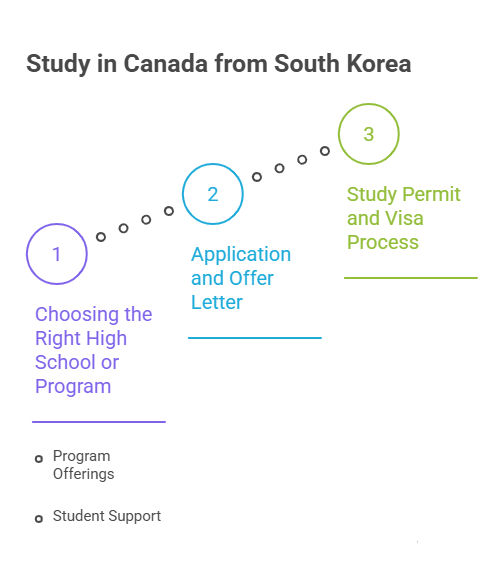
Now that you have the requirements, let’s walk through how you can study in Canada. Start by picking your study program. Next, apply to schools. After you get an offer letter, start the steps to get your study permit for Canada from Korea. Make a simple plan to make sure you stay on track.
Every step matters. If you are ready, you can avoid delays. After you get into a school, your next step is getting your study permit. Some people may need an electronic travel authorization (eTA). This depends on your case. Let’s break down each step so you can have all you need for studying in Canada.
Step 1: Choosing the Right High School or Program
The first step is to find the right high school and program in Canada. There are many options, including public and private schools in big cities or small towns. Consider your preferences for school size and location. Schools with strong support for international students, like USCA Academy, are helpful for Korean students. When choosing, think about these points:
- Program Offerings: Does the school have courses you need for your preferred university path?
- Student Support: What help does the school provide for international students?
Canadian study agents and counselors in South Korea can assist you in finding the best high school.
Step 2: Application and Offer Letter
Once you choose your school, fill out the application form and send all required documents, such as school transcripts, a copy of your passport, and any other forms the school asks for. Double-check everything before submitting to the application centre. If your application is approved, the school will send you a Letter of Acceptance (LOA). This document is essential for your Canadian study permit and proves you have a seat at the school. Carefully read your offer letter for details on classes, start dates, and tuition. Keep the LOA safe, as you will need it for your visa application.
Step 3: Study Permit and Visa Process
With your Letter of Acceptance (LOA), you can apply for a Canadian study permit online through the IRCC website. The study permit is required for international students from South Korea to study in Canada. You’ll need to complete forms, pay fees, and upload documents such as your LOA, proof of financial support, and passport. Biometrics (fingerprints and photograph) must be provided at a visa application centre. Depending on your travel plans, an eTA or visitor visa may also be necessary. Processing times vary, so apply early after receiving your LOA. Below are the key documents needed for your application:
| Document | Description |
|---|---|
| Letter of Acceptance (LOA) | The official acceptance letter from your Canadian school. |
| Proof of Identity | Your valid passport. |
| Proof of Financial Support | Bank statements or other documents showing you can cover tuition and living costs. |
| Biometrics | Your fingerprints and photograph. |
Cost of Studying in Canada for South Korean Students
Knowing the cost of studying in Canada is crucial for your future planning. The total expenses stem from tuition and living costs. Canada offers a quality education that is often more affordable than the US or UK. Proper budgeting can significantly reduce stress during your studies. As a South Korean student, you must demonstrate sufficient funds to cover both tuition and living expenses. Understanding tuition rates and managing your living costs effectively will help you navigate your financial responsibilities while studying in Canada. Let’s explore these costs to ensure a successful study experience.
Tuition Fees and Living Expenses
Tuition fees are the largest expense for South Korean students studying in Canada, varying by school type and province. Private schools often charge higher fees, and international students pay more than locals. Living expenses covering accommodation, food, transportation, health insurance, and personal items also differ widely by city, with Toronto and Vancouver among the costliest. It’s crucial to create a realistic budget. Below is an estimated breakdown of annual costs; these are averages and may change. Be sure to check the official IRCC website for updates, as policy changes may affect financial requirements.
| Expense Category | Estimated Annual Cost (CAD) |
|---|---|
| High School Tuition | $15,000 – $30,000 |
| Accommodation (Homestay/Dorm) | $10,000 – $15,000 |
| Food and Groceries | $3,000 – $4,000 |
| Transportation and Personal | $2,000 – $3,000 |
Budget Tips for Students and Parents
Managing your money well is key to making the most of your time in Canada. Start by creating a clear budget and tracking your spending to identify ways to save. Simple changes, like cooking meals at home instead of eating out, can help reduce costs. To lower study expenses, look for scholarships and bursaries offered by schools and organizations—some have International Student Bursaries for tuition help. Here are a few more budget tips:
- Student Discounts: Always ask for discounts at stores, restaurants, and public transit.
- Used Textbooks: Buy used or digital textbooks to save money.
- Part-Time Work: With a study permit, you can work part-time to cover living costs.
Future Opportunities After High School in Canada
Finishing high school in Canada marks the beginning of your journey. The skills and OSSD you earn will unlock numerous opportunities, not only in Canada but globally. A significant advantage is the straightforward pathway to Canadian universities, where your OSSD is a respected symbol of your dedication. After completing university, you can explore various avenues, including gaining work experience and pursuing permanent residency. A Canadian education empowers you, positioning you favorably in the job market and helping you establish your life in Canada. Let’s delve into the opportunities that await you, from university pathways to potential careers post-high school.
Pathway to Canadian Universities
One of the main benefits of finishing high school in Canada is the clear pathway to Canadian universities. With an OSSD, you apply just like Canadian citizens, making the process smoother. Universities across Canada recognize the OSSD and the skills you gain, so your education is valued. For South Korean students, having an OSSD means you’re applying with a Canadian high school diploma, giving you an advantage over many international students and preparing you for university-level work.
Here’s why this is a strong choice:
- Equal Consideration: Same admission review as Canadian citizens.
- Simplified Applications: Use OUAC to apply to multiple universities easily.
Career and Long-Term Opportunities
Your time studying in Canada can lead to exciting job opportunities. After finishing your studies at a university or college, you may be eligible for a Post-Graduation Work Permit (PGWP), allowing you to work in Canada and gain valuable experience. This work experience can help you launch a strong career. Many international students decide to stay in Canada, and studying plus working here can support your application for permanent residency through various programs. Canada offers clear pathways for students who wish to settle long-term.
Keep these things in mind:
- Post-Graduation Work Permit (PGWP): Work in Canada for up to three years after graduation.
- Pathways to Permanent Residency: Studying and working in Canada can help you qualify for immigration programs like Express Entry.
Stay informed about updates to work permit and permanent residency policies for international students.
Conclusion
To sum up, going to high school in Canada from South Korea gives you many chances for good learning and new experiences. The high school system in Canada helps you learn well and supports you as you grow in a safe place. It is important to know about the admission steps, the cost, and what you need to do before you apply. When you start this path, know that the good things you get from it will last long after high school and help you reach good universities or get great jobs. If you have questions or need help, contact USCA Academy. We will be glad to help you with this big step!
Frequently Asked Questions
1. What grades do Korean students need to study in Canada?
Most high schools in Canada need you to have good grades. They often look for a ‘B’ average or better. The application centre will check your grades to see if they match the high school in Canada requirements. They use rules from the Ontario Ministry of Education or other groups for this.
2. How long does the study permit process take from South Korea?
The time it takes to get a study permit for Canada from Korea can change. You should check the official Immigration, Refugees and Citizenship Canada (IRCC) website to see the latest updates. After you send in your application and give your biometrics at an application centre, it may take a few weeks. So, try to apply as soon as you can.
3. Can South Korean students move from high school to a Canadian university easily?
Yes, this is very easy to do. The Canadian education system helps you move forward without trouble. Finishing a high school OSSD Pathway puts you ahead, because you apply to universities as an Ontario student. Additionally, USCA Academy private school will support you throughout this process, ensuring you have the resources and guidance needed for a smooth transition. This clear path is a big reason why many Korean students come to Canada to complete high school.
4. Where can I find information about scholarships for South Korean students?
You can get scholarship information from the websites of each school, the Canadian government’s EduCanada website, and from online scholarship databases. A lot of schools have scholarships or bursaries for international students. This can help lower the cost of studying in Canada. If you want help, you should contact the school’s application centre or the financial aid office. They can guide you.