


Key Highlights of study techniques for high school students
Here are the key takeaways from this guide:
- Having good study habits is important for high school and helps with future success in school.
- Using smart study techniques like active recall and spaced practice can help you remember things better and help you get higher grades.
- When you manage your time well, you can handle schoolwork, extracurricular activities, and your life outside school more easily.
- Making a plan for when and how you study, and making sure you have the right place to work, helps you stay focused.
- If you use the right study skills and tools, it can lower stress and help you learn more.
- If you work on these skills now, you will make it easier for yourself to do well in school and in life in the future.
These ideas will help you in high school, and they are great for your study techniques, time management, and good study habits too.
Introduction
High school can be tough but also a lot of fun. Are you or your teen hoping to get better grades and feel good in class? You are in the right spot. Building strong study techniques for high school students is the best way to achieve academic success. This guide shares easy tips and clear ways to help you study in a better way. You do not need to work harder, just smarter. We will talk about how to manage your time and show you study methods that work. You will find out everything you need to get through high school and do well later too.
Why Study Techniques Matter for High School Success in Canada
Getting through high school in Canada is about more than going to class. You need the right study habits if you want better grades and to do well. Good study techniques will help you understand hard things, keep them in your memory, and feel sure of yourself when you take tests.
These study habits help you now and later. They set you up for high school success in the future. We will talk about why building these habits matters, what problems students have, and how using the best study techniques can change the way you learn.
The Importance of Effective Study Habits
- Think about effective study habits as tools you need for school, just like how a carpenter needs good tools where he works. The right study skills help you make a strong path for your academic success. Having good study habits helps you with more than passing tests they help you really understand, learn, and remember what you study.
- Some memory improvement techniques, like spaced practice and active recall, work very well. When you look over information many times instead of trying to remember everything at once, you can keep up to 80% more knowledge. This means what you learn will stay with you, not just for the test, but even after the test is over.
- Getting into these good study habits helps you feel sure of yourself and can help you feel less stress about school. When you are ready for tests and homework, you feel in control, which can make you want to keep working hard. Feeling good about your study skills is important for your academic success.
Common Challenges Faced by High School Students
High school students in Canada juggle classes, homework, extracurriculars, and social lives, making it easy to feel overwhelmed. Poor time management leads to last-minute cramming, which is stressful and ineffective. These pressures impact both academic performance and mental health. Many high school students say they deal with these problems:
- Procrastination and not having enough motivation
- Getting distracted by social media and technology
- Feeling like big projects or tough subjects are too much to handle
- Test anxiety and a lot of stress to get good grades
Recognizing these challenges is the first step. Building strong study habits reduces stress, supports mental health, and boosts academic success.
How the Right Study Techniques Can Boost Grades
Using science-backed study techniques can really help you get good grades. Study methods like active studying help you do more than just reread your notes. When you do active studying, you use your own words or think of questions for yourself. This way, your brain makes connections and remembers things better.
For example, you can explain what you read in your own words. Or, you can make a quiz to test yourself after a study session. These study techniques make you think deeper about the material. This is better for learning and helps you keep information in your mind longer.
With these methods, every study session will help you get more done in less time. This does not only lead to good grades, but you also get more free time to do the things you want. It’s all about working better and not just spending more time at your desk.
Study Techniques for High School Students: A Beginner’s Guide
Are you ready to work on your study habits? This part gives you simple steps you can use. The best way to get better at learning is not to study for long hours, but to use your study time well. It does not matter if you learn on your own or with a study group. Having a plan is important.
Here, you will see the tools that can help and the right state of mind to have. You will also find ways to make your study area help you stay on track. These easy study techniques are good for beginners. They will help you feel more ready and not so stressed when exams or tests come up.
What You’ll Need to Get Started (Supplies, Tools, and Mindset)
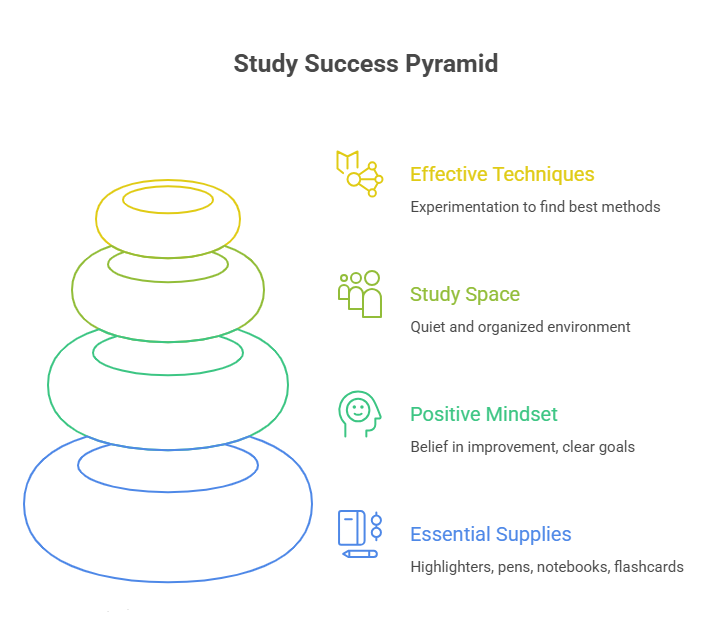
To study smarter, start with the right supplies and mindset. Organized tools reduce stress and make studying easier. Think about what works for you visual aids, writing notes, or another method? Gather the essentials:
- Highlighters, pens, and sticky notes
- Notebooks or binders for each subject
- Flashcards for active recall
- A planner or calendar to track assignments
- Access to a quiet study space
Alongside supplies, a positive attitude is key. Believe in your ability to improve and set a clear goal for each session. Experiment with different techniques until you find what suits you best.
Building a Supportive Study Environment at Home
- Choose a specific, tidy spot for studying like a quiet corner or a desk to signal your brain it’s time to learn. Avoid studying on your bed to prevent feeling sleepy.
- Experiment with different environments, such as a library, coffee shop, or living room, to find out where you focus best. Some people need silence, others work well with background noise.
- Keep your study area clean and free from distractions. A clutter-free space helps you concentrate, especially during finals, and supports good study habits for better academic performance.
Step-by-Step Guide: How to Create an Effective Study Routine
A good study routine is the key to academic success. Instead of working at random times, it is better to make a plan. That way, you can stay on track with your time and know you are covering all your subjects. If you stick with a routine, you make studying a habit. This makes it feel less tiring and more part of your day.
Here is a step-by-step guide that will help you create a study schedule made just for you, much like the personalized approaches used at USCA Academy. You will set your goals and pick the best ways to study. We will show you how to build a plan that works well for your life. This will help you learn more and meet your academic goals.
Step 1: Set Clear Academic Goals
The first step in building a good study routine is to set clear academic goals. Instead of vague goals like “get better grades,” be specific aim for an “A” in math or to fully understand a challenging history chapter by week’s end. Break your main goals into smaller steps, such as making a study guide for each unit, reviewing notes for 20 minutes daily, and completing all practice problems. Planning your study sessions around these specific goals keeps you focused and motivated. Write down your goals and track your progress regularly to stay on course and boost your academic performance.
Step 2: Plan Your Study Schedule for the Week
Once you have your goals, it’s time to create a study schedule. Good time management is essential. At the start of each week, map out your commitments, including classes, extracurricular activities, and social time. Then, block out specific times for studying.
Be realistic about how much study time you can fit in. Shorter, consistent sessions are more effective than long, draining ones. For example, dedicating 30-45 minutes to each subject every other day is better than a four-hour cram session. A structured schedule helps prevent procrastination and reduces stress.
Here is a sample schedule you can adapt:
| Day | 4:00 PM – 4:45 PM | 5:00 PM – 5:45 PM | 7:00 PM – 7:30 PM |
|---|---|---|---|
| Monday | Math Problems | Break | Review English Notes |
| Tuesday | History Reading | Science Flashcards | Break |
| Wednesday | Math Problems | Break | Work on History Project |
| Thursday | Science Lab Report | English Essay Outline | Break |
| Friday | Review Week’s Notes | Plan for Weekend | Free Time |
Step 3: Choose Proven Study Techniques (Active Recall, Spaced Practice, etc.)
Just reading the same notes again and again is not the best way to learn. You should use study techniques and study strategies that get your mind working. These ways to study help you understand and remember things better.
Some of the most useful study techniques are:
- Active Recall: Do not just read. Try to remember key ideas by closing the book or your notes. You can quiz yourself or use flashcards. This is a great way to use your brain.
- Spaced Practice: Go over information in short sessions across a few days. Look at a topic again the next day, then look again after a few more days. This can help your memory much more than trying to learn everything in one night.
- Teaching Others: Try to tell someone else about what you learned, using your own words. Explain things to a friend or family member. This will show what you know and where you need to learn more.
Using these study techniques in your own study cycle is a good way to study well, reach for academic success, and not get too tired.
Step 4: Organize Study Sessions for Maximum Focus
How you set up each study session is key for staying focused. Plan short, strong sessions of 30–45 minutes, followed by a 5–10 minute break to avoid burnout. Before you start, set a clear goal, like “finish 10 math problems,” and remove distractions turn off phone alerts, pick a quiet space, and close extra computer tabs.
Choose a comfortable study spot, such as a quiet corner at home or a library table, where you can pay attention to your work. Your study space should help you stick to your routine and maximize your focus for better results.
Step 5: Track Progress and Adjust Your Routine
A great study routine is flexible and can change with your needs. Regularly check your progress: Are you meeting your goals? Do you feel less stressed? Reviewing your routine helps you see what works and what doesn’t. At the end of each week, look over your schedule. You might need more time for tough subjects or find that another study time suits you better. Stay open to making changes. Keep a list of tasks and mark them off to stay motivated. Improving your study skills takes time, and adjusting your routine helps you learn better and feel more confident.
Time Management for Students: Balancing School, Home, and Life
Good time management is very important in high school. It’s not only about planning your study time. It’s also about finding a balance between schoolwork, extracurricular activities, family, and having enough hours of sleep.
When you get better at time management, you do not feel so stressed. You will also have more energy to use in each study session. Below, you will find some real ways and easy online tools that can help you take control of your schedule. These tips and tools will help you reach academic success.
Practical Strategies for Managing Homework and Activities
Handling homework and extracurricular activities means you need good time management. One helpful tip is to use a planner. Plan out every deadline and thing you have to do. This will help you see your whole week clearly and know what must be done first.
Here are some easy ways to help:
- Break Down Large Tasks: Big school projects can look hard at first. Break them into smaller, manageable chunks. Plan time for each chunk.
- Use a Timer: Pick one study topic and set a timer for 25-30 minutes. Focus only on that part while the timer is going. This will help you get a lot done.
- Prioritize Your Work: Do the hardest or most urgent homework first. Your mind will be ready to work at its best.
- Schedule Downtime: Add breaks and fun to your study schedule. Take time to rest so you can stay driven.
Making a good study schedule helps you keep up with homework and time for activities you like. This leads to better focus in class and higher exam scores.
Digital Tools to Help Manage Time and Stay on Track
Technology can help you with time management in high school. You may think social media takes up your time, but there are a lot of tools that keep you focused and give you ways to stay organized. These tools can be especially useful for high school students at USCA Academy who plan their own study schedule.
Consider using these digital tools:
- Calendar Apps: Google Calendar or iCal can help you plan your study schedule. Use reminders for deadlines. Block out study times and other tasks.
- Focus Apps: Tools like Forest or Freedom can stop distractions. These apps block other websites and apps that can get you off task.
- Note-Taking Apps: Apps like Quizlet let you use your course material to make flashcards or take simple quizzes. You can use these to study anywhere.
If you use these tools well, you can work better. As a student at USCA Academy, you can also keep up with your study time and get the most out of your study sessions in high school. Advanced programs and modern facilities define private schools in Mississauga as the premier choice.
Conclusion
To sum up, knowing effective study techniques for high school students is essential for those who want academic success. If you develop good study habits and utilize time management skills, you can navigate school more effectively. This can enhance your confidence in your daily activities. Simple steps like setting clear goals or creating a calm study space will go a long way. You can also leverage digital tools to help you stay on track. Each small step can significantly improve how you learn.
Keep in mind, the right study techniques for high school students are not just beneficial for exams; they also help you gain a better grip on your schoolwork. For personalized advice or assistance with study habits, consider reaching out to USCA Academy. Now is the time to boost your grades and experience real success at school.
Frequently Asked Questions
1. What are the most effective study techniques for high school students?
The best way to prepare for tests is to use active studying instead of just reading notes. Try to use active recall by asking yourself questions. Spread your study session over days with spaced practice. You can also teach ideas to others to help you remember more. These study techniques will help you keep more information and improve your academic success. They make every study session count.
2. How can students improve their study habits for exams?
To get better study habits for exams, start by making a clear study schedule early on. Try good exam revision strategies, such as doing practice problems and going over your notes to sum them up. Good time management helps a lot. Spread out your study time. Don’t wait until the last minute, and make sure you get enough rest.
3. Are there any study tips for online high school courses?
Yes! It is important to have structure for online courses, especially at USCA Academy. Make a daily study schedule for teens and follow it every day. Try to keep digital distractions low. Use focus apps to help with this. Take part in online talks and keep in touch with your teachers at USCA Academy. Using digital tools to stay organized is a good way to do well in school.
4. What should students avoid when developing study routines?
When you make your study routines, do not give yourself too much to do at once. It is not good to skip breaks, and this can be hard for your mental health. Try not to use passive study methods, such as just rereading notes. Do not multitask during your study session. This takes away your focus and makes it tough to learn well. It is better to pick one study topic at a time and stick with it.