
Key Highlights of Can a Visitor Study in Canada
- Yes, you can study in Canada if you have a visitor visa, but there are some important things you should know.
- You can take short-term courses for 6 months or less with a visitor visa. You do not need a study permit for the short course.
- If your program of study is longer than six months and it’s at a designated learning institution (DLI), you need a study permit.
- There is a way to change from a visitor to a student while you are in Canada. You need to meet the eligibility rules set by IRCC.
- Many people take a prerequisite course to meet the requirements for a study permit from inside Canada.
- You cannot start your main study program until your study permit is approved.
Introduction
Welcome to Canada! The country is known for having a top education system. Many people want to study here after seeing it. If you are a temporary resident and wonder if you can a visitor study in Canada, you are in the right place. This guide will help you understand the rules. You will see how to take short classes with a visitor visa and how to become a full-time student. Let’s talk about your choices for studying in Canada.
From elementary to high school, private school in Mississauga offers continuous educational excellence.
Can a Visitor Study in Canada? Rules and Eligibility
Yes, you can study in Canada while on visitor status, but your options depend on the length and type of study program. Immigration, Refugees and Citizenship Canada (IRCC) has specific rules regarding studying for temporary residents. Your eligibility is based on the duration of your course. For short study programs, a visitor visa is typically sufficient. However, if you intend to enroll in a long course at a designated learning institution, you will need a study permit. Understanding these distinctions is essential for planning your educational journey in Canada effectively.
Canada Visa Study Rules: Who Is Eligible to Take Courses
Anyone who is in Canada as a visitor can sign up for a short course if it follows some rules. The main rule is that the program of study must last six months or less. This is true for tourists, people who come to see family, and all other temporary residents. Your eligibility is not about who you are but about how long the program is.
To be eligible, a person must:
- Have valid temporary resident status in Canada, so they need to be a legal visitor.
- Pick a program of study that goes on for six months or less.
- Finish the course while their stay in Canada is still allowed.
You should remember that you cannot use these short courses as part of a long program. If you want to keep going to a learning institution after six months, you need to get a study permit. This helps make things clear between just wanting a short-term learning time and going for long-term schooling.
Short-Term Study Options for Visitors
Your visitor visa lets you try many short-term study options in Canada. You do not need a study permit if your study program lasts six months or less. This means you can learn new skills or follow an interest while you enjoy your time in Canada.
These choices are good for people with a visitor visa who want to take a language class, a workshop for work, or a fun activity class. You only need to make sure your study program ends before your visitor status is up. Next, we will talk about the rules for these classes and what you can do with your visa.
Six-Month Course Limit: What You Can and Can’t Do
Canada’s six-month rule allows visitors to study short-term courses without a study permit. You can join any number of courses, provided each is less than six months and fits within your authorized stay.
Here’s what you can do:
- Enroll in a language course that is 4 months long.
- Take a series of workshops or join one certificate course that ends within 6 months.
- Study part-time or full-time in a program if it is under the six-month limit.
You cannot enroll in the first semester of a one-year diploma, as longer programs require a study permit. Always maintain valid visitor status.
Types of Courses Allowed for Visitors in Canada
As a visitor in Canada, you can take various short-term courses, as long as the program is 6 months or less. The type of course isn’t restricted you can study for fun, personal growth, or career advancement.
Here are some of the most popular types of courses for visitors:
- Language Programs: Learn English or French (ESL/FSL).
- General Interest & Recreational Classes: Explore hobbies like cooking, art, or photography.
- Professional Development Workshops: Gain skills or certificates in fields like digital marketing or project management.
You may earn a certificate, but you can’t take diploma or degree programs over 6 months. DLIs are only required for study permit prerequisites.
Evening, Part-Time, and Language Classes on a Visitor Visa
Yes, visitors in Canada can take evening classes, part-time courses, or language programs while on a tourist visa, as long as the course can be completed within six months. Many use this opportunity to improve their English or French and experience Canadian culture. However, your primary purpose for being in Canada should remain tourism, not studying.
- You may attend classes at private schools or community colleges during your visa’s validity.
- Language courses are popular and can help with future plans in Canada.
- The course schedule can be daytime, evening, or weekends, but must fit within your visa period.
When Do You Need a Study Permit?
A study permit is needed when your studies in Canada last more than six months. If you want to join a program at a designated learning institution (DLI) that is more than half a year, you have to apply for a study permit and get it approved. This rule covers most university degrees, college diplomas, and long-term certificate courses.
A visitor visa is for short-term studies, but a study permit is for real, long-term education at a DLI in Canada. It’s very important to know this difference if you plan to study in Canada. Below, we list which courses need a permit and what the application process is.
Courses That Require a Study Permit
A study permit is non-negotiable for any program of study lasting longer than six months. This includes academic, professional, or vocational training at a Designated Learning Institution (DLI). A DLI is a school approved by a provincial or territorial government to host international students.
You will need a study permit if your chosen study program is on the left side of this table.
| Course Requires Study Permit | Course Does Not Require Study Permit |
|---|---|
| A 2-year college diploma | A 4-month English language course |
| A 1-year postgraduate certificate | A 3-day professional workshop |
| A 4-year university degree | A 10-week part-time coding bootcamp |
| Any program at a DLI over 6 months | Any course completed within 6 months |
Even if a program has breaks, like a summer vacation, it is the total length of the study program that matters. If you are accepted into a one-year program, you need a study permit before you can begin your classes, even if the first semester is less than six months.
Explore USCA Academy’s Summer School Program in Canada
Canada Study Permit Requirements
Applying for a Canada study permit involves a clear process and specific requirements. You must prove you intend to study, can financially support yourself, and will follow Canadian laws. The main requirements are:
- Letter of Acceptance (LOA): Submit an official acceptance letter from a designated learning institution (DLI).
- Proof of Financial Support: Show how you will pay for tuition, living expenses, and your return trip. Acceptable proofs include bank statements, a Guaranteed Investment Certificate, or a sponsorship letter.
- Valid Passport: Your passport must cover your entire stay in Canada.
Apply online on the IRCC website, and you may need to give biometrics, a health check, or a statement of purpose.
Change Status from Visitor to Student in Canada
You can change your status from a visitor to a student without leaving Canada. People call it “flagpoling” when you do this at the border, but most people do it online while they are still in Canada. This is a good choice if you are a temporary resident and decide you want to start long-term studies after getting here.
But you need to know that not all visitors can apply for a study permit from inside Canada. IRCC has set some rules you have to meet. One of the main ways to do this is to first finish a prerequisite course you need to get into a longer program at a DLI.
Keywords: study permit, temporary resident, canada, ircc, dli, prerequisite
Can You Apply Inside Canada?
Yes, you can apply for a study permit from inside Canada, but you must meet certain requirements. Simply holding a visitor visa is not enough. IRCC allows applications in specific cases, such as:
- Completing a prerequisite course (like an English class at a DLI) with your visitor visa, then applying for a study permit after finishing.
- Having a valid work permit, being a family member of certain workers or students, or being a minor child already studying in Canada.
Check the IRCC website for eligibility rules. If you apply without meeting these, your application will be refused.
Required Documents & Processing Time
When changing your status from visitor to student in Canada, you must prepare key documents for your study permit application. Present your case clearly to the immigration officer. The main documents required are:
- Letter of Acceptance (LOA): Issued by a Designated Learning Institution (DLI) for your main program.
- Proof of Prerequisite Completion: Certificate or transcript showing completion of required courses.
- Proof of Funds: Financial statements proving you can cover tuition and living expenses.
Processing times for study permits inside Canada are often faster than applying from abroad. Check the IRCC website for updates. Applying before your visitor status expires lets you stay with “maintained status.”
IRCC Rules Visitors Must Follow
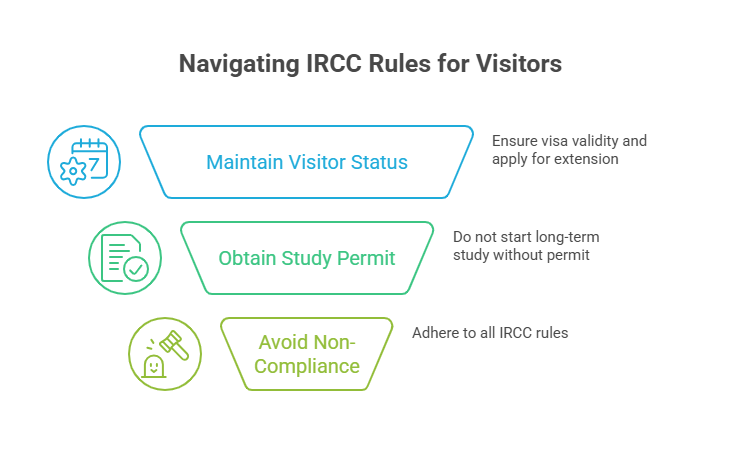
When studying as a visitor in Canada, you must adhere to the IRCC rules. Key points to remember include:
- Maintain Visitor Status: Ensure your temporary resident visa remains valid and apply for an extension if your course exceeds your authorized stay.
- Study Permit Requirement: Do not begin any long-term study program until you have received your study permit, even if you have applied and are waiting.
- Consequences of Non-Compliance: Ignoring these rules can jeopardize your visitor status and negatively affect future applications with IRCC.
Common Mistakes Visitors Make
Many people who want to study in Canada often make mistakes they could avoid. Here are some common pitfalls:
- Long Courses on Visitor Visa: Starting a course over 6 months with just a visitor visa goes against IRCC rules and could lead to serious issues, including being asked to leave Canada.
- Letting Visitor Status Expire: Allowing your visitor status to end while awaiting a study permit decision can complicate your situation.
- Immediate Study Permit Applications: Believing you can apply for a study permit immediately upon arrival is a mistake; you must meet specific eligibility requirements first.
- Ignoring Prerequisites: Failing to check for prerequisite classes can result in permit refusals. Seeking expert advice can help navigate these challenges effectively.
Conclusion
To sum up, understanding the rules and eligibility for studying in Canada as a visitor is crucial for making informed choices about whether can a visitor study in Canada. Short-term courses can be great options, but you must follow the correct steps to meet all Canada and IRCC requirements to avoid future issues.
Be aware of study permit limitations and ensure you have the necessary documentation, which will ease your experience as a student in Canada. Whether you’re considering language classes or longer programs, familiarize yourself with IRCC’s regulations. For more information or personalized advice, consult our experts who are ready to assist you at every step.
Frequently Asked Questions
1. Can you start studying on a visitor visa while waiting for study permit approval?
No, you cannot start a study program that needs a study permit while you are still waiting for it to be approved. Even if you have applied, you need to wait for the official permit before you start. But, you can take other short courses that last less than six months while you wait.
2. Are children on a visitor visa allowed to attend school in Canada?
Minor children who come to Canada as visitors with their parents might be able to go to kindergarten, primary, or secondary school without a study permit. But, the rules can change depending on the province and the situation. It is a good idea to apply for a study permit for your dependent child to make sure school continues without any trouble.
3. Can I apply for a study permit inside Canada on a visitor visa?
Yes, you can try to get a study permit while you are in Canada on a visitor visa. But there are some things you must do first. You need to be accepted by a designated learning institution. Also, you have to apply for the study permit before your visitor visa runs out.
4. Does visitor visa rejection affect student visa?
If you had a visitor visa refused before, this can have an effect on your student visa (study permit) application. The IRCC will take a look at all your history with them when you apply. But, it does not mean you will be refused again for sure. You need to show why your visitor visa was rejected when you apply for a study permit. Also, make a better case for your study permit eligibility in the new application.