

Key Highlights of private school scholarships for low income
- Private school scholarships and financial aid can make tuition affordable for your family.
- Understanding the difference between need-based bursaries and merit-based scholarships is crucial.
- Most aid for a low income family private school experience comes from need-based scholarships in Canada.
- You can find tuition assistance directly from schools and external foundations.
- A strong academic record gives your child a better chance of receiving an award.
- Applying involves detailed financial disclosure and meeting strict deadlines.
Introduction
You want the best for your child when it comes to their education. The price of private school tuition may seem too high for many families. A lot of people think going to a private school is not possible if their family’s income is not high. The good news is that this is not true. There are many choices for financial aid, including private school scholarships for low income families, that can help cover the gap. This guide will help you learn more about scholarships and bursaries. It will show you how you can make private school happen for your child, no matter your financial need.
Understanding Private School Scholarships for Low-Income Families
Looking into private school scholarships for low income families, first thing you need to do when you want more choices for your child’s learning. The main job of these programs is to help with tuition costs if your family has a financial need. When you want a low income family private school option, you will see that most schools make their private school financial assistance fit your family’s needs.
Your eligibility is based on a private application process. The money is set up to make sure a student’s future is not held back by their family’s way to pay.
What is Financial Aid?
Financial aid helps families cover private school tuition, making education more accessible for low-income students. The school determines how much aid you receive by reviewing your family’s income, assets, and other financial details to assess your need. This process ensures that support goes to those who need it most.
To apply for financial aid or scholarships, you must complete an application usually provided by the school or a financial aid service. You’ll need to share information about your finances and submit required documents by set deadlines. We’ll explain each step of the application process in more detail later.
Investment in your child’s future begins with selecting private school Mississauga options carefully.
Core Difference: Bursaries vs. Scholarships
When you look for tuition assistance, you will see the words scholarships and bursaries. Both can help your family pay for tuition, but there is a main way they are different. Knowing this difference is important for you to get the best support for your child.
A bursary is money you get and do not have to pay back. It is only given if your family has a financial need. This means your money situation is the only thing they check. Scholarships are not quite the same. They are mostly given to students who do very well in something, like schoolwork, art, or athletics.
Here’s a simple table to show how they compare:
| Core Difference | Bursaries | Scholarships | Grants |
|---|---|---|---|
| Why You Get It | Financial need shown | Achievement in schoolwork, art, or athletics | Financial need |
| Do You Pay It Back? | No | No | No |
| Who Gives It? | The school | The school | Group outside the school |
Types of Private School Scholarships Available in Canada
In Canada, there are two main types of financial aid for private school. The most common kind is need-based help, such as scholarships and bursaries. This is made for families who have less money. You can find many choices for need-based scholarships and bursaries in different places across Canada.
There are also some awards given to students for good work, known as merit-based scholarships. You will not see as many of these programs for whole provinces, but there are a lot in single schools. Many private schools, especially in Ontario, have their own strong programs to give financial aid. We will talk more about each type of aid in the next sections.
Need-Based Scholarships and Bursaries Explained
- Need-based scholarships and bursaries are common ways for families to get help paying for private school tuition in Canada. These options are designed so that any student can attend, regardless of their family’s financial situation. The main factor considered for these scholarships is financial need, and all personal information is kept confidential during the review process.
- To determine financial need, schools and aid organizations look at your family’s income, assets, debts, and the number of dependents in your family. Most programs cover part of the tuition, though in rare cases, they may cover the full cost.
- Applicants must provide clear documentation of family income, assets, and debts, such as tax forms and proof of earnings. This information helps the financial aid office decide how much you can contribute to tuition and what level of assistance you may receive.
Merit-Based Scholarships for Academics, Sports & Arts
While need-based help is common, merit-based scholarships are also available for students with special skills, regardless of family income. If your child excels in a specific area, a merit-based scholarship could be a great fit. These scholarships reward students for outstanding achievements during the academic year, shown in report cards or special talents. They are not limited to one skill and can cover various areas. The most common types of merit-based scholarships are:
- Academics: For students with top grades and test scores.
- Athletics: For talented athletes who support school sports teams.
- Arts: For students gifted in music, acting, or art.
Full tuition awards are rare and highly competitive.
Where to Find Financial Aid: Key Sources for Families
Knowing where to find help is an important step in the financial aid process. You do not have to do this by yourself. There are many service providers and scholarship funds that are ready to help you get financial aid. The schools and groups outside of school are the two main places to find money for your education.
Many private schools offer their own aid programs. There are also lots of foundations and local groups that give support, so private education can be open to more people. Let’s talk about these important sources now, so you can start looking for help.
School-Based Endowment Funds
One of the best places to start your search for financial aid is with the schools you are interested in. Many established private schools have large endowment funds, investment funds donated to the school, with a portion of the earnings used to provide financial assistance to students. These school-based programs are specifically designed to help families manage tuition costs, and the amount of aid offered can range from a small percentage to a substantial portion of the tuition.
This assistance directly reduces your out-of-pocket expenses and aims to attract a diverse and talented student body, not just those who can afford the full fee. Here is an example of how a bursary from an endowment fund might work:
| Item | Amount |
|---|---|
| Total Annual Tuition | $25,000 |
| Family’s Contribution | $5,000 |
| Bursary Awarded | $20,000 |
External Foundations and Community Programs
Many groups outside of schools offer scholarship funds to students. These groups include big foundations and local community groups. Their main goal is to help kids from families with less money get more chances to go to school. These programs are not the same as government school vouchers. They work on their own and may be in your area even if vouchers are not.
Some groups, like a CSF partner program, team up with schools to give students partial scholarships. You should also ask at local community centers, places where people worship, or cultural groups near you. Sometimes, these places have smaller scholarships just for students in your town.
The good news is that you can often use scholarship funds from these groups along with help from your school. When you look for aid, check out:
- National children’s scholarship funds
- Community foundations
- Religious organizations
- Local service clubs
- Corporate-sponsored scholarships
The Financial Need Assessment: How Schools Decide
Have you ever wondered how schools determine who qualifies for financial aid? They use a process called a financial need assessment, which helps them understand how much each family can contribute towards tuition. This assessment ensures that financial aid is distributed fairly among all applicants.
Schools aim to gain a clear picture of your family’s financial situation. This information is crucial for assessing eligibility for aid and determining the amount of assistance you may receive. By implementing this process, schools foster a diverse community by welcoming families from various economic backgrounds, giving everyone a fair chance at education.
The Application Process: Documents and Disclosures
- You need to provide accurate and clear information about your family’s financial situation, including income, assets, and expenses, along with supporting documents.
- Submit your child’s academic records, such as report cards and transcripts, so schools can review both financial need and academic background.
- Be organized and thorough with your paperwork to help the application process go smoothly.
- Sometimes, you may need to write a brief statement about your family’s circumstances or background.
- Typical documents required include completed financial aid forms, recent tax returns, proof of income (like pay stubs), details about savings or debts, and your child’s latest report cards.
Understanding the FAST/SSS Assessment Tools
- Many private schools in Canada use outside services like the FAST Assessment (Financial Aid for School Tuition) and the SSS Assessment (School and Student Services) to decide if families qualify for financial aid. These tools help keep the process fair and consistent when reviewing family finances.
- When you use these online systems, they guide you step-by-step to enter your financial details. The service reviews your information and then sends a recommendation to the school’s financial aid office about how much your family could pay for tuition, making it easier for the school to decide on aid.
- Using these tools makes the financial aid process clearer and more equal for everyone. While the tools help check who needs aid, the final decision about how much tuition help you get is always made by the school itself.
Step-by-Step Guide to Finding and Applying for Scholarships
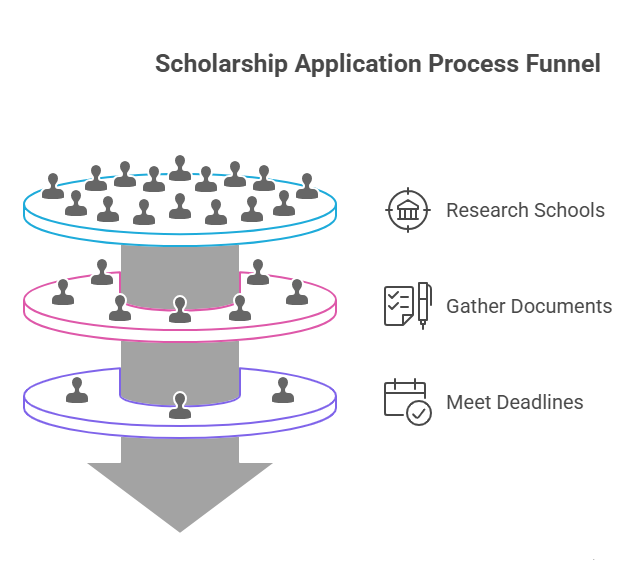
Getting help to pay private school tuition can feel hard. But you can make it easy if you follow simple steps. You should have a plan to guide you as you search for private school scholarships. If you stay organized, it will help you a lot, from the first research step until you send your forms.
This easy guide will tell you the main steps, like how to find the best chances and how to make a strong application for tuition assistance. You should also talk to each school’s financial aid office. That is always a good first move when you want financial aid for tuition.
Step 1: Research and Discovery Strategies
The first step is to spend time searching for scholarship funds by exploring multiple private schools, not just one or two. This increases your chances of finding the right fit for your family. Visit the websites of schools you’re interested in and check the “Financial Aid,” “Tuition,” or “Admissions” sections for information on scholarships, eligibility, and application steps. Make a list of schools offering substantial need-based aid.
Here are a few ways you can do good research:
- Contact the financial aid office at each school and talk to them directly.
- Look online for Canadian children’s scholarship funds.
- Talk with community leaders or ask your child’s teachers to see if they know of any ideas.
- Go to private school open houses. These often have talks about financial aid.
Step 2: Preparation and Document Checklist
When you have chosen the schools and scholarships you want to apply for, start getting organized early to avoid stress later. Gather all necessary materials, as most financial aid forms will ask for accurate and detailed information. Create a folder for each school’s application to track your forms, financial records, essays, and recommendation letters. You’ll need information from tax returns and income, plus details about your assets and any education savings accounts.
Your checklist for getting ready should have:
- Completed application forms for the school.
- Signed copies of your federal tax returns for the past two years.
- Recent pay stubs or a letter from your work.
- Bank statements and records for anything you have put money into.
- Your child’s reports from school and any needed essays.
Step 3: Meeting Critical Deadlines
Deadlines for financial aid are very strict if you miss them, your application won’t be reviewed, no matter how strong it is. Most schools have set dates, usually between December and February, for students applying for the following September. Since each school’s deadline can be different, it’s important to keep track.
- Check each school’s website for specific financial aid deadlines and mark them on a calendar.
- Submit your application and forms well before the deadline to allow for any unexpected issues.
- Remember, late or incomplete applications are rarely accepted, so treat all deadlines as final.
Strategic Preparation: Building a Strong Candidacy
Beyond just filling out forms, there are ways to give your child a better chance at getting help. Strategic planning is important. While financial need matters most for bursaries, a strong application can help too. Even when aid is based mostly on need, if your child stands out, there is a better chance. Schools want to give their money to students they think will do well.
Your child’s grades and personal traits also matter here. If their application shows that they will be a good part of the school community, it will help. This can make a difference, on top of their financial need.
Why Academic Profile Matters in Aid Decisions
You may think only finances matter for need-based aid, but your child’s academic profile is crucial too. Private schools review report cards and transcripts to invest their aid in students who show promise and work hard. When aid is limited, a strong academic record can set your child apart.
- Good grades and transcripts show readiness for challenging coursework and future success.
- Admissions teams prefer students who will thrive and make the most of their opportunities.
- When two students have financial need, the one with better academics is more likely to receive the scholarship.
How USCA Academy Strengthens Scholarship Applications
Having a strong school record is key when applying for private school scholarships for low income families, as schools seek students who are prepared to succeed. Focusing on academic preparation can make scholarship applications stronger and improve your child’s chances of getting into a quality private school.
USCA Academy offers programs designed to strengthen school records, whether your child needs higher grades, course credits, or wants to build essential skills. Excelling academically increases eligibility for both need-based and merit-based private school scholarships for low income applicants.
USCA Academy can help by:
- Offering OSSD credit courses to improve grades or meet requirements for private school scholarships for low income families.
- Providing skill-building lessons for private school readiness.
- Enhancing academic records for stronger scholarship applications for low income families.
Conclusion
To sum up, finding your way through private school scholarships for low income families can be hard. But it is important if you want a good education without worry about money. You should know about the different kinds of financial aid. It also helps to learn how schools check who gets what, as well as smart ways to apply for scholarships. These steps can give you a better chance to get support.
Keep in mind, showing that you have a strong academic record matters a lot. Schools want students who look ready to learn and grow. Using resources like USCA Academy can help you shape your profile and get noticed. If you have more questions or if you need help just for you, feel free to reach out. We are here to help you as you try to get private school financial aid for quality education.
Frequently Asked Questions
1. Are full scholarships available for low-income students?
Full-tuition scholarships are hard to get and do not happen often. Still, some students do get them. They are for people who show great skill in school or other things, and who also have a big financial need. Most of the time, help for students who do not have much money comes as partial scholarships or bursaries. These only pay for part of the tuition.
2. Can you combine different types of financial aid?
Yes, you can mix different types of financial aid. In fact, you should do this. Families often get tuition assistance through the school’s bursaries. They may also get an outside scholarship or grant from a foundation. Using financial aid from more than one place helps cover more of your tuition. This is a good way to pay for all or most of the cost.
3. Can private school scholarships be combined with other forms of financial aid or assistance?
Yes, most of the time, private school scholarships can be used along with other types of financial aid. This includes things like school bursaries and grants from outside groups. Private schools ask families to try for all kinds of help that they can get. This helps take away some of the cost and makes private school tuition easier to handle for many people.
4. What should I include in a scholarship application to increase my chances of receiving aid?
To boost your chances, be sure to send in a full and honest financial application that shows you meet the eligibility rules. Add a strong academic profile with good report cards and transcripts. Write a clear personal statement that talks about your situation and your child’s goals. This can really stand out to the admissions group.