
Key Highlights of homeschool curriculum ontario
- In Ontario, parents have a lot of say in picking a homeschool program. There are many homeschool choices Ontario families can find great for their kids.
- The main legal thing you must do is send a letter of intent to your local school board.
- The Ontario ministry of education homeschooling guides do not say you have to pick any one plan.
- Homeschoolers can pick from do-it-yourself plans or more set online classes.
- For high school, you can get OSSD credits from online schools that are accredited.
- It is good to keep track of your child’s work as a best practice. You do not have to turn these records in to the school board.
Introduction
Choosing to homeschool your child in Ontario is a big step. This means you will be in charge of your child’s learning every day. This guide is here to help you. We will show you how to follow the Education Act. You will also learn how to pick a homeschool curriculum Ontario that works for your family.
You are free to give your child a good and full learning experience. Letting the local school board know about your plan is also an easy thing to do. This lets the local school be aware of what you want to do for your child’s school year.
Homeschool Curriculum Ontario: What Parents Must Know
When you begin your path with a homeschool curriculum in Ontario, the first thing to know is how the law works. The good part for parents is that Ontario law gives you a lot of freedom. You do not have to get your homeschool curriculum checked by the Ministry of Education.
What you mainly need to do is tell your local school board about your choice. You need to send a letter of intent or notice of intent to the local school board. This shows you want to teach your child at home. Because of this freedom, you can make a learning plan that really fits your child.
What is Homeschooling in Ontario and Who Can Do It?
Homeschooling in Ontario is permitted under the Education Act, allowing parents or guardians to teach their own children at home instead of sending them to public or private schools. No teaching degree or special certification is required; you simply need to provide education and be your child’s main guide. Parents have the freedom to create a learning environment that suits their children’s needs and interests, letting them learn at their own pace. The approach and curriculum are up to you, offering flexibility and customization. Many families choose homeschooling in Ontario for its ability to support a personalized, interest-led education experience.
How Ontario laws affect curriculum choices
Ontario’s laws give parents control over their homeschool curriculum. The Education Act means the Ontario Ministry of Education does not require you to follow a set curriculum or review your teaching. Parents decide what and how their children learn at home.
To homeschool, simply inform your local school board, usually by sending a letter of intent. Once the letter is received, your child is excused from mandatory school attendance.
Key points to remember:
- You do not need to submit your curriculum for school board approval.
- You do not need to follow the school’s calendar or daily schedule.
- The school board intervenes only if there are concerns about your child’s learning.
Curriculum Options for Ontario Homeschool Families
After you take care of the legal paperwork, you can start the fun part. It is time to pick your homeschool curriculum in Ontario. There are many homeschool resources you can use. You can make your own plan, or you can buy a full homeschool program in Ontario. Remember, there is not one “best” choice here. The main thing is to do what is right for your family.
You can look at packaged curriculum sets. You might want to mix different homeschool resources, or you can sign up for an online homeschool Ontario program. The right choice will depend on how your child likes to learn, how you like to teach, and what works for your family’s life. Now, we will see some popular ways people choose for homeschool in Ontario.
Using the Official Ontario Curriculum as a Guide
You do not have to follow the official Ontario curriculum, but it can be a very helpful tool. You can find it on the Ontario Ministry of Education website. These documents show you a course of study. They lay out what students are expected to learn in each grade and subject in public schools.
The guidelines from the Ontario curriculum can help you make your homeschool plan. They show you what most kids your child’s age will learn. This can help parents make sure their child is keeping up with other students, or if they might go back to a public school one day.
Think of the Ministry of Education resources as free and complete tools. You can follow them closely, check your progress with them, or just get ideas from them. The ontario curriculum lets you plan a course of study that covers everything your child needs, but it does not make you stick to a set way of teaching.
Choosing Between Pre-made, DIY, and Online Programs
When you pick a homeschool curriculum in Ontario, you usually have three main ways to go. Each path gives a different amount of structure, cost, and how much parents need to be involved. Many families use a mix of these paths for the best results.
A DIY curriculum lets you have the most control and is usually cheaper. You can get free stuff from the library, websites, and videos to build your own plan. This way, you make the learning fit what your child likes.
Here’s a quick breakdown of your options:
- Pre-made Curriculums: These are full “box” sets with all the books, lesson plans, and everything you need for the whole year.
- DIY Curriculum: Here, you pick the materials yourself from many places.
- Online Programs: These can be a single class from an online high school or joining a full-time accredited online school. A private school will sometimes have strong online choices too.
Subject Expectations by Grade Level in Ontario Homeschooling
When you homeschool in Ontario, you can choose what and how you want to teach. Still, it helps to know the Ontario homeschool subjects that are usually taught at each grade. Kids start in kindergarten and go up to homeschool high school Ontario. Teaching the main subjects will help your learners build a strong base in what they need to know.
You do not have to make a strict job out of sticking to a set plan every day. It’s fine to fit these subjects into your week in a way that works for you and your learners. The idea is to keep giving them time on these topics so they get better step by step. In the next part, we will talk about the main Ontario homeschool subjects and ways to change them to fit your homeschool.
Core Subjects Breakdown: Language, Math, Science, and Social Studies
- The official Ontario curriculum is a useful resource for homeschoolers, available on the Ministry of Education website. It outlines grade-by-grade expectations for each subject taught in public schools.
- Using these guidelines helps parents design homeschool plans that align with what peers are learning, and can be especially helpful if a child might return to public school.
- The curriculum documents are free tools—you can follow them closely, use them to track progress, or simply get ideas. You’re not required to stick to a set teaching method, allowing flexibility in your homeschool approach.
How to Customize Learning for Unique Student Needs
When choosing a homeschool curriculum in Ontario, families typically select from three main options, each offering varying levels of structure, cost, and parental involvement. Many parents combine these approaches for flexibility. DIY curriculums provide the most control and are often budget-friendly, using free resources from libraries, websites, and videos tailored to your child’s interests. Here’s a quick breakdown of your options:
- Pre-made Curriculums: Complete “box” sets with books, lesson plans, and materials for the entire year.
- DIY Curriculum: Parents select learning materials from various sources.
- Online Programs: Single online classes or full-time accredited online schools, including some private school options.
Assessment and Record-Keeping for Ontario Homeschoolers
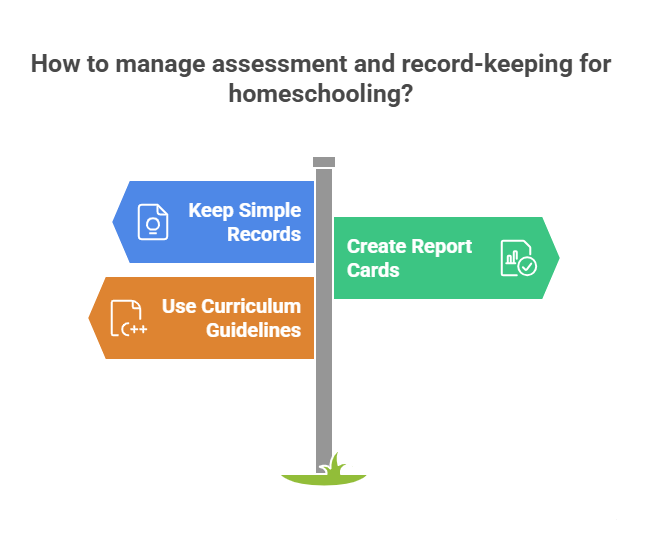
Ontario homeschooling requirements do not say that you need to give the school board any assessments. Still, it is good to keep records. Keeping track of how your child does can help you know where they shine and what they need help with. This gives you a clear look at their learning over time and is helpful when you plan what comes next.
If you are a homeschooler, these records are mostly just for you and your child. You can keep a simple folder with their work or make your own report cards. Doing this helps you stay on track and make sure your child gets a full education. Also, if the school board ever asks about your teaching, you will have proof that you care about your child’s learning and the schooling you provide.
Tracking progress and maintaining records
- The official Ontario curriculum is a useful resource for homeschoolers, available on the Ministry of Education website. It outlines grade-by-grade expectations for each subject taught in public schools.
- Using these guidelines helps parents design homeschool plans that align with what peers are learning, and can be especially helpful if a child might return to public school.
- The curriculum documents are free tools you can follow them closely, use them to track progress, or simply get ideas. You’re not required to stick to a set teaching method, allowing flexibility in your homeschool approach.
Pathways to Earning OSSD Credits When Homeschooling
Ontario homeschooling requirements do not mandate assessments for the school board, but maintaining records is beneficial. Tracking your child’s progress helps identify their strengths and areas needing improvement, providing a clear overview of their learning journey. These records primarily serve you and your child; consider organizing a simple folder of their work or creating report cards. This practice keeps you on track to ensure a comprehensive education. Additionally, if the school board inquires about your teaching methods, you’ll have documentation demonstrating your commitment to your child’s education and the effective schooling you provide.
Meeting High School Diploma Requirements for Homeschoolers
For people who homeschool and want an Ontario Secondary School Diploma, there are a few steps. You need to earn 30 credits. That means you get 18 credits for required courses and 12 credits for courses you pick. You also have to pass the province’s literacy test and do 40 hours of community service. These steps are the same for all high school students, not just those in a local school. The process for getting an OSSD homeschool diploma in Ontario is clear.
If you are in a homeschool high school Ontario program, you get your credits by signing up for classes at a Ministry-inspected school. This can be a private school that lets you learn from far away, or it can be an online school. These schools can give official OSSD credits and will provide real transcripts as proof.
This system makes sure your high school education in Ontario will be seen as real by colleges and other schools. You do not have to tell the local school board or local school about your homeschooling. You will work with the school that gives you the credits.
Online & Private School Support: When It Makes Sense
Many families in Ontario choose a parent-led homeschool program. But sometimes, mixing your plan with outside help is a good idea. A high school, private school, or online high school can help your child where things get hard, or if you want something like the OSSD. Doing this does not mean you stop homeschooling. It can add more to what you are already doing at home.
When you work with an accredited online school, it can help in many ways. It fills in what you may not know or have time to teach. It also gives your child more classes to pick from and help from expert teachers. This high school and homeschool mix gives you freedom, but also some parts of a real school, like records and credits. It’s a good way to go through high school in Ontario, and the choice is there if you or your child need more help.
Who benefits from structured support
For Ontario homeschoolers aiming for an Ontario Secondary School Diploma (OSSD), key requirements are:
- Earn 30 credits: 18 required and 12 elective courses, taken through a Ministry-inspected private or online school, which provides official OSSD credits and transcripts.
- Complete extra requirements: Pass the Ontario Secondary School Literacy Test and finish 40 hours of community service, just like all high school students.
- No board reporting needed: Homeschoolers don’t need to notify the local school board. You’ll work directly with the chosen school to meet diploma requirements, ensuring your education is recognized by colleges and universities.
Conclusion
To sum up, handling the Homeschool Curriculum Ontario means you need to know the law and what curriculum choices there are. When you learn the official rules and what is asked, you can change your child’s learning plan to fit what they need or want. It does not matter if you use programs that are already made or make your own plan at home. The goal should always be to give a strong place for your child to grow and learn. If you use resources like USCA Academy, it can help your homeschooling, especially if you want to get OSSD credits. If you need more help or want to talk about your homeschooling plans, you can reach out at any time. Being a homeschool parent in Ontario can be good and give a lot back to you and your child!
Frequently Asked Questions
1. Can parents use different curriculum sources together in Ontario homeschooling?
Yes, you can do this. The Education Act lets you use different materials for your homeschool. It’s common for people in Ontario to build a homeschool program by using textbooks, things you find online, and hands-on work. This is a good way to teach your child. The Ontario Ministry of Education homeschooling policies do not limit what you can pick for your homeschool.
2. Are homeschool graduates accepted by Ontario universities and colleges?
Yes, colleges and universities in Ontario often accept homeschoolers. Most admissions offices ask for proof that you are ready for school work. This proof can be an OSSD homeschool transcript from an approved school, test scores, or a portfolio. The easiest way is to get an Ontario Secondary School Diploma.
3. Where can new homeschoolers in Ontario find reliable curriculum resources?
New homeschoolers can get great help from local support groups, online forums, and curriculum fairs. The Ministry of Education website gives the Ontario provincial curriculum for free, which is a good guide. Also, you can find online homeschool Ontario programs and some schools like USCA Academy that give organized courses and materials.