

Key Highlights of Canadian Curriculum
- In Canada, the provincial governments choose how to run education in their own areas. Every province can make the Canadian curriculum fit what people in their region need. At the same time, they keep the curriculum in line with national standards.
- K-12 education in Canada covers all the grades from kindergarten up to high school. The provinces offer options for students to pick how they want to study. This can be academic or applied streams, so every student can get what suits them best.
- Large boards in places like Ontario, Alberta, and British Columbia are in charge of changing curriculum and making education policies. Because each province handles its own rules, what teachers cover in classes can change across Canada.
- Getting a high school diploma from the Canadian school system is recognized around the globe. A diploma in Canada opens doors for international students and others. Students can use it to get into good universities and colleges in many countries.
- A lot of international students are attracted to the Canadian education system. The system is friendly and meant to include everyone. Students get to choose to study in either English or French.
- The Canadian curriculum is shaped to give every student several important skills. It helps students practice critical thinking, to know about global citizenship, and to learn hands-on work skills. This sets up students in Canada well for many paths in life.
Introduction
Education in Canada is known to be good and open to all. This makes the Canadian education system one of the top choices for families and international students. Every province in Canada follows the same plan for K-12 education. The Canadian curriculum shapes what students learn from their first year in school to when they finish high school. If your child is getting ready to start school or is close to finishing high school and thinking about college or university, you should know how the Canadian curriculum works. You should look at the way it is set up, the main values, and what it can give your child. This will help you make the best choices for your child’s school journey and future in Canada.
What Is the Canadian Curriculum?
The Canadian curriculum is a guide for what students need to learn in school. It covers what kids study from the start of school to high school. Provincial governments and the department of education are in control of the curriculum. They make sure that what students learn fits what people need where they live, but it also matches the big goals of education in Canada. The Canadian education system wants all students to learn good reading, writing, and math skills. It also helps them think better and be good, active people in their community.
The people who plan the curriculum want to be fair and include all students. They also want to help students get ready for changes in the world. The provincial governments often look at and update the curriculum. They use new ideas and add skills that people will need for life and work. By the time students finish high school, they are ready to go to college, university, or start working. This is one reason many people in the world say the Canadian education system and Canadian curriculum are very good.
How the Canadian Curriculum Is Structured Across Provinces
Canada’s education system is different because the provincial governments make the rules for what students learn. There is no federal department of education, so every province has its own set of rules. Each province picks the subjects students will study and checks their progress through its own department of education. Every province teaches basic subjects like literacy and math. However, some things in the school program will change to fit what that area wants or needs. This happens because each place has its own culture, language, and jobs. With this way, students get a good education, and it lets the provinces plan for what works best in their area.
Let’s see the main boards in every province. There are differences in how they work.
Key Provincial Boards and Differences
Every province and territory in Canada has its own department of education. These departments set up and take care of the provincial curriculum for schools in their places. The British Columbia curriculum is set apart in the way it helps students work on things like talking, thinking, and being responsible for themselves. In Alberta, their provincial curriculum asks students to get basic ideas and fix real-life problems. Ontario’s department of education is known for giving the people clear choices of what to study in school. They split schoolwork into academic and applied streams, and there are specific steps for teachers on how to grade student work.
Lately, there have been some big changes in many provinces.
- Ontario now wants high school students to reach new goals in math and reading. This will help be ready for life after school.
- The british columbia curriculum has been changed. This will help kids build skills they can use anywhere. It helps them keep learning through all their years.
- Alberta changed the way kids learn to make sure students get stronger basic skills and the key things they need to know.
These updates show that Canada wants its schools and colleges to stay up-to-date with the world. The country wants students to be ready for new things that come their way.
Grade Levels and Stages (K–12)
In the Canadian education system, K-12 includes every year from Kindergarten up to Grade 12. Each province, like British Columbia and Nova Scotia, uses its own provincial curriculum for students. This way, the lessons can meet the needs and rules of each place. When you get to high school, you spend time on main subjects and physical education. All of this helps you work toward the main goal, which is to get a high school diploma.
Many international students come to Canada to study. Some of them pick the International Baccalaureate program. This program has a stronger curriculum, and it can help students get more options for going to college or university in Canada. The academic world in Canada is broad, and the International Baccalaureate can open more doors for international students.
Academic Streams and Specializations
In Canada, high school students can pick from two big choices for their studies. One is called the academic stream, and the other is the applied stream. The academic stream has more ideas and prepares you for university. The applied stream focuses more on hands-on work and teaches you skills to get a job. Some high schools also offer special programs like the International Baccalaureate. These programs are there for students who want a harder challenge or who plan to study in other countries.
The provincial curriculum makes sure all high school students have to take some main classes. These are English or French language, mathematics, science, social studies, and physical education. You can also choose classes that are important where you live. For example, in British Columbia, you might take Indigenous studies. If you are in Ontario, you could join French immersion. These options help you follow what you like or improve what you want. In this way, the Canadian education system gives every student a good chance to do well.
How Assessment and Grading Work in Canada
Assessment in Canadian schools includes classroom work, projects, and standardized tests. Each province’s department of education creates these tests. Grades come from percentage marks. Each province decides what you need to pass. A student will get a high school diploma when they finish all the needed credits in required and optional classes.
Physical and health education is included in every year at school. The classes help all students to learn basic ideas about fitness, food, and how to feel good. At first, children move and play together. After that, they talk about caring for themselves, mental health, and how to choose what is safe. Provincial governments check the way they test students. This is to make things fair and open to everybody and to match what schools need today.
Benefits of the Canadian Curriculum for International Students
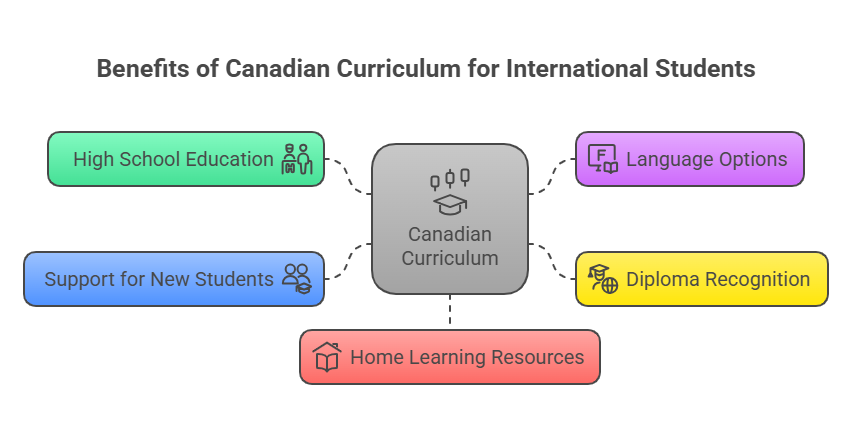
International students choose Canada for high school because the Canadian education system is known around the world. In high school, classes are taught in English or French. Schools in Canada help students feel safe and welcome. If you earn a high school diploma here, you can use it to get into college in Canada or in other countries. There is support for new international students, so they can settle in faster and do well.
If your family wants help with learning at home, you can get Canadian curriculum workbooks. A few good choices are the “Complete Canadian Curriculum” series, or books from Chalkboard Publishing and Popular Book Company Canada. These materials are made to match what each province asks students to learn. This makes the books a good way for your kids to study more at home, and you can use them if you want to homeschool.
the canadian education system is known to accept all people and give lessons that are good for everyone. A high school diploma in Canada helps international students, so they can go to universities and find good jobs anywhere in the world.
How the Canadian Curriculum Compares to Other Systems
The Canadian curriculum is both flexible and strong. This is why many international students and their families want a high school education in Canada. Canadian high schools use a provincial curriculum. It is not based on districts like the US, and it does not focus only on one national test like the UK. There are some basic subjects that everyone must study, but each province can decide what rules and lessons are important for their people. A high school diploma from Canada is known and accepted by most universities around the world. The system aims to help the whole student grow, so development in all areas of life matters here. Next, let us see how the Canadian style compares to high school learning in the US and UK.
Canadian vs US Curriculum
When you look at the Canadian and US curriculum, you see there are some clear differences. In Canada, the K-12 education system is managed by each province. This means every region has its own single curriculum. In the US, the system is set by each state. Sometimes, even local areas set up their own rules.
In Canada, if you want a high school diploma, you must meet the rules your province has. That makes the high school diploma the same for all people in that province. It also helps people know what a high school diploma from that province means and how it relates to k-12 education and high school across the country.
Key comparison points:
- The Canadian high school curriculum looks at how students think and works to help them be good citizens. In the US, high school teaching is often set up for doing well on tests that everyone takes.
- Canada has the same rules for graduation in high school across every province. In the US, each state makes up its own rules for students.
- In Canada, the way high school credits are made is set so they work for college or university. US high school credits might not always fit the same way.
- Canadian high school classes let students choose between academic and hands-on paths. In the US, there is one main way, but students can pick things like Advanced Placement (AP) courses.
Ontario’s high school program teaches both ideas and real skills you can use in life. In British Columbia, the curriculum is also set up as part of K-12 education. It stands out because students can choose from some options and practice skills they will use in the real world. William Butler Yeats said that “Education is not the filling of a pail, but the lighting of a fire.” The Canadian curriculum follows this idea when they make new plans for students’ learning.
Canadian vs UK Curriculum
The Canadian curriculum is different from the UK one. In the UK, students follow one national plan for schools. There are big tests, like GCSEs and A-levels, that are very important. In Canada, each province has its own ways for high school. Students in Canada can pick from many classes. There is more choice for them. This helps international students get more options if they want to go to university in Canada or in other places.
Comparison highlights:
- In the Canadian high school system, students have more time to try new subjects. They do not have to pick what they want to do right away. In the UK, students have to decide what to study much earlier.
- When it comes to education in Canada, grades come from classwork and from tests. In the UK, students get most of their marks from big exams at the end.
- A Canadian high school diploma is accepted by many universities around the world. This is true even for schools in the UK.
- If you get homeschooled in Canada, you can follow the rules of your province. At the same time, you can use the resources that help you learn in the best way.
Because this way is focused on the student, families can follow the rules for high school education in Canada. At the same time, they can give their child the type of learning that works best for them.
Pathways After High School in the Canadian Curriculum
Finishing high school in the Canadian curriculum gives you many options for what to do next. You can go to university, get a college diploma, or start job training. The way you move forward depends on the classes and credits you finish in high school. Some provinces, like British Columbia and Ontario, have made it simple for people to go from high school to college or university.
Parents looking for help with learning at home can use the official Canadian curriculum guides and workbooks. You can find these on provincial education websites. Trusted publishers and local bookstores also have them. With this, students will be ready to stay in the Canadian education system. They can also be set if they want to study in another country. Teachers and counselors are there to help students see all the paths open after high school. They can talk to you about ways to keep going with your studies or to get started at work right after you get out of high school.
Why the Canadian Curriculum Stands Out in 2026
In 2026, the Canadian curriculum will still be known as one of the best in the world. It keeps making changes to match what people need. Starting in September, there will be new updates for the high school curriculum in Canada. The updates will focus on digital skills, being fair to everyone, and teaching life skills. The way the curriculum is organized helps students do well in school and in life. It stays helpful and important for everyone in Canada today.
A “complete Canadian curriculum” book is a helpful guide for students in high school or younger grades. It covers all main subjects for one grade and follows each province’s rules. Parents and teachers use these books to help students learn in class, practice key skills, and stay at or above their grade level. A focus on fresh ideas, fairness, and strong support makes the Canadian curriculum keep getting good results worldwide.
Conclusion
To sum up, the canadian education system gives people in Canada a strong and wide learning experience. This system can change so each province makes sure their students learn what they need for living and working there. It also lets students choose some things they want to know more about. This helps them get ready for work they want in the future. The canadian education system is known in many parts of the world. A lot of international students pick it when they want to study more and get set for their jobs later on.
With the Canadian curriculum, students have a good start in school. They take part in a learning system that wants all to feel welcome and do their best. If you want to know about the Canadian education system, you can talk to our experts for free today!
Frequently Asked Questions
1. Is the Canadian Curriculum the same across all provinces?
No, each province’s department of education looks after its own provincial curriculum. This means there may be differences in what is taught, how students are tested, and the language used in class. The canadian school system agrees on the main subjects, but education in canada is planned to meet what local people need.
2. Is the Canadian Curriculum recognized in other countries?
Yes, the high school diploma from Canada is well known in many countries. A lot of international students use the high school diploma when they want to go to universities in Canada or in different countries. The Canadian education system has a good name. This helps people trust that the high school curriculum is good for both schools and jobs all over the world.
3. What grade levels are included in the Canadian school system?
K-12 education in Canada begins with kindergarten and goes through to grade 12. In some parts of the country, high school finishes at grade 11 instead of grade 12. The Canadian school system has all the grades you need to get a high school diploma. This way, students everywhere can get a full and good education in Canada.