
Key Highlights of Home school in ontario
Here are the main points you need to know about home education in Ontario:
- Home schooling is a legal way to teach kids at home because of Ontario’s Education Act.
- Parents have to make sure their kids get good instruction. However, they do not have to use the Ontario curriculum.
- You need to give a notice of intent in writing to your local school board when you start homeschooling.
- The Ministry of Education is not in charge of checking or regulating home schools.
- There are many benefits of home schooling in Ontario. These include the freedom to set your own schedule and to focus learning for each child.
- There is a lot of support in Canada for home education. You can find a wide range of resources and homeschool curriculum to help you.
Introduction
Are you thinking about home schooling for your child in Ontario? You are not the only one. Many people now look into this way to give a more flexible and custom learning. This home schooling in Ontario guide will help you understand all steps in the process. The Education Act in Ontario allows you to teach your child at home if you want. We will go over the homeschooling pros and cons in Ontario, so you can make a smart choice that fits your family’s needs and goals.
Homeschooling in Ontario: Legal Requirements and Provincial Policy
Home schooling is legal in Ontario, allowing parents to choose home education for children of compulsory school age under the Education Act. The key requirement is to provide “satisfactory instruction,” though the Act doesn’t define this, giving parents flexibility in teaching methods. The Ontario Ministry of Education outlines homeschooling policies in Policy/Program Memorandum No. 131, serving as a guide for parents and school boards. It’s essential to understand the rules and collaborate with your local school board, which requires notification of your decision to homeschool. They will assess whether the child is receiving adequate instruction as mandated by law.
Understanding Home Education Laws in Ontario
The foundation of home schooling law in Ontario is Section 21(2) of the Education Act, which allows children to be excused from compulsory school attendance if they receive satisfactory instruction at home. Here’s what you need to know:
- Parents are trusted to provide a good education and are not required to follow the public school system or Ontario curriculum.
- School boards may investigate if there’s a formal complaint or if parents refuse to notify the board after withdrawing their child.
- The key legal requirement is ensuring your child is genuinely learning and growing through home education.
Notice of Intent and Registration Procedures
To begin home schooling in Ontario, notify your local school board with a Letter of Intent. While not legally required if your child has never attended school, it is strongly recommended. This letter is not a request for approval just a formal notification. There is no standard form; each school board may handle the notice differently, but you can find sample letters from homeschool groups or the Ontario Federation of Teaching Parents (OFTP).
Your letter should include:
- Your child’s full name, gender, and date of birth.
- Your name, address, and phone number.
- A statement of satisfactory instruction at home and your start date.
After sending it, you’ll receive an acknowledgement letter.
How to Start Homeschooling: Step-by-Step Guidance for Parents
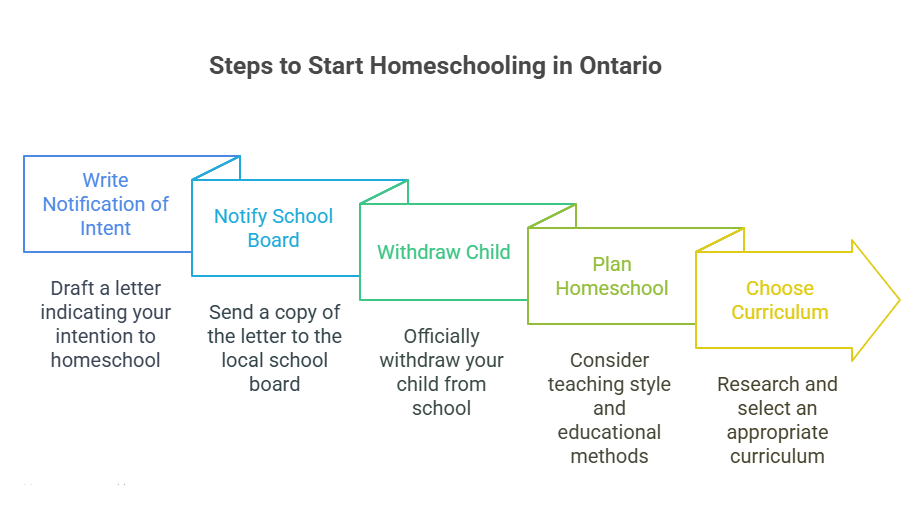
To start home schooling your child in Ontario, follow these steps:
- Write a Notification of Intent: Draft a letter indicating your intention to homeschool and send it to your child’s current school principal.
- Notify the School Board: Also, send a copy of this letter to your local school board office for a clear record.
- Withdraw Your Child: Once the school receives your letter, your child is no longer required to attend school.
- Plan Your Homeschool: Consider your teaching style, explore various educational methods, and select the learning tools that suit your family.
- Choose a Curriculum: Research and choose an appropriate curriculum, utilizing various resources available to support your homeschooling journey.
Curriculum Choices for Home Education in Ontario
In Ontario, you can choose any curriculum for your child, not just the official one. This flexibility allows you to tailor learning to your child’s preferences and needs. Many families create their own eclectic homeschool curriculum by mixing various resources. Options include purchasing complete curriculum sets, using the Independent Learning Centre for online learning, or collaborating with private schools that support home education. These choices help maintain educational quality while fostering a home learning environment.
Selecting Curriculum: Provincial Standards and Flexible Options
Deciding on a curriculum is both exciting and challenging for Ontario homeschoolers. Families can follow provincial standards or embrace a more flexible approach. For high school students aiming for diplomas, using Ontario Secondary School (OSS) guidelines and resources like the Independent Learning Centre (ILC) can be beneficial. Support organizations such as the Ontario Federation of Teaching Parents (OFTP) offer helpful reviews and resources. Many parents blend different materials for a custom plan, while others choose private schools like USCA Academy for complete online curricula and guidance.
Here is a simple breakdown of common curriculum approaches:
| Curriculum Approach | Description |
|---|---|
| Eclectic | Mixing and matching resources from various publishers and sources. |
| All-in-One (Boxed) | A comprehensive, grade-level kit with all subjects from one publisher. |
| Online/Distance | Enrolling in structured online courses (e.g., ILC, private schools). |
| Unschooling | Child-led learning based on interests, with no formal curriculum. |
Parental Roles, Responsibilities, and Record Keeping
As a parent or guardian, your primary responsibility is to provide your child with “satisfactory instruction,” which encompasses both academic subjects and their social and emotional development. You take on roles as principal, teacher, and counselor, determining the daily schedule and learning materials. While record-keeping isn’t legally required, it’s advisable to maintain a folder of your child’s work, a reading list, and notes on their progress. This documentation helps you track growth and supports any future educational transitions.
Benefits and Challenges of Homeschooling in Toronto and Ontario
Home schooling in Ontario offers unique opportunities and challenges for families.
Benefits:
- Custom learning environments allow parents to tailor education to their child’s needs, fostering a love for learning.
- Increased family time and flexibility to incorporate travel and real-life experiences into education.
- Closer family bonds as parents and children engage in shared learning experiences.
Challenges:
- Parents must dedicate significant time, patience, and resources to ensure a comprehensive education.
- Concerns about socialization and potential gaps in learning without traditional school structure.
- The responsibility of managing the child’s complete educational journey can be daunting for many families.
Support Networks, Resources, and Learning Opportunities
You are not alone in home schooling in Ontario. Numerous support networks exist, from large provincial organizations to smaller local groups. The Ontario Federation of Teaching Parents (OFTP) is a great starting point, offering advocacy, information, and a vibrant online community. Accessing homeschool resources is easy, with many online platforms providing curricula and local libraries offering free books and digital media. Community centers also host programs for kids. Building a support network is essential for a successful homeschooling experience.
Homeschooling Toronto Groups, Co-ops, and Online Communities
Connecting with other home schooling families offers valuable support and social opportunities for both parents and children. In Toronto and across Ontario, a strong home schooling community exists online and in person. Facebook groups allow parents to share tips, ask questions, and organize events. For face-to-face interaction, local co-ops and groups are available, providing a sense of community and resources. These connections help kids make friends and parents feel supported. Popular options include:
- Homeschool co-ops where parents take turns teaching different subjects.
- Simple park days or social meetups.
- Group field trips to museums, science centers, or conservation areas.
- Special classes for things like art, music, or physical education.
- Support groups with parents who meet to share, talk, and encourage each other.
Accessing Community Programs, Field Trips, and Enrichment
Your community is more than just a place to live it can be your child’s classroom. Home schooling in Ontario lets families learn from the world around them, with many programs and discounted options for homeschoolers. Libraries offer more than books: workshops, computer access, and interlibrary loans are available. Museums, galleries, and science centers often host homeschool days, providing hands-on learning opportunities. Make the most of these local resources and support services:
- Municipal recreation centers for sports and fitness classes.
- Conservation areas and provincial parks for outdoor learning.
- Theaters, orchestras, and art studios for cultural experiences.
- Local charities for volunteering and community engagement.
Conclusion
Home schooling in Ontario lets parents shape learning to fit what their child needs and still follow the rules set by the province. You need to know the steps, like sending a notice of intent and picking a curriculum that works for your family. Doing homeschooling at home brings some challenges. But there are many good things, such as more flexibility and learning that is just right for your child. This is why more families now choose this way for schooling. You can get help and support from many places, like USCA Academy. They can show you what to do and help as you start. If you are thinking about homeschooling, do not wait. Reach out to get more details or help. The choice you make could change your child’s learning for the better.
Frequently Asked Questions
1. Do homeschoolers need to register with the Ontario school board?
You do not need to “register” with the school board to get their approval. Instead, it is a good idea to send a written notice of intent to let them know what you have decided. This letter lets the school board know that your child will not be taking part in compulsory school attendance. It is the official way to notify the school board and meets what is needed for school attendance rules
2. How are homeschooled students assessed in Ontario?
There are no needed provincial exams or official checks for home schooled students. The Education Act says parents must give “satisfactory instruction.” You decide how to see your child’s progress. You can use projects, talks, or keep a folder of work. This way, you make sure there is good education quality, without anyone checking from outside.
3. Can homeschoolers apply to Ontario universities?
Yes, homeschoolers can go to Ontario universities. There are different ways to get in. Many students put together a portfolio. Some take tests like the SAT. Others earn official Ontario Secondary School credits. You can get these credits through groups like the Independent Learning Centre (ILC) to meet what your program asks for.