
Key Highlights of Grade 11 English
- You will read many kinds of grade 11 english literature, with texts from canada and from other parts of the world.
- The course will help you work on your critical thinking and analysis skills.
- You will get to understand and make a variety of text forms, like essays and media projects.
- Improving your english language skills is a key goal. There is a focus on clarity and precision.
- The curriculum expectations will get you ready for university, college, and your future daily life.
Introduction
Welcome to Grade 11 English! This year you will be taking a big step in your high school journey. You will learn more about the english language and find out more about the world around you. The learning process is going to do more than just reading texts. You will start to look closer at them and see what they really say. These skills will help you in the years to come, both in school and later at work. Get ready to read strong stories, write good arguments, and start using your own voice.
Understanding the Grade 11 English Syllabus in Canada
The Grade 11 English syllabus is designed to build on the skills developed in previous years. In Canada, each province determines its own educational framework, so the Grade 11 English curriculum can vary by location. However, the core goals remain consistent: enhancing literacy, communication, and critical thinking through English language arts. For instance, the Ontario curriculum emphasizes diverse literary texts, informational materials, and creative writing. Students engage with units covering non-fiction, novels, poetry, and drama, meeting key expectations for reading, writing, and oral communication. Next, we will explore the variations in curricula across Canada and the essential skills acquired.
Overview of Curriculum Across Provinces
While each province’s Ministry of Education sets its own English curriculum, all Grade 11 English courses in Canada focus on foundational skills: analyzing texts, thinking critically, and expressing ideas clearly. The biggest differences are in the literary works and themes emphasized some provinces highlight Indigenous voices, while others may focus on Canadian drama or media. Regardless of location, students are expected to read, interpret, and write about themes like identity, society, and values. Below is an overview of key goals and text types across provinces:
| Province | Key Focus Area | Common Text Types |
|---|---|---|
| Ontario | Analysis of literary, informational, & graphic texts | Novels, Shakespearean Drama, Poetry, Essays |
| British Columbia | Exploring texts connected to identity and social issues | Indigenous Literature, Canadian Fiction, Media Texts |
| Manitoba | Critical response to a wide range of texts and media | Short Stories, Non-Fiction, Film, Digital Media |
Key Learning Objectives & Literary Themes
The main goal of Grade 11 English is to enhance your literacy development. In this class, you will learn to read and comprehend more complex texts, identify main ideas, and infer meanings beyond the text. You’ll connect readings to your own experiences, which is crucial for building strong literacy skills.
The course aims to cultivate thoughtful readers and writers. You’ll evaluate the quality of various texts and identify biases, while also exploring how an author’s style conveys meaning. These lessons will prepare you for your final year of high school and beyond, focusing on the skills and concepts necessary to achieve these objectives.
Core Language, Communication, and Critical Thinking Skills
- In Grade 11 English, you will sharpen your communication skills, learning to express ideas clearly in both writing and speaking, whether for formal essays or persuasive speeches.
- Critical thinking is key: you’ll analyze authors’ intentions, evaluate evidence, and identify persuasive techniques like ethos, pathos, and logos, as well as uncover bias and point of view in texts.
- These skills extend beyond English class, helping you build strong arguments, interpret information critically, and confidently present your ideas abilities that are valuable for understanding news, supporting your opinions, and succeeding in future careers.
Major Literature Types and Themes
All year, you will explore various texts in grade 11 English, improving your reading skills and understanding diverse experiences. You’ll begin by focusing on stories and gradually examine how writing style influences meaning. The curriculum covers classic and modern novels, short stories, poetry, and plays including a Shakespeare play most years. You’ll also study non-fiction, such as articles, infographics, and media texts, learning how different forms share ideas. Key themes discussed include:
- The search for identity
- Justice and injustice in society
- The conflict between the individual and the community
- The human relationship with nature
- Power, ambition, and consequence
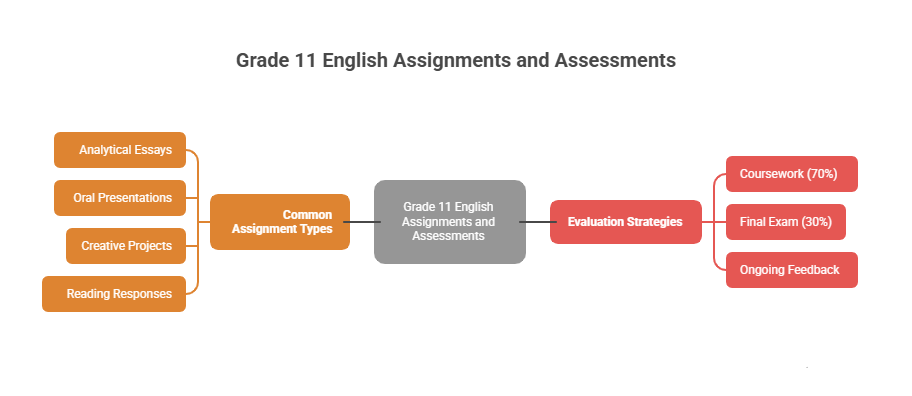
Grade 11 English Assignments and Assessments
You make progress in Grade 11 english language arts by doing different assignments. Each assignment helps test a skill, so you can show what you know and your grade 11 english writing skills many times. Your final grade does not just come from a big final exam. It be based on all the work you do across the semester.
Assignments check your reading comprehension, critical analysis, and communication skills. You get graded for things like short written responses and also big projects. This balanced way means you get to show your strengths, whether you are good at writing, speaking, or doing creative tasks. Now, let’s see what kinds of assignments you can do and how you be graded.
Common Assignment Types
Your teacher will check your learning in different ways throughout Grade 11 English. The most common assignment is the formal essay, where you must state a clear main point and support it using evidence from the reading. This shows your ability to write at a Grade 11 level. However, you’ll also complete other tasks that let you demonstrate your strengths in various formats. These assignments are helpful for all students, including English language learners. Your final grade will reflect how you perform in all these areas.
Common assignments include:
- Analytical Essays: Examine main ideas, characters, or styles in texts.
- Oral Presentations: Present your thoughts on a book or topic to the class.
- Creative Projects: Create stories, poems, podcasts, or videos.
- Reading Responses: Write short reflections on what you have read.
Evaluation Strategies and Grade 11 English Exams
- Grade 11 English grading is designed to be fair and reflect your overall progress, with teachers providing ongoing feedback to help you improve.
- In Ontario, 70% of your grade comes from coursework like essays, projects, and presentations, showing your consistency and growth; the remaining 30% is based on a final exam assessing your grasp of key concepts and skills.
- To prepare for the Grade 11 English exam, review course material, practice writing regularly, and ensure you understand the literacy skills taught throughout the term for the best results.
Recommended Resources and Study Tools
To excel in Grade 11 English, it’s beneficial to utilize resources beyond your school books. A Grade 11 English study guide or workbook offers additional opportunities to practice grammar, vocabulary, and reading skills. These tools reinforce classroom learning and enhance your literacy at your own pace.
Using these resources empowers you to take charge of your English education. Whether you’re focusing on figures of speech or improving essay writing, study tools provide quick answers and clear guidelines. Numerous workbooks and online resources align with provincial curriculum standards. Explore these options to boost your literacy and expand your vocabulary effectively.
Workbooks, Textbooks, and How USCA Academy Supports Learners
- Your class will use a main textbook for major readings like Macbeth or Frankenstein, while side workbooks help break down complex ideas, build grammar, and expand vocabulary.
- For extra support, online courses such as those from USCA Academy offer full lessons, practice tests, and teacher feedback—combining textbook and workbook benefits in one platform.
- To stay on track, check the official Ontario Grade 11 English syllabus on your province’s ministry of education website; online courses usually follow these guidelines, ensuring your studies meet requirements.
Conclusion
Grade 11 English can be a good time if you want to build a strong base for your studies. When you know the plan, the top goals, and what the class asks you to do, you get better at using English and thinking about things in new ways. Reading books from all around the world helps you see life from another side. For exams or assignments, you can get help from workbooks and books, like the ones from USCA Academy, that give you more to work with. If you want help or if something is not clear, you can always reach out for answers.
Frequently Asked Questions
1. What is the ENG3U English course and how does it fit into grade 11 English?
ENG3U is the course code for Grade 11 University Prep English in the Ontario secondary school system. This compulsory grade is meant for students who want to go to a university. It focuses on deep analysis of literary texts. Students will also grow their skills in english language. The course is made to help you meet the curriculum expectations for studies at the university level in Ontario.
2. What strategies can help in writing high-scoring essays for Grade 11 English?
For grade 11 english essay writing, start with a strong and clear main idea. Use details from the reading to support what you say. To help your work have better clarity, be sure to put your thoughts in order. Use words that fit your topic. Outlining first is one of the variety of ways to make sure your notes and points connect well and do not mix up.
3. How can I improve my time management for Grade 11 English assignments and exams?
Good time management begins when you split big assignments into small and easy steps. Use a planner to mark when you need to outline, write, and check your work. This way of doing things will lower stress and help make your report card better. This learning process can help all students.