Key Highlights of curriculum for kindergarten in canada
- The Canadian kindergarten curriculum helps kids get ready for future learning by mixing core subjects with growing activities.
- Some key kindergarten subjects in Canada are language arts, math, social studies, science, and the arts.
- In Canada, play-based learning is a big part of early childhood lessons. This way, kids get to build social skills, get better at solving problems, and be more creative.
- Kindergarten learning outcomes in Canada aim to help children think better, feel good, and move well.
- The kindergarten curriculum can look different in each province. Parents should check with their local school board to know what rules and plans are in place.
Introduction
Welcome to kindergarten! This is the first big step in your child’s school life, and it is an important moment for both of you. The curriculum for kindergarten in Canada does more than build on preschool; it sets the foundation for all future learning. Here, your child will learn and grow in social, emotional, and school skills. This guide will help you know what to expect regarding the curriculum for kindergarten in Canada. It will cover main subjects, teaching methods, and how you can help your child during this new stage.
Curriculum for Kindergarten in Canada: Key Areas and Subjects
The kindergarten curriculum in Canada provides essential tools for children to begin their learning journey. It prepares them for Grade 1 and future challenges, focusing on language arts, counting, and social interactions. Creativity is also encouraged. These subjects are designed to spark curiosity and foster a love for learning, laying the groundwork for more complex concepts in later grades. Key learning goals include language arts, counting, and other fundamental areas that support your child’s educational development.
Core Subjects in the Canadian Kindergarten Curriculum
The kindergarten curriculum in Canada is designed to give young learners a strong foundation through a blend of play and learning. Children explore key subjects in ways that are engaging and fun, helping them develop basic skills for reading, counting, and understanding the world. The goal is to prepare every child for future success in school.
Key subjects in the Canadian kindergarten curriculum are:
- Language Arts: Kids practice talking, listening, learning letters and sounds, and develop a love for reading, in English or French.
- Mathematics: Children learn counting, sorting, identifying patterns, and understanding numbers.
- Social Studies, Science, and the Arts: Kids explore their community, nature, and express themselves through drawing, music, and pretend play.
Learning Goals and Outcomes for Kindergarten Students
The kindergarten curriculum in Canada supports children’s growth in key areas beyond academic subjects, nurturing their thinking, emotions, and social skills. The main goals are to build confidence and help kids become active learners who keep trying, solve problems, and ask questions. By year’s end, students are expected to:
- Interact with friends, listen, and follow multi-step directions
- Practice printing using upper and lower case letters to develop fine motor skills
- Tackle tasks that are slightly challenging to boost problem-solving and resilience
These skills prepare children for future success in reading, writing, and other subjects.
Provincial Variations in the Kindergarten Curriculum
In Canada, each province and territory is in charge of their own education. This means there is no single, national kindergarten curriculum for kindergarten in Canada. The main goals are much the same everywhere in the country, like getting kids ready for Grade 1. Still, each provincial kindergarten curriculum in Canada, such as in British Columbia or Quebec, can be different in some ways.
Some of these differences are about what subjects they focus on. Others may be about how the day is set, or what students are meant to learn. For example, the way French immersion programs are offered is not the same in every place. It is important to know about these differences in BC and other places when you look at school choices for your child.
Notable Differences by Province and Territory
When comparing provincial kindergarten curriculums in Canada, you’ll find differences in structure and focus. Ontario offers a two-year, play-based program, while Alberta emphasizes literacy and numeracy within a play-based context. British Columbia’s curriculum centers on inquiry and core competencies. Quebec uses a cycle program that promotes development through guided and spontaneous play. For the most accurate and current information, visit your province’s Ministry of Education website. This table provides a general overview contact your local school district for specific details.
| Province/Territory | Primary Focus | Language Options |
|---|---|---|
| Ontario | Two-year, play-based learning program with a team of a teacher and an early childhood educator. | English, French Immersion |
| Alberta | Focus on literacy, numeracy, and skills for lifelong learning within a play-based context. | English, French Immersion |
| British Columbia | Inquiry-based learning centered on core competencies like communication and critical thinking. | English, French Immersion |
| Quebec | A cycle program that emphasizes development through guided and spontaneous play. | French, English |
Teaching Approaches in Early Childhood Classrooms
The main idea behind canadian early years education is that children learn best when they are active and busy in the classroom. In canada, kindergarten teachers use ways of teaching that move away from just making kids repeat things over and over. They use lessons that get kids involved and working with their hands. The classroom is made to be a nice place where kids want to learn and ask questions.
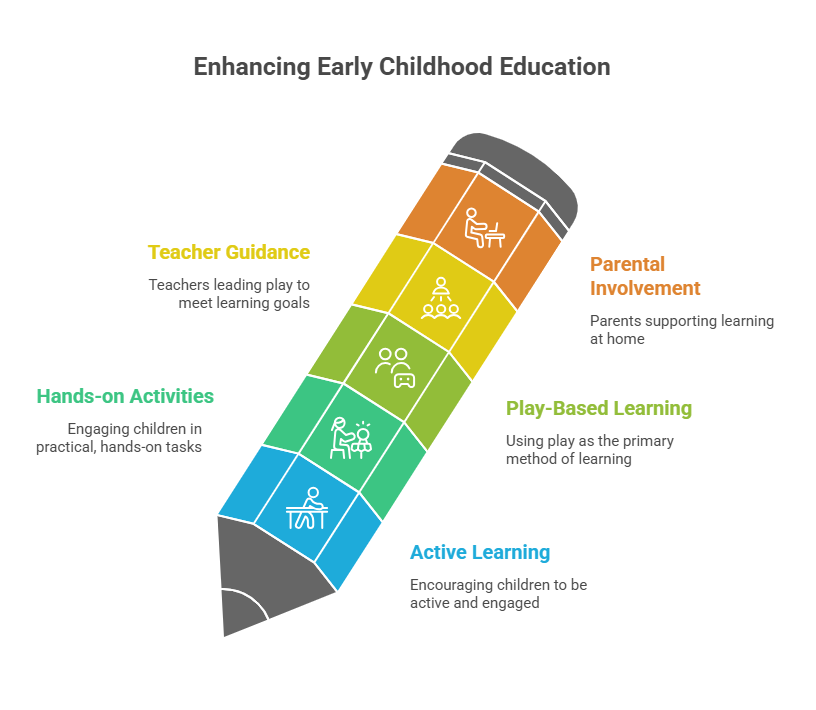
The most common way to teach is called play-based learning. In this method, play is the main way for kids to learn new things. Teachers help lead these games so that children meet certain learning goals. If you are a parent and want to help at home, you can use tools like the “Complete Canadian Curriculum: Kindergarten” workbook. It gives you fun things to do that line up with what your child learns at school and help your child grow.
Play-Based Learning in the Canadian Early Childhood Curriculum
Play-based learning is central to the Canadian early childhood curriculum. Children learn through exploration, imagination, and both free and teacher-guided play. This approach develops social, emotional, and academic skills in a relaxed environment. Teachers observe and support each child’s growth through engaging activities, such as building with blocks or role-playing in pretend stores.
Key benefits of play-based learning include:
- Skill Development: Encourages problem-solving, communication, and emotional regulation.
- Real-World Understanding: Helps children grasp concepts in math, science, and social interaction.
- School Readiness: Prepares adaptable and curious learners for future challenges in grade school.
Parent Support for the Kindergarten Journey
As a parent, you are the first and most important teacher for your child. Working together with the school helps your child do well. This article is a guide for parents. Many school boards also have their own resources that can help you. They often share these as PDF files that you can download from your browser to help you learn more about their kindergarten curriculum.
Helping your child move from preschool to kindergarten does not have to be hard. You can do simple things with them at home every day. These activities can build their confidence. They also get your child ready for both the schoolwork and the social side of their new classroom.
Getting Ready for Kindergarten: Practical Steps for Families
Getting your child ready for kindergarten can be an enjoyable experience. Help them learn and grow by including simple, fun activities in your daily routine. These activities build important skills for school. While guide papers and workbooks are helpful, being involved is best. Read together every day, pointing to each word, to develop reading skills. If using worksheets, choose ones with consistent fonts to avoid confusion.
Here are some things you can do:
- Build Independence: Let your child dress themselves, open lunch boxes, and use the bathroom on their own.
- Develop Cognitive Skills: Count objects, sort toys, and discuss days of the week.
- Foster Language: Talk often, ask questions, and share stories about books and drawings.
Choosing a Strong Kindergarten Program: Spotlight on USCA Academy
Choosing the right kindergarten program is important for your child’s early years. Consider both public and private options, like USCA Academy, which offers strong early education and small class sizes. When visiting schools, look for:
- Programs that focus on play, questions, and learning by doing.
- Special programs or extra support to build strong English and math skills.
- An environment where children feel welcome, curious, and excited to learn.
Ask about the Canadian kindergarten program structure and observe classroom interactions. The best schools help children grow academically and personally, encouraging confidence and a love for learning.
Conclusion
In the end, knowing the curriculum for kindergarten in Canada is key for parents as they guide their child’s first school years. This includes main subjects, the way things may change by province, and new teaching methods like play-based learning. These things help your child grow in many ways. When you keep up with these main parts of the curriculum for kindergarten in Canada and what to expect, you can help your child learn and grow at this important time. Picking the right kindergarten, like USCA Academy, helps your child build a strong start for more school in the future. If you have questions or want some help, reach out to us. We can work together to give your child the best beginning for their learning journey.
Frequently Asked Questions
1. How does the Curriculum for Kindergarten in Canada support different learning styles?
The Canadian kindergarten curriculum is made to help all learners. Teachers use many ways to teach, and play-based learning is one of the main methods. Kids do things like building, telling stories, and making art. These activities help children learn with their hands, be creative, and move around. This way, every child can find what works best for them and reach key kindergarten learning outcomes in Canada.
2. Do private schools in Canada follow the same kindergarten curriculum as public schools?
Private schools in Canada usually meet or go beyond what public schools ask for in their curriculum. They may also have a special or more detailed way of teaching, a different Canadian kindergarten program structure, or use other teaching ideas. If you want to know details about their kindergarten program, it is best to ask the school directly.
3. What skills will children develop by the end of kindergarten in Canada?
By the end of kindergarten, children in Canada will get key skills in working well with others, solving problems, and talking with people. The kindergarten learning outcomes in Canada make sure kids have a start in early language arts and math. They will know letters and numbers, and they will be more sure of themselves and able to do things on their own. This helps them be better learners.
4. How does the Canadian kindergarten curriculum prepare children for Grade 1?
The early childhood curriculum in Canada helps young kids get ready for Grade 1. It does this by teaching the basic skills they need for future learning. In kindergarten, children start to learn reading and math, develop social and emotional skills, and grow their curiosity. These kindergarten learning outcomes in Canada help make sure that kids move easily into Grade 1, where school becomes more structured.