
Key Highlights of Kindergarten interview questions for parents
Here are the main things to keep in mind for your kindergarten interview in Canada:
- The interview will feel like a friendly talk. It is not a test. The school wants to know if it is the right place for your family.
- Schools want to learn about your child’s social skills, what their day is like, and how they talk about things.
- The private school parent interview process can be more detailed than what you may find at a public school.
- It helps to think a bit about your child’s personality and bring up real-life examples. You do not need to rehearse answers.
- This guide gives you sample parent interview questions about the interview process so you can feel good and ready.
Introduction
The kindergarten interview process can seem like a big part of your child’s education. Many parents want to know what questions schools will ask in a kindergarten interview. You’re not alone in this. This guide will give you simple and friendly advice about what to expect. This way, you can feel sure and ready for the talk. Remember, the schools in Canada want to know your family. They also want to find the best ways to help your child do well in their new place for learning.
Top 10 Kindergarten Interview Questions for Parents (With Sample Answers)
Schools use parent interview questions to get to know your child’s special way of thinking and what they need. This is not about looking for problems in how you raise your child or judging them. The main goal is to work together to help with your child’s education and their character development. These questions help the kindergarten teacher and other staff know what to do to make the classroom a good and friendly place for all.
Below, you will find some common parent interview questions you may see. We will talk about what schools are hoping to find out and show you how you can answer in a clear, honest way.
1. How does your child interact with other children?
When schools ask about how your child interacts with other children, they want to see your child’s social skills and personality. For example, you could answer:
“My child is usually friendly and enjoys playing with other children. On playdates, she likes to share her toys and often invites others to join in games. However, she can be a bit shy in new situations and sometimes needs a little time to warm up. For instance, when she started going to a new playground, she watched other kids for a while before joining in. Once comfortable, she made friends and participated in group activities.”
This kind of answer shows the teacher how your child acts in social settings and that you support your child with positive reinforcement, which is important for their social development.
2. How do they handle sharing or taking turns?
Sharing is a skill that kids learn as they grow, and the school will know that. They ask this to see where your child is right now in learning to share. They do not want or expect your child to be perfect. Instead, they want to see how you help your child grow and learn in real life.
For example, you could answer: “My child is still learning to share and sometimes needs a reminder. At home, we take turns with toys when playing together. If there’s a favorite toy, we use a timer so each child gets an equal turn. I always praise him when he shares or waits patiently. We talk about how sharing makes playtime more fun for everyone.”
This kind of answer is honest and shows that you are involved in teaching your child. It also helps the school understand how you help your child develop social skills and that you are willing to work with them to teach your child.
3. Can your child follow simple routines?
A kindergarten classroom needs routines to run well. Kids hang up their coats when they come in. They also need to clean up when they finish each activity. This question helps the school see if your child is ready for the way they do things. They want to know if your child can follow some easy steps during the day.
Example answer:
“Yes, my child can follow simple routines. At home, we have a morning routine where he gets dressed, eats breakfast, and brushes his teeth. He does a good job with this most days. We also make cleaning up fun by singing songs or playing educational games together. I believe these routines help him get ready to learn and work well with others.”
With these school interview tips, you let them know you help your child get ready to learn and work well with others at home.
4. How independent is your child with basic tasks?
This question is about what your child can do by themselves. For example, can your child put on their own shoes? Can they wash their hands or open their lunchbox? The school wants to see if your child is starting to be more independent. This is a big part of holistic development. Teachers also want to know if your child will need help with these tasks each day.
Sample Answer:
“My child is quite independent with basic tasks. She can put on her own coat and shoes and is very proud when she gets the zipper right. She also washes her hands by herself and tries to open her lunchbox on her own, although sometimes she needs a little help. We always encourage her to try things herself before asking for help, so she is learning to be more confident and independent every day.”
5. How does your child express their needs?
Good communication is important for your child’s happiness and growth at school. This question lets teachers see how your child shows if they are hungry, tired, or need help. Your child may use words, hand signs, or both. Every way is helpful for teachers to know.
Sample Answer:
“My child usually tells us what he needs using clear words. For example, if he is thirsty, he says, ‘I want water,’ or if he needs help, he says, ‘Can you help me, please?’ Sometimes, if he feels shy around new people, he might point to what he wants or go to the teacher for help. We encourage him to use both words and gestures so he can always express himself.”
This helps the school see a full picture of your child. It shows the best way to help them at school. This step is very important for checking if your child is ready for kindergarten in Canada. It also helps make sure your child’s needs are met from the start.
6. What languages are spoken at home?
Canada is home to many multilingual families, so schools want to know which languages are spoken at home to better support your child’s language development. When answering, be honest and specific about your family’s language use. For example:
Sample Answer:
“At home, we mostly speak English, but my husband and I also speak Hindi with each other and with our parents. Our child listens to both English and Hindi daily, and sometimes we use Punjabi when visiting extended family. We encourage our child to use all three languages, so they stay connected to our culture and communicate well with relatives.”
Sharing these details helps teachers understand your child’s background and provide better support.
7. What activities does your child enjoy most?
Example Answer:
“My child enjoys a mix of quiet and active activities. She loves drawing dinosaurs and often asks for books about them, showing her curiosity and creativity. She enjoys helping me water the plants and is always excited to play outside, whether it’s riding her bike or playing catch. She also likes working on puzzles, which keeps her engaged and helps her problem-solving skills. Listening to stories is another favorite, especially when we read together before bedtime. These activities show she enjoys learning, exploring nature, and spending time with family, which helps her grow in different ways.”
8. How do they respond to new challenges?
When my child faces new challenges, she tends to approach them with curiosity and determination. For example, when she started learning to ride her scooter, she fell several times but refused to give up. Each time she got back up, I praised her effort and encouraged her to try again. We focus on positive reinforcement, celebrating her willingness to try rather than just her success. This attitude extends to other situations, like tackling educational games or tasting new foods. She’s learning to be resilient and confident, and we support her by encouraging her to keep trying, even when things are difficult.
9. How does your child handle frustration?
When my child feels frustrated, such as when a puzzle piece doesn’t fit or his blocks fall down, he sometimes gets upset and may cry briefly. For example, last week he was building a tower, and when it fell, he got frustrated and started to cry. I encouraged him to take a deep breath, then we talked about what happened. Together, we tried again and rebuilt the tower. I praise his efforts and remind him that it’s okay to feel upset but important to keep trying. This helps him learn to handle frustration positively and develop problem-solving skills.
10. How do you support your child when they are upset?
When my child is upset, I first make sure they know their feelings are valid by listening carefully and offering comfort, like a hug or gentle words. I let them express what’s wrong without interrupting, and reassure them that it’s okay to feel sad or frustrated. Once they are calmer, we talk together about what happened and discuss ways to handle similar situations in the future. I encourage positive thinking and praise them for sharing their emotions. If needed, I work with their teachers to understand any issues at school. I believe emotional support helps my child feel safe and confident.
Kindergarten Interviews in Canada: Private vs Public Schools
In Canada, how the interview goes can be different depending on the school. Most public schools in places like Ontario make it easy to sign up for kindergarten. You don’t need to worry about a special parent interview. But the private school application process can ask for more steps.
A private school or the best international school might want parents to come in for an interview. This helps them see if your family values fit with what the school stands for. Schools like USCA Academy use the parent interview to get to know families. They want to start building a strong and good partnership for your student.
How Parents Can Prepare for the Interview
Getting ready for the parent interview is not about repeating answers in your head. It is more about taking time to think about what you want to say. When you use the right preparation, you can be calm and sure of yourself. You do not have to say everything the same way each time. The interview process is good for both sides. You can also ask about the school and learn what they do.
The school interview tips here can help you get your ideas together. The list of common mistakes can make sure you do not make small, easy errors on the day.
Tips to Help You Get Ready for Interview Day
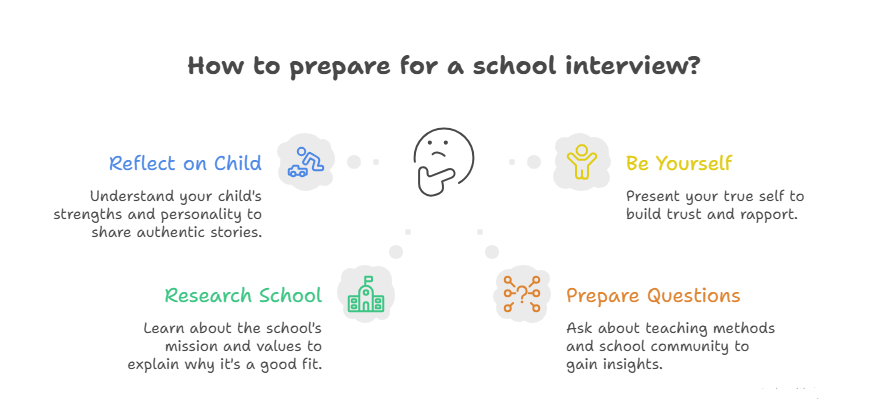
Feeling ready helps make the interview process go more smoothly. It lowers stress, and helps you show your family in a true and confident way. Here are some easy school interview tips to help you get set.
- Reflect on Your Child: Think about your child’s strengths, what they like, and their way of acting. What makes your child stand out? Be ready to share a few quick stories. This feels more real than just saying a list of words about your child.
- Research the School: Look at the school’s website. Learn about their mission and values. This will help you say why you find this school is the right pick.
- Prepare Your Own Questions: Remember, this interview is for you as well. Ask about how they teach, how students get used to new things, orabout their school community.
- Be Yourself: The school is interested in meeting the real you.They do not want the answers you think they want. Just be honest.
Getting ready like this makes the private school application process better for everyone.
Common Mistakes Parents Should Avoid
While you want to do your best in the parent interview, it’s good to know what not to do. The right preparation is not just about getting ready—it’s also about staying away from common mistakes. These could make the parent interview seem tense or not real. Here are some things to keep in mind.
- Over-coaching Your Child: Try not to push your child too much. Let them be who they are. The school wants to see your child’s true self.
- Exaggerating Your Child’s Abilities: Be honest about what your child can do and where they still need help. Schools like when parents are open and real.
- Dominating the Conversation: Be sure to listen as well as talk. The parent interview is a two-way talk, not just you telling everything.
- Forgetting to Ask Questions: If you don’t ask anything, it can show you are not interested. Use this time to find out if this preschool is good for your child.
- Sounding Negative: Try not to say bad things about your child’s old preschool or past times. Talk in a way that is hopeful and looks ahead.
The right preparation for a parent interview is important so you and your child can show your best side.
Suggested Ways to Answer Popular Interview Questions
The way you answer parent interview questions matters as much as the words you use. Your tone and how you talk can show the school that you are a helpful and involved parent. Try to be honest, positive, and clear when you answer parent interview questions. Give real-life examples and talk about what makes your child’s personality special. This can help the school remember what you say.
The tips below are here to guide you. They will help you prepare for the interview process, show your child’s strengths, and use stories to answer hard questions about your child in the parent interview.
How to Highlight Your Child’s Strengths and Interests
Every child is different and has things they are good at. They also have things they like. The interview is a time to talk about these things. The most important thing is to talk in a way that feels real and not like you are bragging. Try to share the traits that help make learning better for all.
Here are ways you can share the best things about your child’s personality and actions:
- Focus on Curiosity: You do not have to say “he’s smart.” You can say something like, “He’s curious and loves to ask questions about how things work.”
- Talk About Kindness: Give an example of your child’s kindness. You can say, “She is very caring and is the first to help or comfort a friend who is upset.”
- Connect Interests to Learning: Point out how your child’s love for building blocks shows good skills for problem-solving.
- Emphasize Effort: You can talk about your child’s effort. Say, “He works hard on his drawings and feels proud of what he makes.”
When you use positive reinforcement like this, it shows that you think your child’s character is just as important as what they achieve in school.
Sharing Real-Life Examples for Challenging Questions
When you get one of those tough parent interview questions, like how your child deals with frustration, it helps to share a real story. Stories make your answer honest and easy to remember. They let you show the interviewer how you face parenting challenges.
Here are some tips to use real-life examples in the parent interview process:
- Keep it Brief: Pick a short and simple story. Make sure it gives a clear answer to the parent interview question.
- Focus on the Lesson: Share what you and your child learned from what happened.
- Be Honest: You do not need to pick a story where your child is perfect. It is better to pick a time your child struggled and how you both got through it.
- Connect it to School: When you can, talk about something that could happen in a classroom.
For example, if someone asks about resilience, you could talk about a day your child was doing a hard puzzle. You stayed with them, asked them to take a break, and try again later. This shows the school how you support your child during the interview process and use good ways to help them learn.
Conclusion
Getting ready for kindergarten interviews can feel challenging, but approaching them with a positive mindset can turn them into a rewarding experience. Schools seek to learn about your child and your family’s unique story. Remember to be yourself and share your insights as a parent, highlighting your child’s strengths and the nurturing environment at home. This openness helps teachers connect with you and understand your child better. By preparing for these kindergarten interview questions for parents, you can engage meaningfully with educators and ensure you find the best fit for your child. If you need assistance, don’t hesitate to reach out to us!
USCA Academy ranks among the best private schools in Ontario with exceptional academic programs and facilities.
Frequently Asked Questions
1. How are interviews different between kindergarten and preschool?
Kindergarten interviews look at whether a child is ready for a regular school day. They check if a child can learn with a group and be a bit independent. Preschool interviews are a little different. They are more about how a child handles feelings and being with other people. They want to see if the child can be away from parents, since preschool is often a child’s first group experience.
2. Are there any specific skills or behaviors that are important for children to demonstrate in a kindergarten interview?
Schools in Canada check for signs that show a child is ready for kindergarten. They look to see if kids can listen, follow simple directions, and if they show curiosity. Social skills matter a lot. Kids need to share and be kind when talking or playing with others. These social skills are usually more important than knowing facts or numbers. A private school will focus on character development, too. This helps with the child’s holistic development, not just what they can do in class.
3. What qualities should parents look for in a kindergarten program during the interview process?
Parents need to find a place that feels warm and friendly. Teachers should love working with young kids and be excited about early childhood education. You should ask how the school teaches kids. Find out if they care about a strong academic reputation but also let kids play and be creative. The best program will help your child’s education grow. It will also help your child feel good, curious, and ready to try new things.