
Key Highlights of is kindergarten mandatory in ontario
- Kindergarten in Ontario lasts for two years. It is a play-based program, but it is not something you have to do.
- Children in Ontario need to start school at the age of 6 because this is the compulsory school age.
- Kindergarten is split into two parts. Junior kindergarten is for kids who are four years old, and senior kindergarten is for those who are five.
- Kids do not have to go to kindergarten in Ontario, but it does help them build a strong foundation for Grade 1.
- Parents can sign up their child for kindergarten through their local school board.
- The kindergarten curriculum helps kids learn by playing, solving problems, and growing in how they get along with others.
Introduction
If you are a parent dealing with the Ontario education system for the first time, you might have many questions. You want your young children to have the best possible start in school and in life. One of the first big choices you will face is about kindergarten. Is kindergarten mandatory in Ontario? Is it something you must do? What can your child learn there? This guide is here to help you. It will tell you what you need to know about kindergarten in Ontario. The answers are clear and simple. This will help you make the right choice for your family about the school year.
Is Kindergarten Mandatory in Ontario?
No, Kindergarten (JK and SK) is not mandatory in Ontario. According to the Education Act, school attendance is only compulsory starting at age 6 (Grade 1). However, most parents enroll their children in the free two-year program to build a strong foundation.
According to the Education Act, children must attend school starting at age six, making kindergarten optional and Grade 1 compulsory once that age is reached. For more details on registration, parents can contact their local school board. In summary, children in Ontario must start school at age six, not before.
Junior Kindergarten (JK) and Senior Kindergarten (SK) Explained
If you choose to have your child join the kindergarten program in Ontario, you will hear about both Junior Kindergarten and Senior Kindergarten. The program is made up of two years. Junior Kindergarten, often called JK, is the first year. Senior Kindergarten, or SK, is the next year. After SK, your child will start Grade 1.
Knowing the difference between these two years can help you get ready for what your child will learn and do as they grow. Let’s talk about what each year offers, including the age kids start and the main skills they will focus on in the school year.
What Is Junior Kindergarten? (JK, JK Age Ontario, Junior KG)
Junior Kindergarten, or JK, is the first year of the kindergarten program in Ontario. This year is made for kids who are four years old. To enroll in Junior Kindergarten Ontario, your child must turn four by December 31st of the school year when they start school.
For many families, JK is the first step for kids to be away from home or other child care. The goal here is to give children a soft start at school. On the first day of school, your child will be in a classroom that uses play-based learning and lets them explore and meet other kids.
Junior Kindergarten does not push hard academics. The point is to help children get a good feeling about school. You can get the details you need for signing up from your local school board. The whole experience is planned to be a kind and fun way to begin your child’s school journey.
How Is Senior Kindergarten Different from Junior Kindergarten?
Senior Kindergarten (SK) is the final year of kindergarten for 5-year-olds. Like Junior Kindergarten, it uses play-based learning, but SK helps students build on skills from the previous year and prepares them for Grade 1, which is more structured. The main difference between SK and JK is the level of growth children review concepts from JK but explore them in greater depth. The Ontario curriculum guides teachers in helping kids develop independence and improve their abilities.
Key differences you may notice in SK include:
- More structured activities focused on early reading and math skills.
- A stronger focus on problem-solving and working with others.
- Higher expectations for your child to follow routines and be independent during the school year.
Kindergarten Enrollment: Ages, Registration, and School Options
When you want to enroll your child in kindergarten, you need to know the age rules, finish the registration with your local school board, and pick the best school. Most kindergarten registration happens in the winter or spring before the school year starts.
Going through this process is a big part of making sure your child’s first school days go well. In the next part, you will see the age rules for JK and SK and the kinds of schools in Ontario. Some options are public, Catholic, and private schools.
When Do Children Start Kindergarten? Age Rules for JK and SK
The kindergarten age in Ontario is set by your child’s age as of December 31 in the year they start school. This provincial cut-off date means eligibility is based on the age your child will reach by year’s end, not on the first day of school. All school boards follow this rule to ensure consistency. To enroll in the two-year kindergarten program, children must be four or five years old within the calendar year they start. Here’s a clear overview of the age requirements for each kindergarten year:
| Program | Age Requirement |
|---|---|
| Junior Kindergarten (JK) | Your child must turn 4 years old by December 31. |
| Senior Kindergarten (SK) | Your child must turn 5 years old by December 31. |
Public, Catholic, and Private Kindergarten Options in Ontario
- Public School: These schools are funded by the government, open to all children, and managed by local school boards. Options like French Immersion are available, and families can also choose French-language boards such as Conseil scolaire Viamonde.
- Catholic School: These schools also receive public funding but require students to meet certain church-related criteria, such as providing a Catholic baptism certificate. Families can select English or French Catholic boards, like Conseil scolaire catholique.
- Private School: These schools are independently operated and require tuition fees. They may offer unique learning approaches and special programs. Schools such as USCA Academy are popular among newcomers and may offer international curricula.
Parents trust private school in Mississauga for smaller class sizes and individualized attention.
Attendance Rules and What Happens If Your Child Misses Kindergarten
Since kindergarten is not something you have to do, the rules about showing up are not as strict as in later grades. But, if you sign your child up for kindergarten, the school board will want your child to go most days. When your child goes to the school year often, they get the most out of the program. They also start good habits for the rest of the school year.
So, what may happen if you choose not to sign your child up at all, or if your child misses a lot of days? Let’s talk about what the law says and look at some other things your family might do before your child starts Grade 1.
Are There Legal Consequences for Not Enrolling?
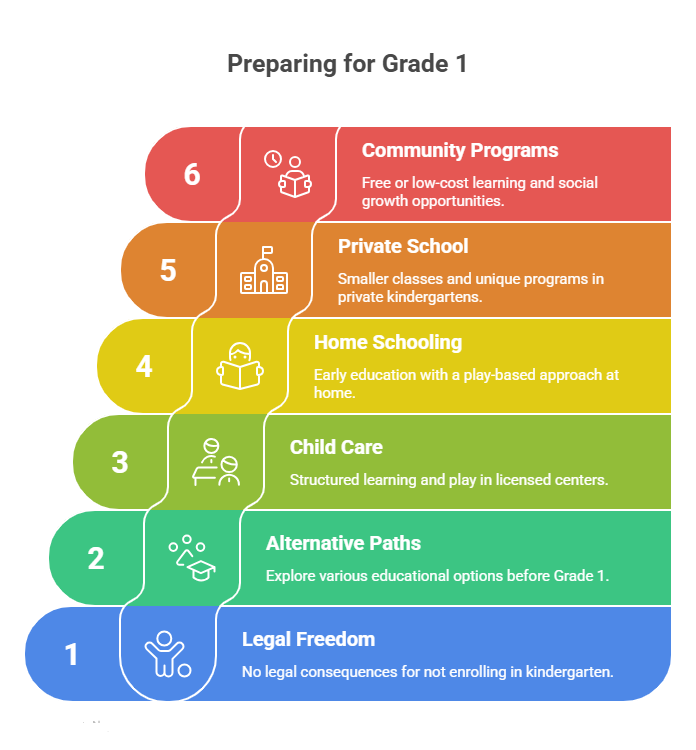
- There are no legal problems if you do not sign your child up for kindergarten. The Education Act in Ontario does not require children to attend school until age six, so you will not get any fines or face legal action if you keep your child at home during the kindergarten years.
- The choice to enroll your child in kindergarten is entirely up to you. You do not have to provide a reason, ask for an exemption, or inform the school if you decide to wait until Grade 1 to start formal education.
- Once your child turns six and the new school year begins, enrolling them in school becomes mandatory under the Education Act. Until then, you have the freedom to decide what works best for your family.
Choosing Alternative Paths Before Grade 1
If you choose not to enroll your child in public kindergarten, there are several effective alternatives to support their early development. These options allow children to learn and socialize before starting Grade 1, while matching your family’s preferences.
Common alternatives include:
- Licensed Child Care: Centers where children follow structured learning and play.
- Home Schooling: Early home education with a play-based approach.
- Private School: Private kindergartens often offer smaller classes or unique programs.
- Community Programs: Family centres and libraries provide free or low-cost programs for learning and social growth.
These choices help your child prepare for future school success.
What Do Children Learn in the Ontario Kindergarten Program?
The Ontario kindergarten program helps kindergarten students get a strong start. The main goal is to support all areas of children’s growth. The kindergarten curriculum does not focus on memorizing things or taking tests. Instead, it helps kids love learning by letting them explore, ask questions, and play. The program sees that every child is different and supports their curiosity.
This new way to support early childhood development helps children become confident and pick up important skills. The full-day kindergarten curriculum teaches many things your child will need. It helps them get ready for what is waiting in Grade 1 and later years.
Overview of the Curriculum in Full Day Kindergarten
The full-day kindergarten program in Ontario is play-based, allowing children to learn through activities, exploration, and asking questions. Teachers design experiences that support social, emotional, and academic growth in an engaging way. The curriculum focuses on four key areas: Belonging and Contributing, Self-Regulation and Well-Being, Demonstrating Literacy and Mathematics Behaviours, and Problem Solving and Innovating, ensuring a well-rounded approach to learning.
Children aren’t sitting at desks all day instead, they learn through activities that support:
- Problem-solving and creative thinking.
- Literacy and math using stories, songs, and games.
- Social skills like sharing, teamwork, and kindness.
- Connections to their community and nature.
How Kindergarten Prepares Kids for Grade 1 and Beyond
Kindergarten does more than introduce letters and numbers it lays the groundwork for future learning. The habits and skills gained in kindergarten help children transition smoothly into Grade 1. Teachers track progress and provide regular updates, ensuring children develop the social and emotional skills they’ll need. This support makes moving to Grade 1 less intimidating for both kids and parents.
Kindergarten gets children ready for Grade 1 by:
- Improving their ability to handle their feelings and focus in a group.
- Giving them more confidence in solving problems and thinking through ideas.
- Helping them get used to school routines, so the change to a more set school day is easier.
Conclusion
To sum up, it is important that parents and guardians know if kindergarten is required in Ontario, specifically asking, “Is kindergarten mandatory in Ontario?” The answer is that kindergarten is not a must, but putting your child in Junior Kindergarten (JK) or Senior Kindergarten (SK) can help them learn early. It can get them ready for Grade 1.
There are different choices, such as public, Catholic, and private schools, which means families can pick what works best for them. The choice you make now can shape your child’s time in school. If you still have questions or want help with your child’s kindergarten path, reach out to us. Your child’s future begins here!
Frequently Asked Questions
1. Does skipping kindergarten affect a child’s future schooling in Ontario?
A child can skip kindergarten without breaking the law, because the Education Act says kids need to be in school from six years of age. But if a child skips kindergarten, the move to Grade 1 could be harder. This is because kids learn key social and school skills in the Ontario curriculum for kindergarten.
2. Are there public and private kindergarten options in Ontario?
Yes, Ontario has a few options to choose from for the school year. You can go with public schools or Catholic schools that the local school boards run. These are free for people to use. You can also pick private schools, but you will have to pay for those. Each type gives a different setting, so you can pick what will be right for your child for the school year.
3. What support is available for parents making decisions about kindergarten?
Parents can get help from their local school board. The school board gives practical advice on how to enroll and what programs are there. You can also find support at family centres in your area. If you want specific guidance about your child’s education plans or are thinking about private school in Mississauga, places like USCA Academy can give expert help. This is good for families who need more advice.
4. Can my child skip JK and start directly in SK in Ontario?
Yes, since kindergarten is not mandatory in Ontario, you can choose to skip Junior Kindergarten (JK) and enroll your child directly in Senior Kindergarten (SK) when they turn five. However, starting in JK is recommended to help children get used to the classroom environment.
5. Is kindergarten mandatory in Ontario for 4-year-olds?
No, it is not. Children in Ontario are not legally required to attend school until they reach the compulsory age of six (Grade 1). JK is an optional play-based program designed for 4-year-olds to build early social and cognitive skills.
6. What is the cut-off date for Kindergarten enrollment in Ontario for 2026?
The cut-off date is December 31st. For the 2026 school year, children must turn four by December 31, 2026, to enter JK, and five by that same date to enter SK.
7. What age is Junior Kindergarten in Ontario?
Junior Kindergarten is for children who are four years old. If your child’s 4th birthday falls anywhere between January 1st and December 31st of the calendar year, they are eligible to start JK in September of that year.
8. Is full-day kindergarten better than half-day for my child’s development?
Most public schools in Ontario offer full-day kindergarten. It provides a more consistent routine and more time for play-based learning, which helps in better social-emotional development and prepares them more effectively for Grade 1.